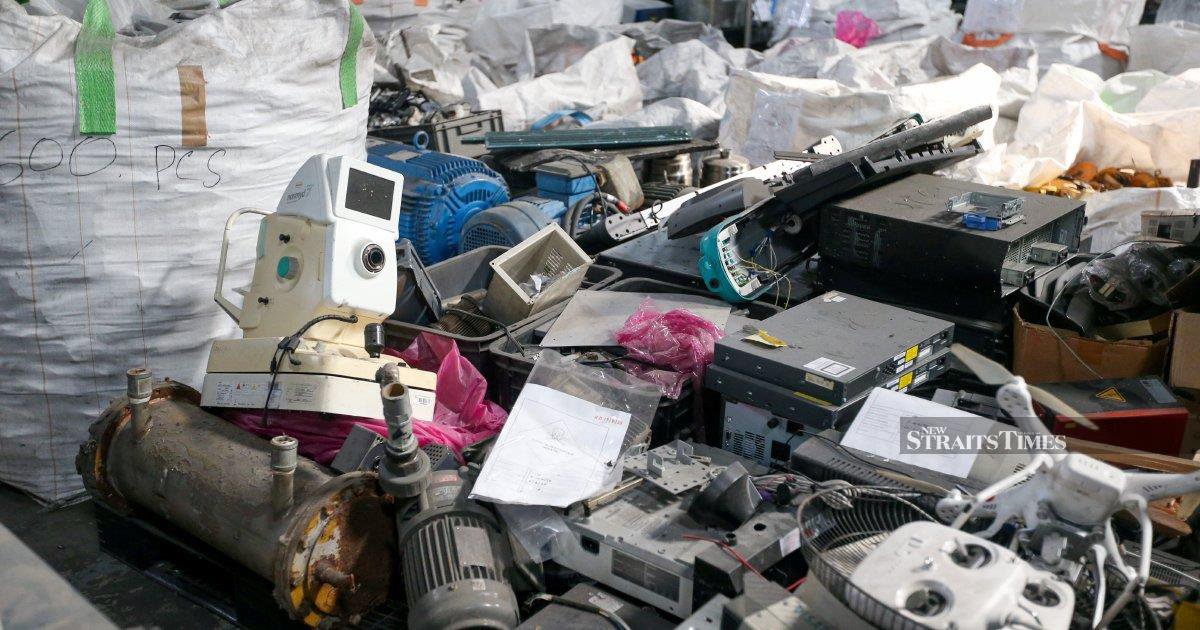
A major investigation into alleged criminal misconduct within Malaysia's paramilitary forces has led to the arrest of ten General Operations Force (GOF) officers, who are being questioned over their involvement in an extortion scheme centred on an e-waste processing facility in Tasek Gelugor, Penang. The development represents a significant integrity concern for the federal force, which has been tasked with law enforcement and public order maintenance across the country.
The nature of the allegations—involving uniformed officers allegedly exploiting their position to extract money from a commercial operation—underscores broader concerns about accountability within Malaysia's security apparatus. E-waste processing has become an increasingly important sector in Malaysia as the nation grapples with mounting electronic refuse, making facilities engaged in this work vulnerable to various forms of interference and illegal demands.
Taske Gelugor, a fast-developing industrial area within Penang's northern corridor, hosts numerous manufacturing and processing operations that support both domestic consumption and export markets. The presence of organised extortion within such facilities compounds existing challenges facing factory operators, who must navigate complex regulatory frameworks while managing operational costs. For an e-waste processor specifically, the incidents raise questions about the adequacy of protective measures for businesses engaged in environmentally sensitive operations.
The GOF, formally established to maintain internal security and assist in civil defence operations, has faced periodic scrutiny regarding personnel conduct and disciplinary standards. Instances of misconduct by uniformed officers, though not widespread, have periodically surfaced and generated public concern about institutional oversight. The arrest of ten officers simultaneously suggests either a coordinated criminal enterprise or systematic exploitation over an extended period—both scenarios that demand thorough investigation and transparent accountability processes.
Investigations of this nature typically examine the extent of alleged criminal activity, identify the hierarchy and roles of those involved, and determine whether institutional failures enabled the misconduct. Authorities will likely scrutinise whether supervisory lapses, inadequate internal controls, or insufficient accountability mechanisms contributed to the circumstances allowing such behaviour to occur.
For Malaysian businesses operating in sectors like e-waste processing, episodes of alleged official extortion create a chilling effect that discourages investment and complicates operational planning. Such incidents also damage public confidence in state institutions and undermine efforts to position Malaysia as a destination for responsible and sustainable manufacturing, particularly as international environmental standards become increasingly stringent.
The Penang case arrives at a moment when Malaysia is attempting to strengthen its circular economy credentials and attract investment in waste management and recycling infrastructure. Allegations that personnel ostensibly charged with maintaining order have themselves engaged in illegal extraction erode the institutional reliability necessary for such initiatives to succeed. Foreign and domestic investors evaluating facility locations consider both the regulatory environment and the predictability of dealings with state authorities.
The formal investigation process will determine the specific allegations against each individual and whether charges will be laid. Depending on the findings, the matter could prompt broader internal reviews within the GOF regarding recruitment, training, ethical standards, and supervision. Questions may also be raised about whether existing complaint mechanisms are sufficiently robust to detect and address misconduct before it reaches the scale apparently involved in the Tasek Gelugor incident.
From a sectoral perspective, e-waste processors face particular vulnerabilities because their operations involve hazardous materials and fall under multiple regulatory jurisdictions covering environmental compliance, occupational safety, and proper handling of electronic refuse. The complexity of oversight creates numerous touchpoints with various government agencies, each representing potential vectors for improper conduct by officials. Streamlining these regulatory interactions through transparent, documented procedures and digital systems could reduce opportunities for such incidents.
The arrest of the ten officers signals that investigators have identified sufficient grounds to detain those involved pending completion of inquiries. The coming weeks will likely see the emergence of further details regarding the nature of demands made, the duration of the alleged scheme, and the identities of individuals or entities from whom money was extracted. Such information will be crucial for understanding both the specific misconduct and any systemic factors that may have enabled it.
For the broader business community in Penang and nationally, the incident serves as a reminder of the importance of documenting interactions with government officials and maintaining clear records of any unusual requests or demands. While most public servants conduct themselves professionally, the case demonstrates that vigilance and proper reporting mechanisms remain essential safeguards against misconduct within government institutions.

