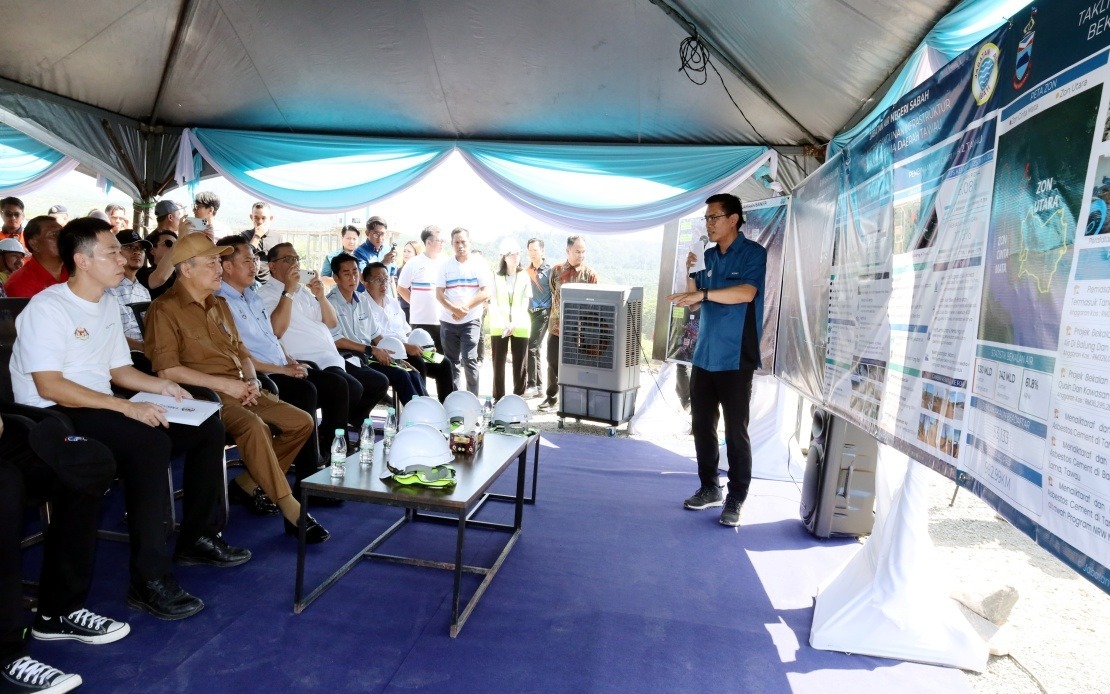
Tawau's enduring water supply crisis, which has plagued the East Malaysian city for decades, should finally reach resolution by the end of 2027 following substantial progress on a RM450.5 million infrastructure overhaul. Sabah Chief Minister Datuk Seri Hajiji Noor confirmed during a site inspection that Phase III of the Tawau Water Supply Scheme remains on track despite the contractor requesting additional time, with completion still targeted before the calendar year concludes. The ambitious undertaking addresses one of the most pressing utilities challenges facing the region's residents and businesses.
The centrepiece of this development is a new dam designed to feed raw water into the existing Cinta Mata 1 and Cinta Mata 2 Water Treatment Plants. According to progress reports as of late July, the dam itself had achieved approximately 74 percent completion, demonstrating tangible momentum in a project that has become symbolically important for demonstrating governmental competence in service delivery. Beyond its primary function, the infrastructure promises secondary benefits by reducing flood risk to downstream communities, creating a dual-purpose utility that addresses multiple vulnerabilities simultaneously.
Currently, Tawau's water production capacity stands at 130 million litres daily against actual demand of 142 million litres—a 12-million litre shortfall that forces regular rationing and frustrates both residents and commercial interests. The scheme's combined treatment capacity from three plants will eventually reach 161 million litres per day once fully operational, providing substantial surplus capacity and long-term security for population growth. This expansion represents roughly a 23 percent increase in available water, fundamentally transforming the city's infrastructure situation from perpetual scarcity to adequacy.
The raw water infrastructure component includes construction of a 30 million cubic metre storage reservoir and installation of 11.6 kilometres of 700-millimetre diameter pipelines distributing water across the treatment network. These specifications reflect engineering designed to handle not merely current demand but anticipated growth, with system redundancy built into the design through multiple distribution pathways. Tawau's registered water accounts number 53,133, and the project promises particular benefit to approximately 42,000 additional consumers in Tawau and surrounding areas once fully implemented.
The RM299.9 million Cinta Mata 2 Water Treatment Plant component represents the most significant individual investment within the broader scheme. Scheduled for completion in July 2028, this facility alone will contribute 30 million litres daily treatment capacity when operational. As of late July, physical construction progress stood at just over 16 percent, indicating that despite timeline pressures, the project remains within the reasonable bands expected for major infrastructure development. The plant's specific completion date precedes the overall scheme deadline by several months, suggesting a staggered operational timeline where capacity can come online incrementally.
Chief Minister Hajiji emphasised that the Sabah state government inherited this water crisis from predecessors rather than creating it through policy failures, framing the substantial investment as remediation of longstanding structural deficits. He stressed the administration's willingness to allocate additional funding if technical assessments from the Sabah State Water Department and the Department of Irrigation and Drainage recommend such increases. This flexibility suggests recognition that massive infrastructure projects often encounter cost overruns or design modifications warranting financial adjustment.
The contractor's request for additional time, while not unusual in construction of this complexity, has nonetheless been managed such that the overall project completion deadline remains viable. Rather than viewing extension requests as failures, project managers appear to have integrated the additional timeline into their scheduling while preserving the critical end-of-2027 threshold. This approach suggests either conservative original timelines or realistic re-baselining to accommodate field conditions and logistical challenges inevitable in such undertakings.
For Malaysian and Southeast Asian observers, the Tawau scheme illustrates the infrastructure investments required to support growing regional populations and economic activity. East Malaysia's development pathways frequently depend upon such foundational utilities becoming adequate before bottlenecks constrain further growth. The completion of this project would represent successful delivery of a complex, multi-component infrastructure initiative spanning years and hundreds of millions in public investment—a benchmark for assessing capability to execute larger development ambitions.
The water shortage itself has imposed real costs on Tawau's economy and quality of life. Commercial operations from agriculture to manufacturing to hospitality face constraints when water supplies fluctuate, deterring investment and limiting sectoral expansion. Residents endure periodic rationing and pressure limitations affecting daily activities. By addressing these constraints comprehensively rather than through temporary palliatives, the scheme promises to unlock economic potential currently suppressed by utility limitations.
Beyond immediate local benefits, the project demonstrates commitment to infrastructure development in East Malaysia, where geographic distance and lower population densities than Peninsular Malaysia sometimes result in delayed attention to utilities. Successful delivery would strengthen political credibility around governance competence while providing tangible improvements in living standards. The timeline extending into 2027 allows approximately two years for project completion, an ambitious but achievable target for a scheme of this magnitude given current progress trajectories.
For Tawau's business community and residents who have contended with water restrictions affecting everything from household routines to industrial operations, the prospect of resolution carries substantial significance. Once operational, the expanded infrastructure should transform water from a scarce resource requiring careful management into a stable utility supporting normal economic and domestic activity. This transition from scarcity to adequacy represents the fundamental objective underlying the RM450.5 million investment.

