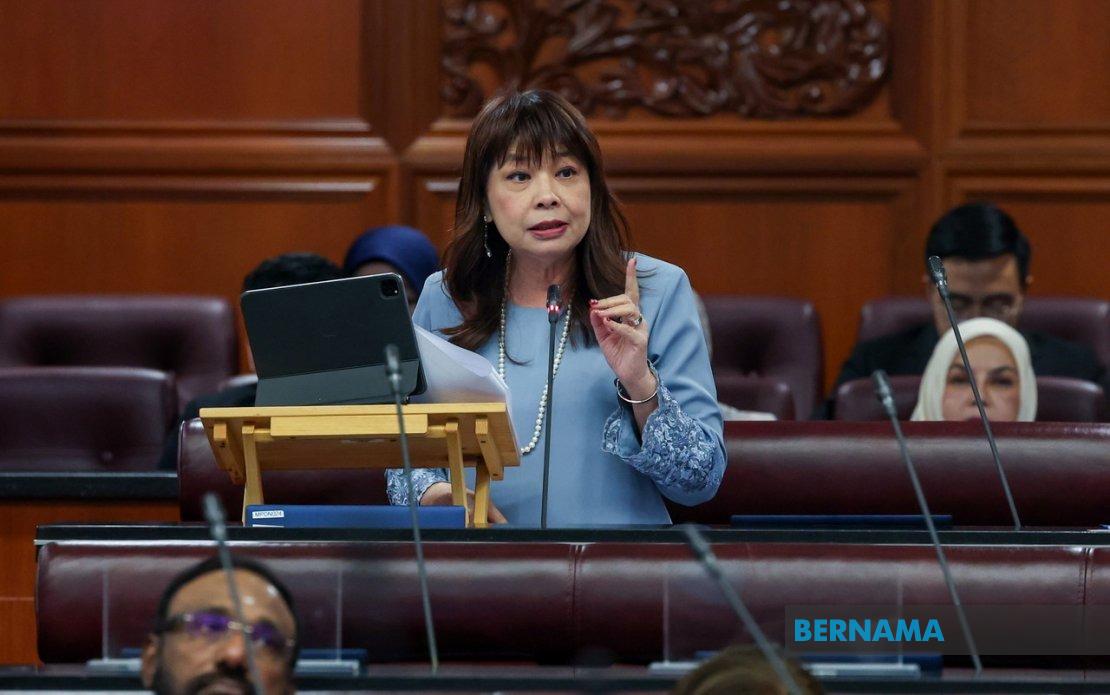
Malaysia's Talian Kasih 15999 hotline, a critical resource for citizens facing domestic crises, has processed 9,327 calls concerning domestic violence incidents across a three-year window from 2022 through May 2025, according to Deputy Minister of Women, Family and Community Development Lim Hui Ying. This figure emerged during parliamentary questioning on the effectiveness and reach of the government's frontline support mechanism for abuse survivors, underscoring the persistent scale of family violence across the country.
The domestic violence call volume forms a substantial subset of the hotline's broader operational scope. Talian Kasih received a cumulative total of 127,000 calls during the same period, encompassing diverse social and welfare complaints extending beyond domestic abuse to encompass child protection, elderly care, and general family disputes. The concentration of nearly one-tenth of all incoming contacts on domestic violence alone illustrates the severity and frequency of intimate partner and family-based abuse within Malaysian households, reflecting patterns consistent with regional data on violence in intimate relationships.
Significantly, the ministry's tracking indicates that all domestic violence complaints filed between 2022 and the end of 2024 have achieved complete resolution, marking what officials characterise as a comprehensive response closure rate. During the most recent reporting period spanning January through May 2025, the hotline fielded 470 domestic violence calls, of which 406 cases—approximately 86 percent—had been fully resolved by the time of the parliamentary statement. The remaining 64 cases were documented as active and progressing through intervention protocols, suggesting ongoing support provision rather than abandonment of unresolved complaints.
The ministry's intervention toolkit extends beyond telephone counselling to encompass concrete protective mechanisms for vulnerable individuals. Follow-up actions initiated by authorities following Talian Kasih reports include securing Emergency Protection Orders (EPO), a rapid legal mechanism to immediately shield victims from contact with alleged abusers, and Interim Protection Orders (IPO), which provide medium-term judicial safeguards. Additionally, the ministry coordinates placement of victims into secure shelters, removing them from immediate danger while investigations and legal processes unfold. This multi-layered response architecture reflects recognition that crisis hotline intervention represents merely the initial stage in a longer protective journey for survivors.
An important demographic shift has become apparent in recent years, with the composition of domestic violence victims expanding beyond the traditionally female-centred focus of abuse prevention campaigns. Deputy Minister Lim acknowledged a documented upward trajectory in reported cases involving male victims, though she cautioned that absolute numbers remain substantially lower than female victimisation. The emergence of male domestic violence cases, whilst numerically modest, signals either genuine epidemiological change—men increasingly experiencing partner violence—or improved willingness among male victims to report abuse previously concealed by shame or social stigma. This trend carries policy implications for intervention frameworks and public awareness messaging that has historically centred women's experiences.
The ministry's institutional response to this demographic diversification reflects a stated commitment to gender-neutral victim protection. Rather than maintaining a women-focused mandate, the Women, Family and Community Development Ministry has repositioned its protective remit to encompass welfare safeguarding across all genders and ethnic communities without discriminatory filtering. This philosophical stance aligns with contemporary understanding of domestic violence as a phenomenon affecting individuals across demographic categories, though epidemiological evidence globally continues to demonstrate markedly higher victimisation rates among women.
The parliamentary disclosure comes at a moment of intensified global and regional focus on domestic violence prevention. Southeast Asian nations, including Malaysia, have witnessed increasing advocacy for strengthened legal protections, improved access to emergency services, and enhanced funding for victim support infrastructure. The Talian Kasih data provides empirical grounding for ongoing policy debates about resource adequacy, staffing sufficiency, and public awareness penetration—whether awareness campaigns effectively reach those experiencing abuse and whether hotline capacity matches demand.
The resolution rates cited by the ministry merit contextual examination. Achieving closure on 100 percent of cases filed between 2022 and 2024 suggests either exceptionally efficient case handling or potentially varied definitions of "resolution" encompassing outcomes ranging from successful victim relocation to case abandonment due to victim withdrawal. The 86 percent resolution rate for cases filed in 2025 within just five months indicates relatively rapid case progression, though sustainability of this pace warrants monitoring as accumulated caseloads deepen.
For Malaysian readers and regional observers, the Talian Kasih figures underscore both institutional responsiveness and the persistence of family-based violence as a widespread social challenge. The hotline's annual throughput of roughly 3,000-3,100 domestic violence inquiries, distributed across a population exceeding 34 million, raises questions about penetration—whether unreported abuse substantially exceeds reported cases, or whether awareness of the hotline's existence remains geographically or sociodemographically uneven. Rural and indigenous communities, migrant worker populations, and economically marginalised groups may experience differential awareness and access barriers.
The inclusion of male victims within protection frameworks also reflects evolving understandings of family violence as structurally complex rather than a simple gender binary. Whilst patriarchal violence against women continues to dominate population-level patterns, recognition of abuse experiences across gender categories may improve institutional responsiveness and reduce victim isolation across all communities. The ministry's stated non-discriminatory approach provides rhetorical commitment, though implementation fidelity—whether shelters, counsellors, and legal advocates possess cultural competency and genuine commitment to male victim support—remains an open question requiring ongoing scrutiny.

