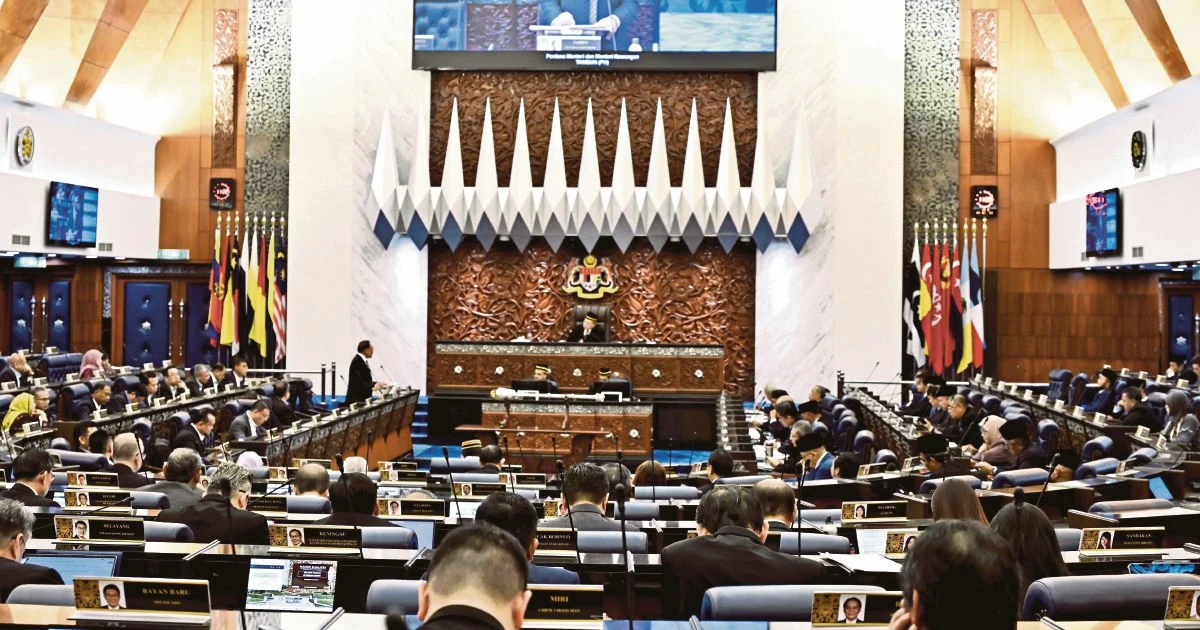
Members of the Dewan Rakyat descended into acrimonious dispute early in today's parliamentary session, with tensions exploding barely an hour after the sitting commenced. The flashpoint centred on allegations concerning the treatment of smaller coalition partners, sparking a prolonged exchange of accusations between government and opposition parliamentarians that underscored widening fault lines within Malaysia's ruling alliance.
Takiyuddin, the PAS politician at the centre of the confrontation, found himself at odds with a government backbencher over claims that the Islamist party had engaged in intimidatory behaviour toward Bersatu, the Bumiputera Empowerment Party led by former Prime Minister Muhyiddin Yassin. The dispute, though originating from what appeared a procedural matter regarding opposition leadership, rapidly evolved into a broader indictment of coalition dynamics and internal power struggles that have been simmering beneath the surface of Malaysia's political landscape.
The parliamentary eruption reveals deepening fractures within the federal government's coalition arrangements, particularly between its major components. PAS, having consolidated substantial electoral gains and ministerial positions in recent years, has become increasingly assertive in coalition decision-making, a development that has created friction with smaller partners like Bersatu. For Malaysian observers and political analysts, this public airing of grievances signals that the informal arrangements holding the coalition together are under considerable strain, suggesting potential instability in government operations should internal tensions continue escalating.
Bersatu's position within the ruling coalition has long been precarious. The party, which entered government after the 2023 elections as part of the broader anti-opposition strategy, lacks the numerical strength to resist pressure from larger coalition members. This structural imbalance has made Bersatu vulnerable to marginalisation within coalition negotiations, particularly when disagreements arise over ministerial appointments, legislative priorities, or policy direction. The current parliamentary confrontation appears to have crystallised long-standing frustrations about this power differential.
The timing of the dispute carries particular significance for Malaysia's political trajectory. With both major coalition and opposition blocs controlling substantial parliamentary numbers, government stability depends heavily on maintaining cohesion among diverse coalition partners. When such internal tensions spill into public parliamentary discourse, they risk emboldening opposition lawmakers to exploit divisions for tactical advantage, potentially weakening the government's legislative agenda or ability to manage parliamentary business efficiently.
For Malaysian observers monitoring political developments, the broader implication concerns whether the current coalition configuration can endure sustained internal pressure. Previous Malaysian governments have witnessed coalition partners fracturing when internal grievances became unmanageable, typically resulting in either government collapse or major realignments. While today's exchange, dramatic as it was, may represent a single incident, it reflects underlying structural weaknesses that periodically surface whenever coalition partners feel their interests are being subordinated or ignored.
The substance of the allegation—that PAS engages in bullying behaviour toward Bersatu—touches on a common dynamic within Malaysian coalition politics. Larger parties frequently leverage their numerical advantage to dominate smaller partners, restricting their input on policy matters or limiting their access to ministerial portfolios. For Bersatu, a party with limited grassroots organisational capacity compared to PAS's nationwide network, such treatment threatens its political viability and capacity to deliver benefits to its supporters and constituents.
Regional observers note that such coalition instability often attracts attention from neighbouring countries and international investors concerned about governance continuity. Malaysia's reputation for political unpredictability has already imposed economic costs and complicated long-term policymaking. Public parliamentary quarrels among coalition partners amplify these concerns by signalling that executive coherence may be compromised by internal political competition rather than unified governance.
The parliamentary speaker's role in managing such disputes becomes crucial during moments of heightened tension. How legislative leadership handles confrontational exchanges between government and opposition members—and indeed between government coalition partners—shapes both the tone of parliamentary debate and the government's ability to project competence and unified direction to the public. Today's eruption suggests that managing coalition tensions within the parliamentary arena remains an ongoing challenge for Malaysia's legislative institutions.
Looking forward, the episode serves as a reminder that Malaysian coalition politics remain volatile and vulnerable to fracture. While the current government commands parliamentary majority, maintaining that coalition's functionality depends on managing grievances and ensuring all partners feel adequately represented and respected. The Takiyuddin-government MP exchange indicates that such assurances may currently be lacking, at least from Bersatu's perspective, and that festering resentments could jeopardise coalition stability if not addressed through substantive policy adjustments or renewed coalition arrangements that better accommodate smaller partners' concerns and political aspirations.