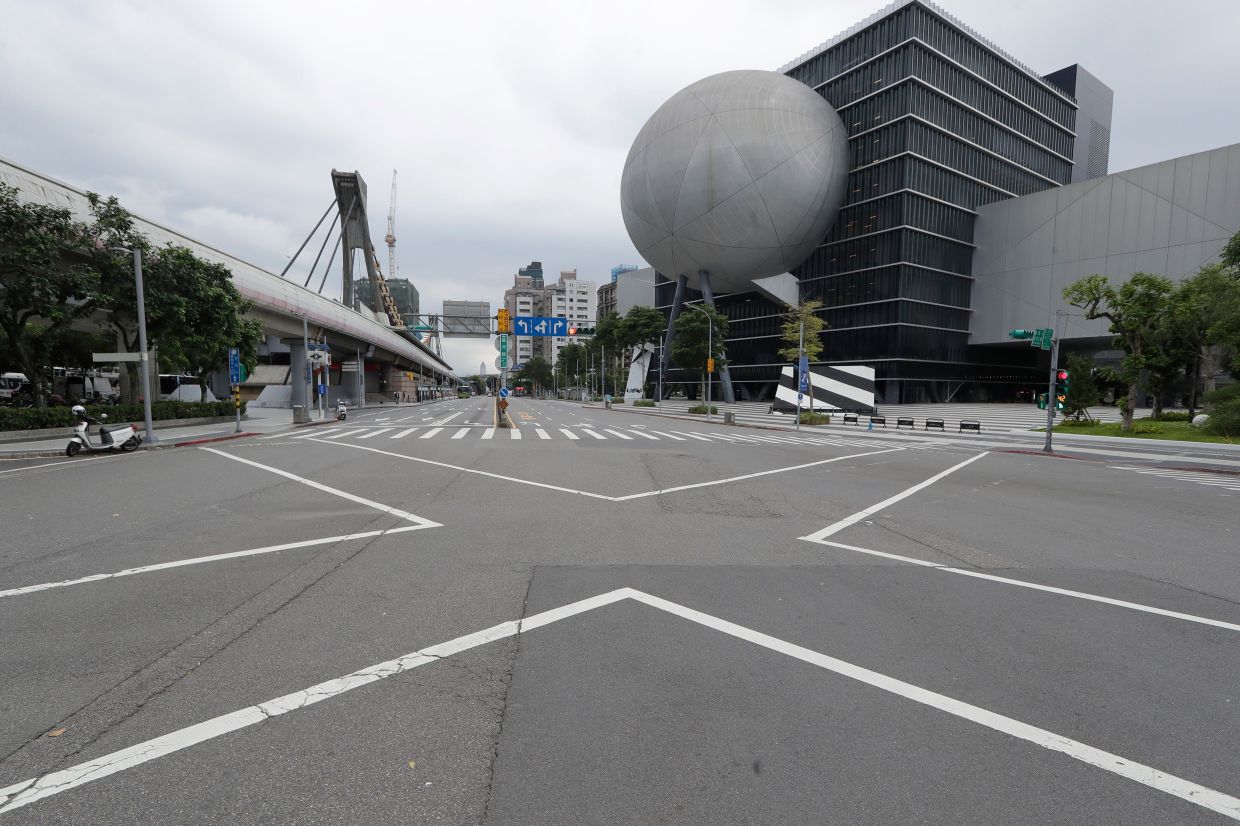
Taiwan orchestrated a deliberate slowdown of its mobile internet infrastructure on August 13, restricting speeds to 256 Kbps across Taipei and six other cities and localities as the final phase of its annual Han Kuang military exercises. The exercise represented a significant escalation in how the island approaches disaster preparedness, moving from largely invisible urban simulations to tangible, widespread disruptions that directly affect ordinary citizens and their daily connectivity patterns.
Telecommunication operators across the affected regions implemented the bandwidth restrictions, effectively crippling the ability to transmit anything beyond text-based communications. Residents accustomed to seamless 5G connectivity in major urban centres suddenly found themselves operating under severely constrained conditions similar to mobile networks from two decades ago. This deliberate throttling served as a practical test of how society functions when modern digital infrastructure becomes compromised, whether through military attack, natural disaster, or electromagnetic interference.
President Lai Ching-te publicly apologised for the disruption while simultaneously framing it as an essential measure. His statement acknowledged citizen inconvenience while emphasising the necessity of the drill: "We ask for your understanding and support, as this is a necessary drill." This messaging reflected Taiwan's strategic calculation that preparing civilians for potential conflict scenarios justifies temporary interference with normal life, a position that becomes increasingly consequential given military tensions across the Taiwan Strait.
The Han Kuang exercises have undergone fundamental transformation in recent years, shifting from military-centric drills toward comprehensive civilian-military integration. Previously, urban resilience exercises in Taipei proceeded with minimal public awareness or disruption—air raid drills in metro stations, for instance, barely interrupted passenger flow or normal operations. This year's approach inverted that philosophy entirely, deliberately maximising visibility and imposing genuine inconvenience to ensure citizens genuinely engaged with emergency protocols rather than treating them as abstract simulations.
The integration of reservists, civilian populations, and local government coordination represented the core innovation of these evolved exercises. Rather than confining drills to military personnel and designated zones, Taiwan expanded participation to encompass the broader population who would constitute the actual civilian workforce during any genuine crisis. This expansion acknowledged a fundamental reality: effective defence against modern military threats requires an entire society's capacity to function under degraded conditions, not merely military readiness alone.
At Taipei's metro stations on the afternoon of August 13, the exercise's reality became visceral when operators shut station gates as part of simulated air raid scenarios. Passengers found themselves detained for approximately 30 minutes, unable to exit or proceed, experiencing firsthand the mobility restrictions that wartime conditions might impose. Such tangible disruptions carry pedagogical weight that theoretical exercises cannot replicate; they embed understanding into bodily memory rather than leaving it as abstract knowledge.
Allen Hsieh, a Hong Kong tourist trapped within one of the shuttered metro stations, provided revealing commentary on the exercise's authenticity. Rather than viewing the experience negatively, Hsieh acknowledged the drill's credibility and necessity, noting that he initially expected only to receive text messages but discovered the simulation extended far beyond those parameters. His assessment proved particularly significant because, as a visitor from outside Taiwan, he could evaluate the exercise's realism against his own expectations and observations of civil defence elsewhere in East Asia.
Parallel to the internet throttling and metro lockdowns, Taiwan's hospital system participated by conducting tabletop and practical exercises simulating the relocation of critical medical operations to underground facilities. This component addressed a crucial vulnerability in any conflict scenario: maintaining essential health services when surface infrastructure becomes vulnerable to attack. Hospitals represent not merely civilian infrastructure but critical systems whose failure would compound casualties and suffering beyond immediate military damage, making their hardening and contingency planning strategically vital.
President Lai's personal participation in hospital simulations underscored government commitment to these preparations. By visibly observing how medical facilities would transition to underground operations, Lai demonstrated that civil defence planning permeated Taiwan's highest decision-making levels rather than remaining a bureaucratic formality delegated to subordinates. Such visible leadership sends signals both domestically—reinforcing seriousness to Taiwan's population—and internationally, potentially affecting adversary calculations about Taiwan's preparedness and civilian morale.
For Malaysian observers and regional analysts, Taiwan's escalating civil defence integration offers instructive lessons about preparing densely-populated societies for potential conflict. The willingness to deliberately disrupt normal commercial activity—throttling internet, closing transit systems—reflects a judgment that mild, inconspicuous drills fail to generate the muscle-memory and institutional adaptability that genuine crises demand. As Southeast Asian nations grapple with their own security uncertainties, Taiwan's comprehensive approach to civilian-military integration provides a model combining practical realism with sustained democratic consultation.
The August 13 exercises also illustrated how Taiwan's strategic environment has shifted. Previous assumptions that conflicts would develop slowly, permitting gradual mobilisation, have given way to scenarios where rapid deterioration could occur with minimal warning. Accordingly, civil defence exercises have evolved from occasional disruptions into foundational preparedness infrastructure woven throughout peacetime operations. Whether this represents prudent hedging or inadvertent normalisation of conflict consciousness remains contested among observers, yet Taiwan's leadership appears committed to the proposition that visible, experienced readiness constitutes its most credible deterrent against miscalculation.

