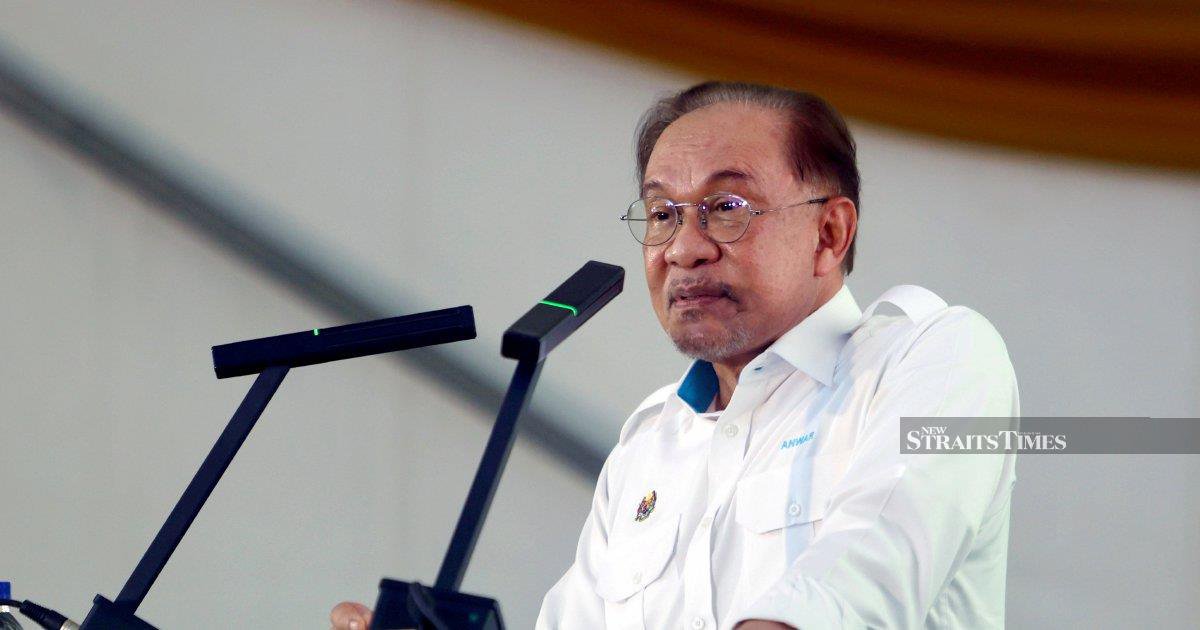
The Taiwan Chamber of Commerce & Industry in Malaysia has formally expressed deep concern following Prime Minister Datuk Seri Anwar Ibrahim's characterization of Taiwan as territory belonging to China, signalling that such political statements may carry consequences for the flow of technology and semiconductor capital into the region.
The chamber's cautious response reflects growing sensitivities around how Malaysian political leaders frame cross-strait relations, particularly as Taipei-based firms evaluate whether Southeast Asia remains a stable and politically neutral investment destination. Taiwan's technology sector, already diversifying its manufacturing footprint beyond the island amid geopolitical tensions, views diplomatic clarity and non-alignment as essential preconditions for relocating sensitive operations abroad.
Anwar's statement, which aligns Malaysia's official position with Beijing's diplomatic stance on Taiwan's political status, has triggered alarm within Taiwan's business community operating here. The chamber appears concerned that such language, even when consistent with Malaysia's long-standing adherence to the One China principle, could be misinterpreted as a shift in how Kuala Lumpur views the commercial and technological relationship with Taiwan's thriving private sector.
For Malaysian policymakers, this tension underscores a delicate balancing act that Southeast Asian governments routinely navigate. Countries in the region maintain formal diplomatic ties exclusively with Beijing while simultaneously hosting billions in Taiwanese private investment across semiconductors, electronics manufacturing, and other advanced industries. The chamber's intervention suggests that business confidence depends partly on visible separation between China's political claims and the commercial treatment of Taiwan-headquartered enterprises.
Semiconductor investment from Taiwan has become increasingly significant for Malaysia's economic trajectory. The country hosts major wafer fabrication facilities and component assembly operations that employ tens of thousands and generate substantial export revenues. Any perception that political sensitivities might affect how Taiwanese investors are treated could prompt companies to reconsider expansion plans or accelerate their diversification toward other Southeast Asian hubs like Vietnam or Thailand.
The timing of the chamber's statement carries additional weight given ongoing global semiconductor supply chain realignment. Taiwan and South Korea currently dominate advanced chip design and production, but both face pressure to distribute manufacturing capacity geographically to reduce single-point-of-failure risks. Malaysia, with established infrastructure, skilled labour pools, and existing Taiwanese investor networks, competes actively for this relocation wave. Political messaging that creates uncertainty about the long-term operating environment could prove costly.
Anwar's remarks likely reflect domestic political considerations and Malaysia's principled stance on respecting Beijing's stated position on sovereignty matters. However, the chamber's response reveals how political language, even when technically consistent with official policy, can create anxiety within investor communities that measure risk through multiple lenses simultaneously. Taiwanese executives evaluating Malaysia against rival locations may wonder whether tomorrow's political developments could suddenly impose restrictions or create bureaucratic complications.
The relationship between political statements and investment flows operates through subtle psychological channels. Large capital commitments in semiconductors involve multi-year development timelines and substantial sunk costs. Investors scrutinize not just formal legal frameworks but also the broader political atmosphere—assessing whether leaders view their sector as a strategic asset or a secondary concern. Comments that emphasize China's claims over Taiwan can inadvertently signal that Taiwan-origin capital, however profitable, remains somewhat contingent.
Malaysia faces structural incentives to maintain strong ties with both China and Taiwan. Beijing is a crucial trading partner and source of investment, while Taiwanese companies have integrated themselves deeply into Malaysian manufacturing and technology ecosystems. The chamber's cautionary statement suggests these interests are not automatically harmonious, and that careful communication becomes necessary to preserve investor confidence.
For the broader Southeast Asian region, this episode illustrates how cross-strait geopolitical complexities increasingly intersect with economic nationalism and supply chain security. Countries hosting advanced technology facilities must increasingly articulate nuanced positions that respect major power sensibilities while reassuring private investors that their operations will not become hostages to inter-government disputes. Malaysia's tech sector competitiveness may depend partly on how effectively leaders manage these competing pressures without appearing to abandon either commitment.
The chamber's intervention may also serve as a gentle reminder that foreign investment decisions reflect cumulative judgments about political stability, regulatory predictability, and perceived fairness toward investors regardless of their origin. Taiwan's private sector, despite the island's distinctive political status, generates employment and technology transfer benefits that Malaysian policymakers should reasonably protect through deliberate rhetoric and policy consistency.
Looking forward, clarity from Malaysian authorities on distinguishing between respecting China's political position and maintaining welcoming conditions for Taiwanese private enterprise could help reassure investors without contradicting official diplomacy. The semiconductor and technology sectors that both countries wish to attract have demonstrated willingness to operate in politically complex environments, but they require sufficient confidence that commercial operations will not become collateral damage in geopolitical disputes.

