Tabung Haji's involvement in Putrajaya Perdana Bhd has become emblematic of the governance failures that plagued Malaysia's pilgrimage fund, with the institution losing RM145.3 million in what investigators have characterised as an investment decision that pulled the organisation into the orbit of 1Malaysia Development Bhd. The entanglement, detailed in a comprehensive Royal Commission of Inquiry report released in July, represents one of fourteen problematic investments that collectively generated billions of ringgit in losses across the period 2014 to 2020.
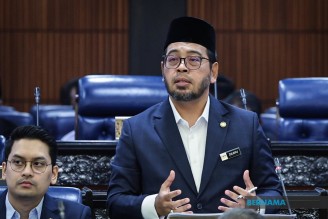
During a parliamentary briefing, Minister in the Prime Minister's Department (Religious Affairs) Dr Zulkifli Hasan articulated the fundamental conflict of interest underlying these transactions. The decision to appoint Tabung Haji's then-chairman to simultaneously lead Putrajaya Perdana created a structural problem that compromised the fund's investment judgement at a critical moment. When the chief executive officer of Tabung Haji also served on 1MDB's board of directors, the potential for institutional capture became acute. These overlapping roles raised pointed questions about whether capital deployment decisions genuinely served Tabung Haji's millions of members or instead functioned as a mechanism to shore up troubled entities elsewhere in the corporate ecosystem.
The Putrajaya Perdana transaction exemplified a broader pattern of questionable capital allocation. Beyond the immediate loss, Tabung Haji's acquisition of land at the Tun Razak Exchange from 1MDB during the height of the fund's public controversies signalled institutional judgment clouded by competing loyalties. The fund committed significant resources to purchasing property from an entity simultaneously undergoing intense scrutiny. This move compounded the reputational damage when losses materialised, as it appeared that Tabung Haji had provided financial support to 1MDB precisely when the latter faced mounting pressure.
For Malaysian investors and pensioners who depend on Tabung Haji's returns, the capital structure implications proved devastating. The FGV Holdings initial public offering, which mobilised over RM10 billion and was marketed as a national success story, subsequently inflicted losses exceeding RM1 billion on the pilgrimage fund. Rather than acknowledging diminished asset values as share prices collapsed by more than eighty percent, institutional management altered accounting classifications to obscure the deterioration. This accounting manoeuvre—reclassifying rather than confronting the impairment—represented not merely poor stewardship but an active misrepresentation of financial reality to stakeholders.
The recovery trajectory outlined by Minister Zulkifli demonstrates that Tabung Haji has begun reversing some of these destructive decisions. The fund repurchased Tun Razak Exchange land that it had sold in 2018 for RM400 million, acquiring it back at RM270 million—a transaction reflecting the subsequent decline in underlying valuations and the fund's improved liquidity position. More significantly, Tabung Haji reacquired the UJ Estates oil palm plantation previously divested for RM800 million, returning it to the portfolio at RM695 million including cash components. These buybacks represent tangible efforts to reconstitute a productive asset base, though they simultaneously underscore the magnitude of value destruction incurred through earlier decisions.
The governance failures identified in the Royal Commission of Inquiry report extend beyond individual transactions to encompass systemic institutional weakness. Over a six-year period beginning in 2014, successive layers of oversight demonstrably failed to prevent capital erosion that should have triggered intervention much earlier. The RCI's findings documented how basic risk management protocols were either absent or circumvented, how conflicts of interest went unresolved, and how accountability mechanisms proved inadequate to constrain decision-makers operating under divided loyalties.
For Southeast Asian observers concerned with fund governance more broadly, the Tabung Haji case illuminates vulnerabilities in institutional structures managing collective savings. The pilgrimage fund operates at the intersection of religious trust, state involvement, and commercial imperative—a positioning that can create ambiguity about primary obligations. When governance becomes diffuse and when leadership roles span multiple organisations with divergent interests, fiduciary duty erodes. The capacity of boards to exercise independent judgment diminishes when institutional presidents simultaneously chair related entities or sit on boards of connected companies.
The RCI report itself, presented to the King in August 2022 after an eighteen-month investigation, contained twenty-five specific recommendations designed to remediate governance deficiencies. By late July, Tabung Haji had implemented approximately seventy-five percent of these recommendations, suggesting serious institutional effort to prevent recurrence. However, implementation of procedural reforms operates on a different timeline than the reconstruction of institutional trust, particularly among Malaysian Muslims who view the fund as custodian of their religious savings.
The financial quantum involved in these transactions carries significance beyond the abstract figures. Tabung Haji serves millions of Malaysian pilgrims; its capital base directly affects pilgrimage affordability and returns distributed to members. Losses aggregating billions of ringgit represent foregone educational opportunities, retirement resources, and intergenerational wealth transfer. The RM145.3 million Putrajaya Perdana loss, while substantial in isolation, comprises only one component of the broader institutional damage that accumulated through the 2014-2020 period.
Moving forward, the test of governance reform will appear in institutional behaviour when future opportunities arise that present conflicts between member interests and broader policy objectives. The regulatory and institutional architecture must prevent situations where corporate personalities can simultaneously champion competing institutional interests. Clear separation of roles, robust independent audit mechanisms, and transparency standards applicable to all transactions—particularly those involving related parties—represent essential safeguards. For Tabung Haji and similar institutions across Southeast Asia managing collective savings, the lesson from this episode is that governance cannot be treated as ancillary to strategy; it must constitute the fundamental framework through which all decisions are evaluated and constrained.

