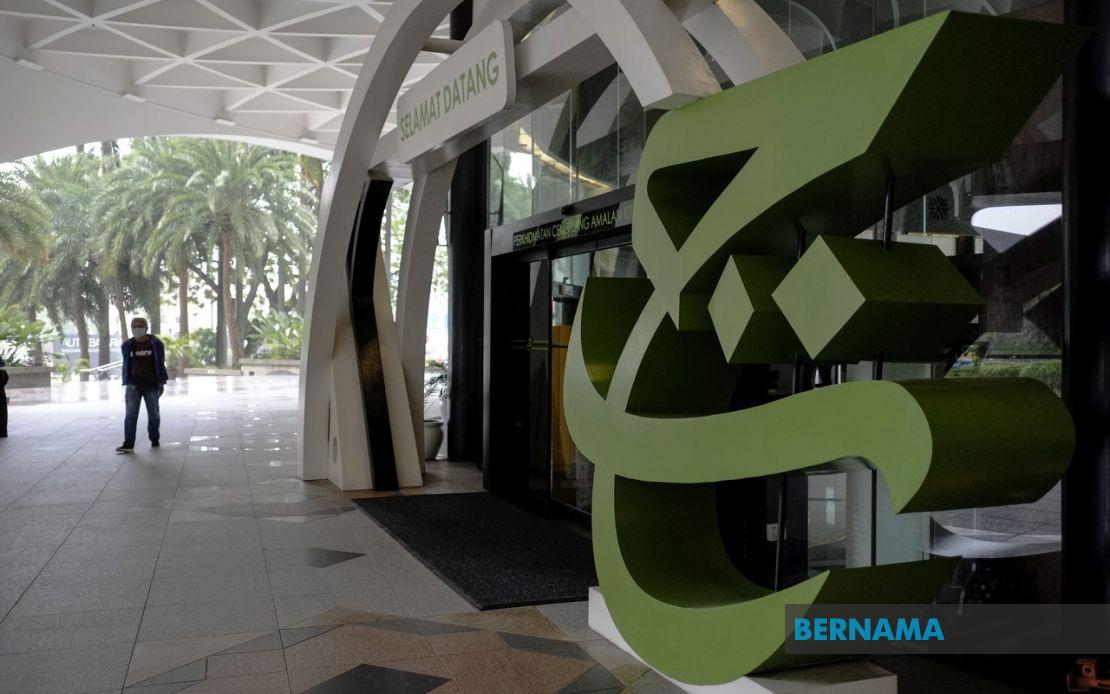
The Royal Commission of Inquiry's fully declassified report on Tabung Haji (TH) reveals that the nation's pilgrimage fund has successfully navigated a severe financial crisis through its restructuring and recovery plan, stabilising an institution that serves millions of Malaysian Muslims saving for the hajj. The findings, released in Kuala Lumpur on August 8, confirm that the massive RM12.6 billion in investment losses have been comprehensively addressed, restoring confidence in an organisation fundamental to Malaysia's social fabric and financial system.
The recovery unfolded across two phases. The 2018 Recovery Plan tackled RM10 billion of the accumulated losses, while the remaining RM2.6 billion was progressively resolved through 2025, demonstrating a methodical approach to resolving one of Malaysia's most significant institutional crises. This measured restructuring reflects the complexity of stabilising a fund holding billions in depositor savings whilst maintaining its primary mission of facilitating hajj operations for the nation's Muslim community.
Implementation of the RCI's recommendations has progressed substantially, with three-quarters of suggested reforms already integrated into TH's operations. The government has publicly committed to expediting the outstanding quarter of recommendations, signalling political will to strengthen the fund's governance architecture, investment decision-making processes, and risk management protocols. This phased implementation approach suggests policymakers recognise both the urgency of reform and the practical constraints of overhauling complex institutional frameworks.
The financial turnaround has been tangible and measurable. Investment income surged to RM4.64 billion in the most recent financial year, representing TH's strongest performance since 2018 and vindicating the recovery strategy's core assumptions. This resurgence matters considerably for depositors, whose confidence in the fund's viability directly affects savings flows into the pilgrimage scheme across Malaysia's diverse Muslim population.
Central to the recovery was the transfer of underperforming assets to Urusharta Jamaah Sdn Bhd (UJSB), a government-created special purpose vehicle designed to quarantine problematic investments whilst allowing TH to concentrate on its core competency of pilgrimage management. The transfer valued assets at RM19.9 billion despite a market valuation of RM9.7 billion, representing a RM10.2 billion premium that effectively represented a government backstop of the fund's losses. This mechanism preserved TH's operational viability whilst creating a structured mechanism for potential asset recovery.
However, the RCI's assessment explicitly cautions against treating the recovery plan as a permanent solution. Several critical vulnerabilities persist that demand urgent attention. The fund's governance framework requires substantial strengthening, the foundational Tabung Haji Act 1995 needs comprehensive revision to reflect contemporary regulatory expectations, and the institution's approach to risk management and cost control demands significant enhancement. These structural issues extend beyond financial metrics into the operational and legal architecture governing how TH functions.
A particularly pressing concern involves UJSB's financial sustainability and the government's capacity to support its obligations. The RCI warns that the government must reliably redeem UJSB sukuk instruments and maintain promised annual cash allocations. Failure to meet these commitments could force TH into distributing profits to depositors without corresponding cash reserves, creating a dangerous accounting disconnect that undermines the fund's financial credibility. This vulnerability exposes TH to broader government budget pressures.
TH has financed UJSB's operations through two sukuk issuances backed by government letters of support, carrying profit rates of 4.05 per cent and 4.10 per cent respectively. These instruments essentially convert government backing into market-tradeable securities, but their sustainability depends on sustained government fiscal capacity. The fund has periodically repurchased selected assets from UJSB when valuations proved attractive, including RM270 million for Tun Razak Exchange land originally transferred at RM400 million, and RM695 million for UJ Estates oil palm operations previously valued at RM800 million. These selective buybacks indicate TH is selectively re-integrating assets where market conditions have moved favourably.
Depositor distributions have improved substantially as the recovery has progressed, rising from 1.25 per cent in 2018 to 3.25 per cent in 2024 and 3.5 per cent projected for 2025. These distributions were calculated whilst accounting for RM2.6 billion in impaired assets that could not be transferred to UJSB in 2018 due to specific circumstances. The improving distribution trajectory signals strengthening financial performance, though the RCI emphasises this momentum depends on sustained governance discipline.
The RCI's overarching conclusion acknowledges genuine progress whilst emphasising that stabilisation must transform into sustained excellence. TH's financial position has demonstrably strengthened and the institution has commenced rebuilding reserve buffers intended to underpin long-term resilience. Yet the commission insists that future stability cannot depend on extraordinary government support. Instead, TH must embed institutional reforms in governance, regulatory compliance, and risk management that create organic financial resilience independent of extraordinary rescue mechanisms.
For Malaysian policymakers and depositors, the RCI report presents a mixed picture. The recovery plan clearly worked in stabilising an institution holding the hajj savings of millions of Malaysians, averting a potential catastrophe for the nation's Muslim community. Yet the emphasis on ongoing reforms suggests the RCI views the crisis as symptomatic of deeper governance failures requiring comprehensive institutional reconstruction. The government's track record in implementing the outstanding 25 per cent of recommendations will become a critical test of whether TH transitions from crisis recovery to sustainable excellence.
The implications extend beyond TH itself. The fund's experience offers lessons about governance weaknesses in large Malaysian state institutions and the limits of using special purpose vehicles to quarantine failed assets. Successful completion of pending reforms could establish a model for managing other troubled state entities, whilst failure would suggest systemic governance challenges requiring broader regulatory intervention across Malaysia's institutional landscape.

