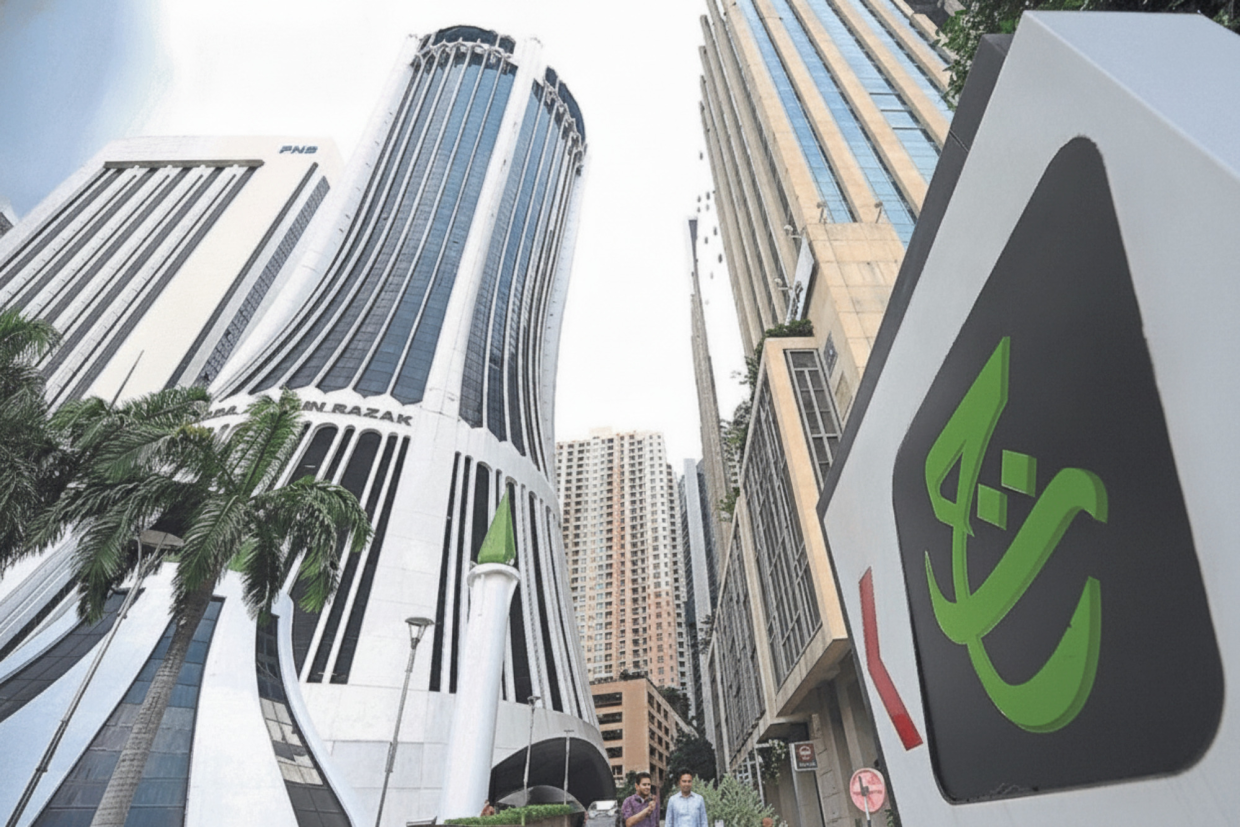
The Pilgrimage Fund Board, officially known as Lembaga Tabung Haji (TH), manipulated its accounting policies to obscure mounting financial distress during 2017, according to findings presented to Parliament by the Minister in the Prime Minister's Department (Religious Affairs), Dr Zulkifli Hasan. The institution's impairment policy—the method used to account for depreciating asset values—was changed twice in a single day, shifting from a 70 per cent threshold to 85 per cent and then to 90 per cent. This accounting manoeuvre enabled TH to present profits that justified dividend distributions to its 9.3 million depositors, masking what should have been reported as a substantial loss.
The Royal Commission of Inquiry, which completed its 211-page investigation into TH's operations between 2014 and 2020, identified systematic departures from accepted accounting principles. The core issue revolved around how TH valued its investment portfolio and recognised losses. Under proper Financial Reporting Standards, particularly FRS 139, assets should be impaired when their market value falls significantly below book value. TH's previous approach ignored this requirement until asset prices had collapsed to just 10 per cent of their original value—a dramatic and unjustifiable delay in recognising losses. Dr Zulkifli illustrated this with a concrete example: if TH had invested RM1,000 in shares that subsequently plummeted to RM100, the institution continued reporting the RM1,000 figure in its accounts rather than acknowledging that selling those shares in the open market would yield only RM100.
The decision to alter impairment policy was not made in isolation or by junior accounting staff. According to statutory declarations examined by the RCI, TH's chief financial officer at the time explicitly stated that the policy change was designed to enable profit distributions aligned with depositor expectations, rather than to ensure accurate asset valuation as required by accounting standards. This distinction between accounting convenience and regulatory compliance proved critical to the RCI's findings. The institution faced a credibility crisis with its massive depositor base if it failed to distribute anticipated profits, yet the only way to justify those distributions was to systematically undervalue losses on the institution's books.
The magnitude of the distortion became apparent when comparing TH's reported figures against what properly applied Malaysian Financial Reporting Standards would have yielded. The institution announced a profit of RM3.4 billion for 2017, a figure that justified distributing RM600 million in additional grants to depositors. However, if MFRS standards had been rigorously applied, TH should have recorded a net loss of RM1.4 billion that year. This RM4.8 billion difference between reported and actual financial position represented one of the most significant accounting deviations in recent Malaysian corporate history.
TH's profit distribution mechanism itself underwent revision during this period, compounding the distortion of its true financial condition. The institution shifted from calculating distributions based on average monthly deposit balances to using average annual lowest balances—a change that would have reduced payouts to depositors. Facing negative reaction from savers who had come to expect regular dividend payments, TH's management essentially backtracked by manipulating asset impairment thresholds instead, reverting to the monthly lowest balance method and approving a 4.50 per cent plus 1.75 per cent distribution rate. This sequence of reversals demonstrated decision-making driven by political and social pressure rather than sound financial governance.
The manipulation extended beyond 2017, as TH had adopted a questionable accounting methodology called realisable asset value (RAV) beginning in 2014. This approach had particular significance because 2014 marked the inflection point when TH's liabilities surpassed its assets—a critical threshold in institutional finance that would normally trigger urgent remedial action and transparent disclosure. Instead, RAV allowed TH to continue distributing profits to depositors despite not meeting the fundamental conditions required by the Tabung Haji Act 1995 for such distributions. By creating this alternative valuation framework, TH's leadership effectively insulated the institution from the rigorous scrutiny that Malaysian Financial Reporting Standards would have imposed.
For Malaysian depositors and taxpayers monitoring TH's trajectory, the implications of these findings are sobering. The institution manages savings for nearly one-third of the country's Muslim population, predominantly from middle and lower-income groups saving specifically for the Hajj pilgrimage. These depositors relied entirely on financial statements to assess the safety of their funds, yet those statements systematically misrepresented the institution's position. A saver who believed TH was distributing profits from genuine earnings was actually receiving distributions funded by asset depletion and accounting reclassification—a fundamental breach of trust.
The RCI investigation, initiated in 2021 and formally reported to the King in August 2022, encompassed the full period during which TH's problems intensified from manageable challenges into systemic crisis. The commission examined not merely isolated incidents but rather a pattern of governance failures spanning seven years. Among its 25 recommendations for institutional reform, approximately 75 per cent had been implemented by TH by late July 2023, suggesting that the institution has begun structural changes. However, implementation of recommendations represents merely the first step in rebuilding institutional credibility and depositor confidence.
The accountability framework revealed by the RCI highlighted that policy changes of this magnitude required approval from the minister in charge at the time. This finding raises important questions about ministerial oversight of statutory bodies and the extent to which political considerations influenced accounting decisions. The minister's approval of the impairment policy adjustments suggests that institutional pressures extending beyond TH's board room may have contributed to the accounting irregularities. Such political dimensions are particularly significant in Malaysia's context, where Tabung Haji holds substantial social and religious importance beyond its function as a savings institution.
Regional implications extend beyond Malaysia's borders, as Islamic financial institutions across Southeast Asia have adopted TH as a model for Hajj savings schemes. The accounting failures documented in this RCI report provide cautionary lessons for regulators and depositors in other countries managing similar funds. The case demonstrates how governance weaknesses can accumulate insidiously, particularly when institutions face simultaneous pressures from rising liabilities, social expectations for dividend payments, and limited regulatory oversight of accounting methodologies specific to statutory bodies.
The pathway forward for TH involves not only technical accounting reforms but also restoration of institutional transparency and independence from political influences on financial reporting. The concentration of accounting authority in a single chief financial officer, whose stated motivation was meeting depositor expectations rather than ensuring accurate financial reporting, suggests that structural separation of accounting functions and governance oversight remains necessary. Future appointments to TH's financial leadership must prioritise technical expertise and commitment to accounting standards over institutional loyalty or political alignment.
Moving beyond this episode requires that Malaysian regulators and depositors understand how quickly large financial institutions can deteriorate when accounting standards are compromised and governance structures fail to challenge poor decisions. TH's trajectory from apparently stable in 2013 to near-crisis by 2018 illustrates how management discretion in accounting policy, when unchecked by independent auditors or board-level scrutiny, can produce catastrophic results. The RCI's public documentation of these failures serves as the beginning of accountability and institutional reform rather than its conclusion.

