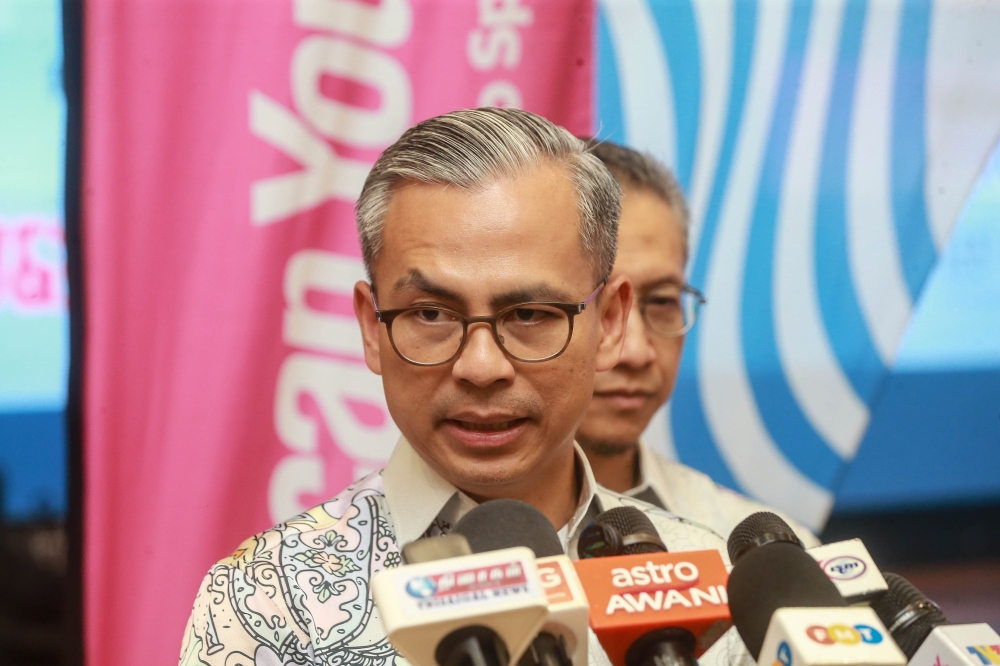
The government will distribute the Royal Commission of Inquiry report on Lembaga Tabung Haji to multiple enforcement and regulatory agencies, signalling a coordinated approach to addressing serious governance concerns at Malaysia's largest Islamic savings institution. Communication Minister Fahmi Fadzil announced that the findings will be forwarded to the police, Malaysian Anti-Corruption Commission (MACC), Bank Negara Malaysia, and the Inland Revenue Board (IRB) for independent investigation and action. The multi-agency referral underscores the severity of issues uncovered during the inquiry, which examined the institution's management and operational practices.
Tabung Haji, which manages savings for Malaysian Muslims preparing for the Hajj pilgrimage, has faced mounting scrutiny over recent years following reports of financial irregularities and management failures. The pilgrimage fund's reputation suffered significantly following various controversies, prompting the government to establish the RCI to conduct a thorough examination of the institution's governance structures and decision-making processes. The inquiry's scope extended to investigating potential breaches of fiduciary duty, compliance failures, and administrative shortcomings that may have affected the institution's financial position and the interests of its 8.8 million depositors.
The involvement of Bank Negara Malaysia indicates that regulatory concerns extend to Tabung Haji's compliance with financial supervision standards and prudential requirements governing Islamic financial institutions. As the central bank, Bank Negara oversees the financial stability and operational integrity of institutions managing public funds, particularly those handling savings intended for religious purposes. The bank's inclusion in the investigative process suggests the RCI findings may contain evidence of breaches in banking regulations or oversight of investment and fund management practices. This layer of scrutiny is particularly significant given Tabung Haji's unique status as both a savings institution and a quasi-governmental body entrusted with managing significant Islamic community assets.
The referral to the IRB points toward potential tax-related findings within the RCI report, possibly involving unreported income, improper deductions, or tax compliance issues among senior management or related parties. Tax authorities will examine whether any individuals or entities associated with Tabung Haji failed to properly report income or engaged in tax avoidance schemes connected to the institution's operations. This dimension of the investigation reflects growing international and domestic pressure on authorities to address financial crimes comprehensively, ensuring that investigations into institutional failures extend beyond governance into potential personal enrichment or money laundering concerns.
The Malaysian Anti-Corruption Commission's involvement is particularly significant, as MACC will assess whether evidence in the RCI report supports investigations into corrupt practices, abuse of power, or conflicts of interest among Tabung Haji leadership and officials. MACC has established expertise in pursuing high-level corruption cases involving public institutions and statutory bodies, and its investigative capacity will be critical in determining whether breaches of fiduciary duty constitute criminal corruption under the Malaysian Anti-Corruption Commission Act 2009. The commission may examine whether decision-makers prioritised personal interests over depositors' welfare or engaged in corrupt relationships with contractors, vendors, or external parties conducting business with the institution.
Police involvement signals that the RCI report may contain evidence of criminal conduct falling under the jurisdiction of the Royal Malaysia Police, potentially including fraud, misappropriation of funds, or criminal breach of trust. Police will coordinate with other agencies to determine whether criminal charges should be filed against individuals implicated in the RCI findings. This prosecutorial pathway ensures that cases meeting the threshold for criminal liability proceed through the courts rather than remaining confined to civil or administrative remedies, providing stronger accountability mechanisms for serious breaches.
For the 8.8 million Tabung Haji depositors across Malaysia, the multi-agency investigation offers some assurance that governance failures and potential misconduct will be thoroughly examined through multiple institutional lenses. However, the referral also raises questions about the timeline for completion, the extent of recoverable losses, and what remedial measures will restore confidence in the institution. Many depositors, particularly those from lower-income backgrounds saving for one of Islam's Five Pillars, have expressed anxiety about the safety of their accumulated savings amid the institution's difficulties.
The referral process reflects Malaysia's commitment to institutional accountability and transparent governance following high-profile cases of corporate and public sector misconduct. By distributing investigation responsibility across multiple agencies with distinct mandates—financial regulation, anti-corruption, criminal law, and tax compliance—the government creates overlapping oversight that reduces the risk of institutional gaps allowing misconduct to escape scrutiny. This approach also enables cross-agency intelligence sharing and coordinated prosecution strategies.
For Southeast Asia's broader financial sector, the Tabung Haji case underscores the importance of robust governance frameworks within Islamic financial institutions. As Islamic finance expands across the region, regulators and policymakers are keenly observing how major institutions respond to governance failures and institutional crises. The thoroughness of Malaysia's investigative response may influence standards and practices adopted by comparable institutions in Indonesia, Brunei, and other ASEAN nations managing Islamic community assets.
The timing of the referral, coming months after the RCI concluded its hearings, reflects administrative processes in compiling and reviewing the final report before distribution to enforcement agencies. Government officials have indicated that preliminary findings revealed systematic issues requiring investigation beyond the RCI's mandate. Authorities emphasize that the referral does not prejudge outcomes of police, MACC, Bank Negara, and IRB investigations, each of which will independently assess evidence and determine appropriate action under their respective legislative frameworks.
Stakeholders now await clarity on investigation timelines, interim measures to protect depositor interests during the investigative period, and potential institutional reforms addressing governance vulnerabilities. The government has signalled commitment to ensuring Tabung Haji emerges from this period with strengthened oversight structures and restored public confidence. The multi-agency investigation represents the substantive phase of accountability, moving beyond the RCI's fact-finding role toward potential enforcement action and institutional remediation that will ultimately determine whether this crisis becomes a catalyst for sectoral reform or a precursor to further institutional failures.

