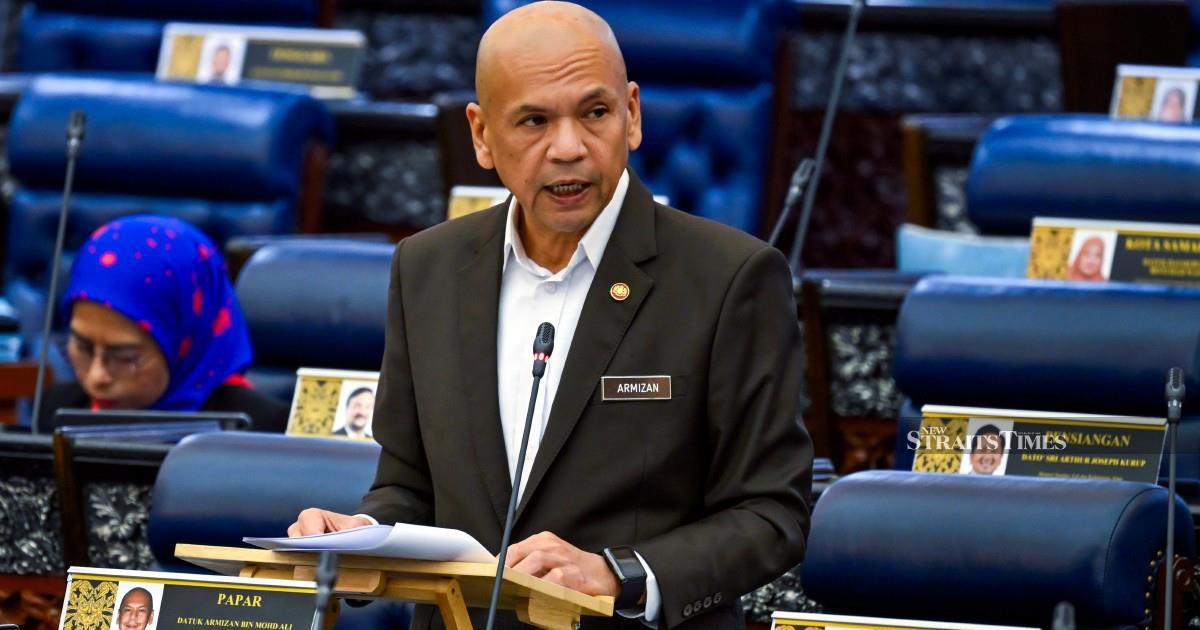
Malaysia's legislators have expressed serious concern following the release of the Royal Commission of Inquiry (RCI) findings on Tabung Haji, warning that the report's conclusions cast significant doubt on the credibility of audit documentation that had been routinely presented to the Cabinet, Parliament and the Malaysian public over an extended period.
The RCI's investigation appears to have uncovered discrepancies or irregularities that fundamentally challenge the reliability of audit reports submitted through official channels. This discovery strikes at the heart of governance accountability, as these documents are meant to serve as independent verification of the financial health and management practices of one of Malaysia's most important pilgrimage fund organisations. The implications extend beyond Tabung Haji itself, touching on broader questions about oversight mechanisms and the integrity of institutional auditing processes.
For Malaysian Muslims who have contributed to Tabung Haji over decades, the findings represent a particular cause for concern. The fund, which manages savings for prospective hajj pilgrims and provides other financial services to members, holds the trust of hundreds of thousands of Malaysians. The RCI's revelations suggest that the public assurance provided by regular audit reports may not have reflected the actual state of the organisation's operations and financial position. This gap between reported and actual conditions undermines confidence in both the fund's management and the audit processes designed to protect member interests.
The timing of the RCI's conclusions also raises questions about how long such issues may have persisted without public knowledge. If audit reports were systematically failing to capture problems within Tabung Haji, then the mechanisms by which Parliament and Cabinet received information about the fund's performance were fundamentally compromised. This raises uncomfortable questions about whether legislative scrutiny and executive oversight were operating on incomplete or inaccurate information.
For the audit profession in Malaysia more broadly, the RCI findings carry significant implications. Independent auditors are expected to conduct rigorous examinations and provide objective assessments of organisations' financial health and governance. If audits of a major national institution like Tabung Haji were inadequate or failed to detect material issues, questions naturally emerge about audit quality control and the effectiveness of mechanisms designed to ensure professional standards across the sector.
Parliamentarians have highlighted that the RCI report's implications extend to the accountability framework itself. When legislative bodies and the public rely upon audit reports to assess institutional performance, the integrity of those documents becomes central to democratic governance. The RCI's findings suggest that this reliance may have been misplaced in the case of Tabung Haji, and lawmakers are now grappling with what this means for oversight of other major organisations.
The RCI investigation appears to have adopted a more forensic approach than routine audits, examining records and practices in greater depth. This raises an important question: why did standard audit procedures fail to identify issues that the RCI subsequently uncovered? The answer likely involves factors ranging from audit scope and methodology to resource constraints and perhaps insufficient independence from the audited organisation's management.
For Malaysian policymakers, the RCI findings underscore the need for strengthening institutional safeguards. The case of Tabung Haji demonstrates that relying on standard audit cycles may be insufficient, particularly for organisations managing public funds or member contributions. Enhanced oversight mechanisms, more frequent and rigorous assessments, and clearer channels for reporting irregularities may all warrant review in light of these developments.
The public reaction to the RCI report will likely influence broader discussions about financial institution governance in Malaysia. Trust in organisations managing Malaysian citizens' savings and investments depends fundamentally on belief in their auditing and oversight processes. When that trust is shaken by revelations of undetected problems, restoring confidence requires not only addressing the specific issues identified but also demonstrating that systemic safeguards have been strengthened.
Laymakers have indicated that the RCI's conclusions demand immediate action. This may include reviewing audit procedures for other similar organisations, establishing independent review mechanisms, enhancing auditor accountability, and ensuring that future audit reports to Cabinet and Parliament incorporate more robust verification processes. The focus must shift from simply accepting audit reports to actively scrutinising whether audit processes themselves are fit for purpose.
Looking ahead, the Tabung Haji situation will likely prompt renewed debate about the role of special investigations like RCIs in exposing governance failures. While royal commissions can be slow and resource-intensive, the Tabung Haji case suggests they may serve a crucial function in uncovering problems that routine oversight mechanisms miss. Malaysian governance frameworks may need to consider whether triggering RCI investigations should be easier when significant public institutions are concerned.
The broader message from lawmakers is clear: audit integrity cannot be assumed. Institutions, whether government bodies or government-linked entities managing public resources, require oversight processes that actively test the adequacy of audit findings. The Tabung Haji RCI report serves as a reminder that safeguarding public trust requires constant vigilance and a willingness to question whether established procedures are delivering the accountability they promise.

