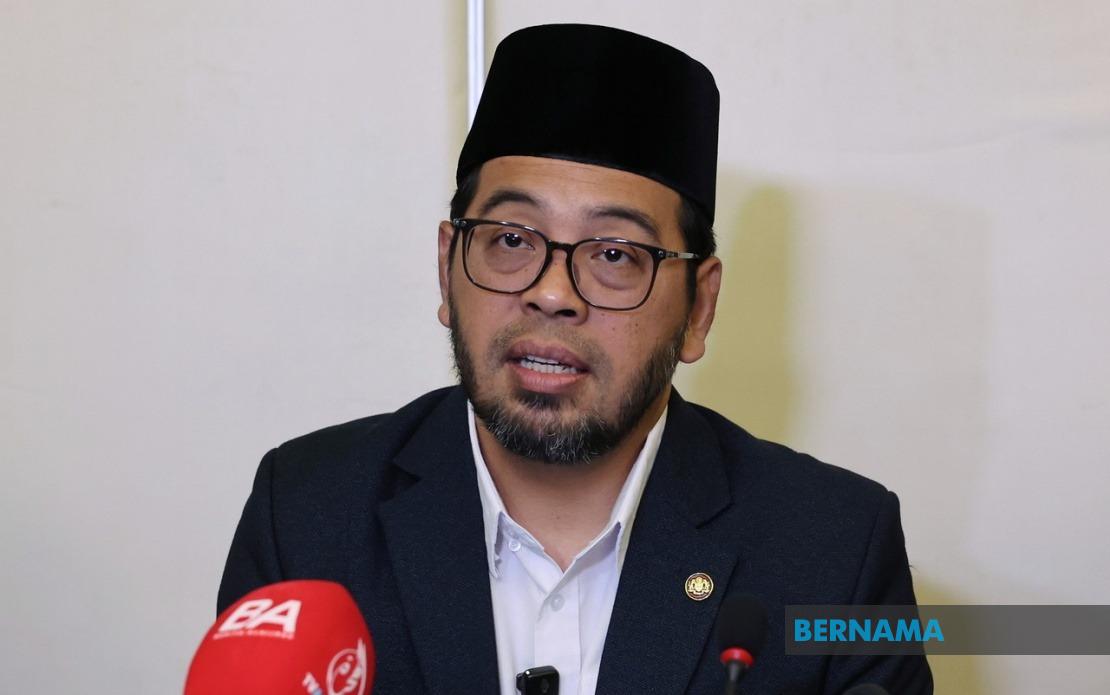
Lembaga Tabung Haji (TH) has substantially strengthened its institutional position following a comprehensive recovery and restoration effort initiated under the current administration, according to Dr Zulkifli Hasan, Minister in the Prime Minister's Department (Religious Affairs). Speaking during a special parliamentary sitting dedicated to reviewing the Royal Commission of Inquiry (RCI) Report on Tabung Haji, Zulkifli attributed this turnaround to deliberate government intervention and fresh institutional leadership that took hold when the MADANI Government assumed power at the end of 2022.
When the current administration inherited oversight of the country's pilgrimage management system, Tabung Haji was grappling with a significant accumulated burden. The institution carried legacy financial and asset-related problems that had accumulated since 2018, with numerous holdings that had become uncompetitive and problematic on the balance sheet. Rather than rushing to impose immediate corrective measures or restrict the institution's autonomy, the government adopted a measured approach that granted Tabung Haji the operational space necessary to undertake thorough internal rehabilitation. This patience and strategic forbearance, Zulkifli indicated, has now yielded tangible improvements in the organisation's health and capability.
The government's decision to publicly release the RCI report represents a watershed moment in transparency regarding Tabung Haji's governance challenges. Following unanimous Cabinet approval on July 29, the 211-page inquiry document, which had been presented to His Majesty on August 30 of the previous year, was declassified and made available for public scrutiny. This marks the first occasion that the RCI's findings have been formally debated in Parliament through a special sitting convened specifically for this purpose. Zulkifli described the release as a demonstration of confidence in TH's renewed institutional strength, suggesting that the organisation is now sufficiently stable and reformed to withstand public examination of its historical weaknesses.
International recognition has bolstered the narrative of TH's institutional renaissance. Over a span of four consecutive years, the organisation has garnered five World's Best Haj Management Awards, a distinction that Zulkifli presented as empirical validation that effective, competent and integrity-centred leadership can successfully rehabilitate even complex institutional structures. These accolades suggest that from an operational standpoint, Tabung Haji's current management is delivering world-class performance in one of its core mandates: managing the logistics and administration of Malaysian pilgrims undertaking the Hajj to Saudi Arabia.
The RCI itself, chaired by former Chief Justice Tun Mohamed Raus Sharif, conducted a focused examination of Tabung Haji's management and operational deficiencies spanning the period from 2014 to 2020. The inquiry body comprised five experts drawn from fields including public administration, banking, finance, Islamic law and accounting. Their investigation identified a range of governance weaknesses and produced 25 recommendations for systemic improvement. By July 30, three-quarters of these recommendations had already been operationalised, demonstrating that the new TH leadership has moved with significant urgency to address the commission's concerns. The remaining recommendations are reportedly being pursued actively, indicating an ongoing commitment to complete institutional remediation.
Parallel to administrative reform, enforcement agencies have launched investigations into the conduct identified in the RCI report. The Malaysian Anti-Corruption Commission (MACC) and police have begun formal inquiries and have already detained several individuals connected to the asset misappropriation detailed in the commission's findings. Zulkifli characterised this coordinated law enforcement response as reflecting the government's uncompromising stance on breaches of trust and abuse of power within public institutions. He invoked a directive from His Majesty Sultan Ibrahim, King of Malaysia, emphasising that investigations must be exhaustive, transparent and relentless, pursuing every lead without exception until the full truth emerges.
The moral and social dimensions of Tabung Haji's crisis cannot be separated from the technical details of its institutional recovery. The organisation holds deposits from millions of Malaysians whose motivations for saving extend far beyond financial returns. Teachers, small traders, rubber tappers, fishermen, taxi drivers, retirees and farmers have entrusted Tabung Haji with their gradually accumulated savings. Parents have placed funds there specifically to enable their children to perform the Hajj pilgrimage. These contributions are not primarily investment capital; they represent a manifestation of faith and spiritual aspiration. When such funds are compromised through mismanagement or dishonesty, the breach extends beyond financial loss to encompass a violation of sacred trust.
Zulkifli articulated this distinction explicitly, arguing that the gravity of Tabung Haji's historical failures cannot be minimised through statistical presentation or obscured through institutional reticence. The sums involved, the number of affected depositors and the years over which mismanagement occurred mean the matter cannot be swept aside or treated as a technocratic problem amenable to quiet resolution. He rejected the notion that political narratives should be permitted to override the interests of individual depositors and the broader Muslim community, implying that accountability and transparent remediation must take precedence over political convenience or reputational management.
The architectural principles underlying the RCI's establishment and the government's subsequent responses reflect this philosophy. Every decision touching Tabung Haji must be evaluated against the test of whether it strengthens depositors' confidence and upholds the institution's fiduciary obligations. When evidence suggests breach of trust has occurred, the imperative is not to minimise or compartmentalise the problem, but to investigate comprehensively, identify root causes, rectify operational vulnerabilities and implement preventative measures against recurrence. This investigative and remedial spirit animated the RCI's work and continues to guide both administrative reform and law enforcement activity.
For Malaysian depositors and for the broader Southeast Asian context, the unfolding situation at Tabung Haji carries several lessons. First, it demonstrates that institutional recovery is possible when determined leadership confronts structural problems candidly rather than concealing them. Second, it illustrates that transparency, though challenging in the short term, builds long-term confidence more effectively than continued secrecy. Third, it underscores the importance of separating financial stewardship from political expediency, a principle that remains relevant across the region's multilayered governance systems. As enforcement agencies pursue investigations and administrative reforms continue, the test of the government's commitment will be whether these principles are maintained consistently throughout the process.
The positioning of Tabung Haji's recovery as substantially complete, combined with the simultaneous launch of investigations into past misdeeds, represents a calibrated strategy. The organisation can move forward operationally with renewed credibility while historical accountability is pursued through law enforcement channels. For depositors whose faith in the institution was shaken by revelations of mismanagement and lost assets, the world-class awards and operational improvements offer some reassurance about TH's present trajectory. Simultaneously, the criminal investigations signal that those responsible for past breaches will not escape consequences. The success of this dual approach in ultimately restoring public confidence remains to be seen, but the government's public commitment to transparency and accountability at least establishes the framework within which restoration might occur.

