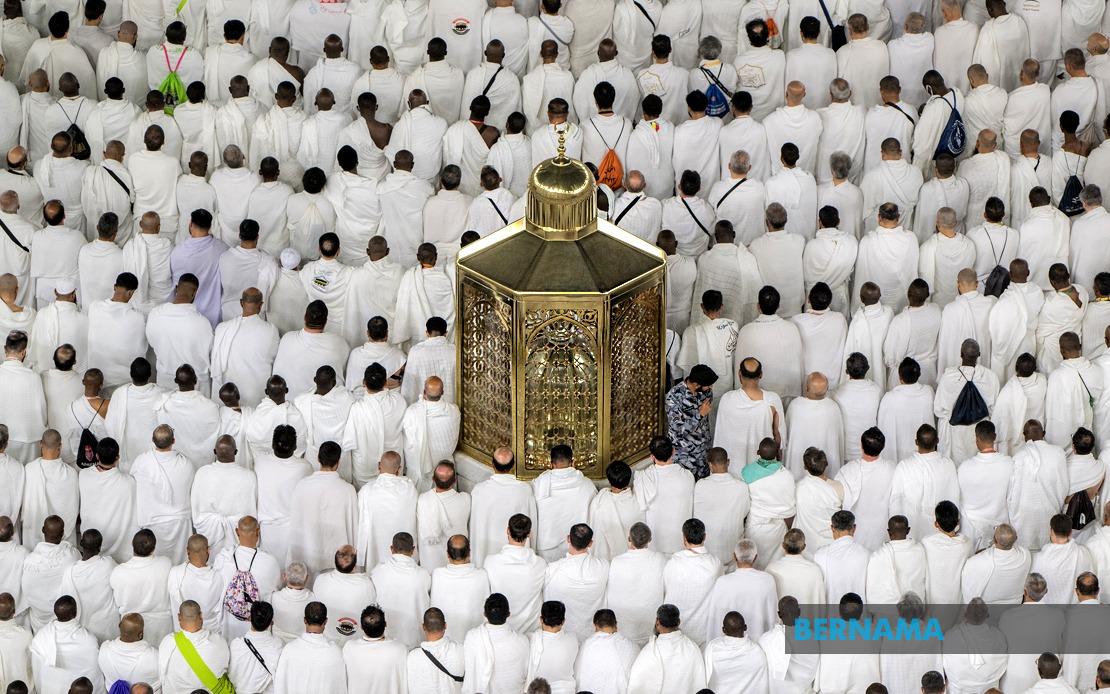
Tabung Haji has reaffirmed its commitment to allocating pilgrimage slots through a transparent queue system that prioritises fairness over special exemptions, according to Marhamah Rosli, the Deputy Minister in the Prime Minister's Department overseeing religious affairs. The statutory fund managing Malaysia's Haj arrangements will continue applying the "first-registered, first-served" principle without introducing preferential categories, a position articulated during parliamentary debate this week. This approach, officials argue, ensures equity across the expanding pool of Malaysian Muslims awaiting their turn to perform the annual ritual in Makkah, while respecting the finite quota allocated annually by the Saudi Arabian authorities.
The decision reflects concerns that introducing fast-track schemes could destabilise the existing queue and create winners and losers among the depositor base. Marhamah explained that special categories would reward certain demographic groups—such as recently retired individuals receiving gratuity payouts—at the expense of those who have accumulated savings over many years while maintaining their place in the waiting list. Such stratification could transform what has traditionally been seen as a transparent, merit-neutral system into one perceived as arbitrary and politically influenced. The government's position suggests that financial liquidity, however desirable, should not leapfrog individuals forward based on their employment circumstances or life stage.
The specific proposal challenging this stance came from Abdul Latiff Abdul Rahman, a parliamentarian representing Kuala Krai, who questioned whether compulsory retirees deserved expedited access given their sudden financial windfalls from gratuity settlements. His argument carried intuitive force: individuals receiving lump-sum retirement payments possess immediate purchasing power that many long-queuing depositors lack, potentially enabling faster haj preparation and execution. However, Tabung Haji's leadership rejected this logic, maintaining that introducing exceptions would fragment the system and invite further requests for preferential treatment from other constituencies—potentially opening pathways for political patronage that could undermine public confidence in the allocation process.
Another dimension of the allocation challenge involves Tabung Haji's recently implemented minimum savings requirement of RM15,000 before issuing a pilgrimage offer, even though the actual cost of performing haj stands at RM33,300. This threshold is designed to filter out depositors who may have accumulated long-term savings but lack immediate liquidity to proceed once selected. The gap between the minimum requirement and full cost acknowledges that prospective pilgrims typically accumulate additional funds through supplementary savings, loans, or family contributions once their turn arrives. For Malaysian Muslims, this phased preparation period represents both a financial reality and a spiritual practice of building anticipation and commitment to the journey.
The allocation discussion occurs against a backdrop of constrained supply. Malaysia received an official quota of 31,600 pilgrims for the current Haj season, a number that falls far short of demand from the nation's 3.9 million Muslims. The Saudi Arabian government determines these quotas based on diplomatic negotiations and demographic considerations, leaving Tabung Haji unable to guarantee rapid progression through the queue regardless of policy adjustments. Marhamah confirmed that additional slots remain exclusively within Saudi Arabia's discretion, though Tabung Haji will continue petitioning annually for increased allocations. This structural scarcity explains why queue management has become so critical—without a fair, transparent system, allocation disputes could generate communal grievances and erode institutional legitimacy.
Depositors currently in the system receive information about their estimated Haj year, allowing them to plan financially, prepare health requirements, and undertake religious education before departure. This forward communication represents an attempt to mitigate the frustration inherent in extended waiting periods. Some individuals may wait 10, 15, or more years before their number reaches the top of the queue, creating a substantial lag between initial deposit and actual pilgrimage. The advance notification enables prospective pilgrims to coordinate with family members, arrange leave from employment, secure medical clearances, and participate in haj preparation courses offered by Islamic institutions across Malaysia.
Tabung Haji also highlighted a parallel protection mechanism: the appeals process. Depositors facing genuine hardship or extraordinary circumstances may submit appeals for consideration outside the standard queue, though such requests undergo evaluation against established criteria. This safety valve prevents the system from becoming mechanistic while preserving its fundamental integrity. Appeals might address situations involving advanced age, terminal illness, or other compelling personal factors that would render waiting years more ethically problematic. By reserving exceptions for demonstrable hardship rather than expanding preferential categories, Tabung Haji attempts to balance compassion with consistency.
The pilgrimage system has faced security challenges that implementation of these allocation rules partly addresses. During the 1447 Hijrah Haj season, the Haj Fraud Task Force—comprising representatives from Tabung Haji, the Royal Malaysia Police, and the Ministry of Tourism, Arts and Culture—recorded no reported cases of package fraud affecting Malaysian pilgrims. This clean record reflects strengthened enforcement mechanisms and the effectiveness of awareness campaigns promoting the "No Visa, No Haj" principle in alignment with Saudi Arabia's "No Haj Without Permit" policy. These safeguards prevent unlicensed operators from exploiting aspirant pilgrims through fraudulent package schemes, protecting both individuals and Malaysia's institutional reputation with Saudi authorities.
The broader policy reflects how government agencies navigate conflicts between competing principles. Efficiency and expedited access appeal intuitively—why shouldn't financially capable individuals move through faster? Yet fairness, transparency, and resistance to stratification represent equally compelling values, particularly in contexts involving religious observance where community trust remains paramount. Tabung Haji's choice prioritises institutional integrity and collective equity over accommodating individual circumstances, a stance that requires political courage given inevitable complaints from excluded constituencies.
For Malaysian Muslims contemplating Haj, this position carries immediate implications. Advancement in the queue depends purely on registration timing, not wealth, age, employment status, or personal circumstances. Those currently in mid-queue positions face lengthy waits, but the system promises that advancement will eventually arrive in orderly fashion. The RM15,000 minimum requirement creates a realistic filter that separates genuine intent from casual interest. Looking forward, Tabung Haji's advocacy for additional Saudi quotas represents the primary avenue for systemic relief—expanding supply remains far more sustainable than fragmenting the allocation process into preferential channels.
The decision also positions Malaysia ahead of potential governance challenges affecting Haj administration across Muslim-majority nations. Countries that introduce special categories often struggle with subsequent political pressure to expand exemptions, creating perception of bias and eroding public confidence. By maintaining a principled stance now, Tabung Haji reduces future institutional risk while signalling to depositors and the broader public that access decisions rest on transparent rules rather than political connections or demographic advantages. This institutional consistency ultimately strengthens rather than constrains the pilgrimage system's capacity to serve Malaysia's Muslim population fairly across generational cohorts.

