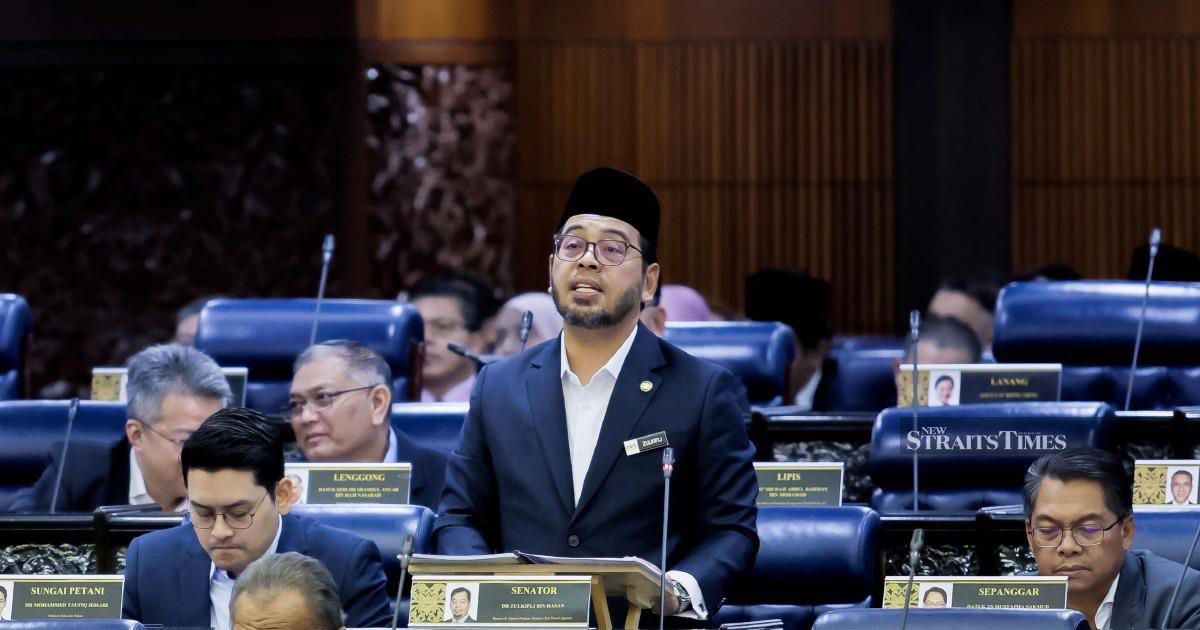
Tabung Haji has escalated its response to the Royal Commission of Inquiry findings by filing a dozen formal reports with both the Royal Malaysian Police and the Malaysian Anti-Corruption Commission. The move signals the pilgrimage fund's commitment to pursuing accountability following an investigation that exposed significant governance and operational failures within the institution.
The decision to lodge multiple reports across the two enforcement agencies reflects the breadth and severity of issues identified in the RCI report. Tabung Haji appears to be treating the findings not merely as a matter requiring internal remediation, but as potential criminal conduct warranting formal investigation by law enforcement. The staggered approach to multiple authorities suggests the organization believes different aspects of the RCI's conclusions may fall under the respective jurisdictions of the police and the anti-corruption body.
The Royal Commission of Inquiry was established to examine the pilgrimage fund's troubled operations, which have been dogged by controversy in recent years. The RCI's mandate encompassed investigation into various allegations concerning the fund's management, financial decisions, and institutional governance. The commission's final report apparently contained sufficient evidence of potential misconduct to warrant Tabung Haji's decision to formally involve criminal investigators.
For Malaysian pilgrims, the news carries particular resonance. Tabung Haji manages the savings of millions of Muslims preparing for their Hajj pilgrimage, making it a trusted repository of personal wealth with deep cultural and religious significance. Any institutional failures or misconduct directly threatens the security of funds entrusted to the organization for one of Islam's five pillars. This public action by Tabung Haji's leadership may be intended partly to reassure depositors that wrongdoing will not be tolerated and that the organization is taking corrective steps.
The reporting mechanism chosen—utilizing both the general police force and the specialized anti-corruption commission—indicates a sophisticated understanding of how to leverage different investigative capabilities. The MACC possesses particular expertise in unraveling complex financial misconduct and corruption schemes, while the police can pursue broader criminal investigations. The dual approach hedges against any suggestion that Tabung Haji was selectively applying pressure on suspected wrongdoers.
Within Southeast Asia's broader context of institutional transparency and governance reform, Tabung Haji's decision stands as a test case of how large organizations respond to public accountability mechanisms. The pilgrimage fund is not merely a financial institution but a national symbol, and its handling of RCI findings will be scrutinized as a barometer of whether Malaysia's regulatory framework can effectively address institutional failures. Competitors in regional Islamic finance and asset management will also observe whether the enforcement agencies produce tangible outcomes from the referrals.
The filing of reports by Tabung Haji itself, rather than waiting for external investigators or political pressure, suggests that leadership has accepted the RCI's conclusions as credible. This stance contrasts with corporate responses in other jurisdictions where organizations have disputed or downplayed commission findings. By cooperating proactively, Tabung Haji's management may be attempting to rehabilitate institutional credibility and position itself as a reformed organization committed to future compliance.
The nature of the 12 separate reports remains to be disclosed in public detail. Some may relate to individual executives or officials identified in the RCI report, while others could concern systemic failures, unauthorized transactions, or breaches of fiduciary duty. The multiplicity suggests that rather than a single consolidated complaint, Tabung Haji's legal and compliance teams have deconstructed the RCI findings into distinct investigable matters for law enforcement to pursue separately and in parallel.
Looking ahead, the enforcement agencies face considerable responsibility in translating the RCI's findings into criminal cases. The investigation, prosecution and potential conviction of senior figures in such a high-profile institution carry implications beyond Tabung Haji itself. Success in holding wrongdoers accountable would reinforce faith in Malaysia's capacity to investigate and punish institutional misconduct, while failure could deepen public cynicism about whether powerful figures within established organizations can evade consequences. For the millions of Malaysians who contribute to Tabung Haji's coffers as they save toward their pilgrimage, the coming investigations represent a crucial moment in determining whether their trust was justified.

