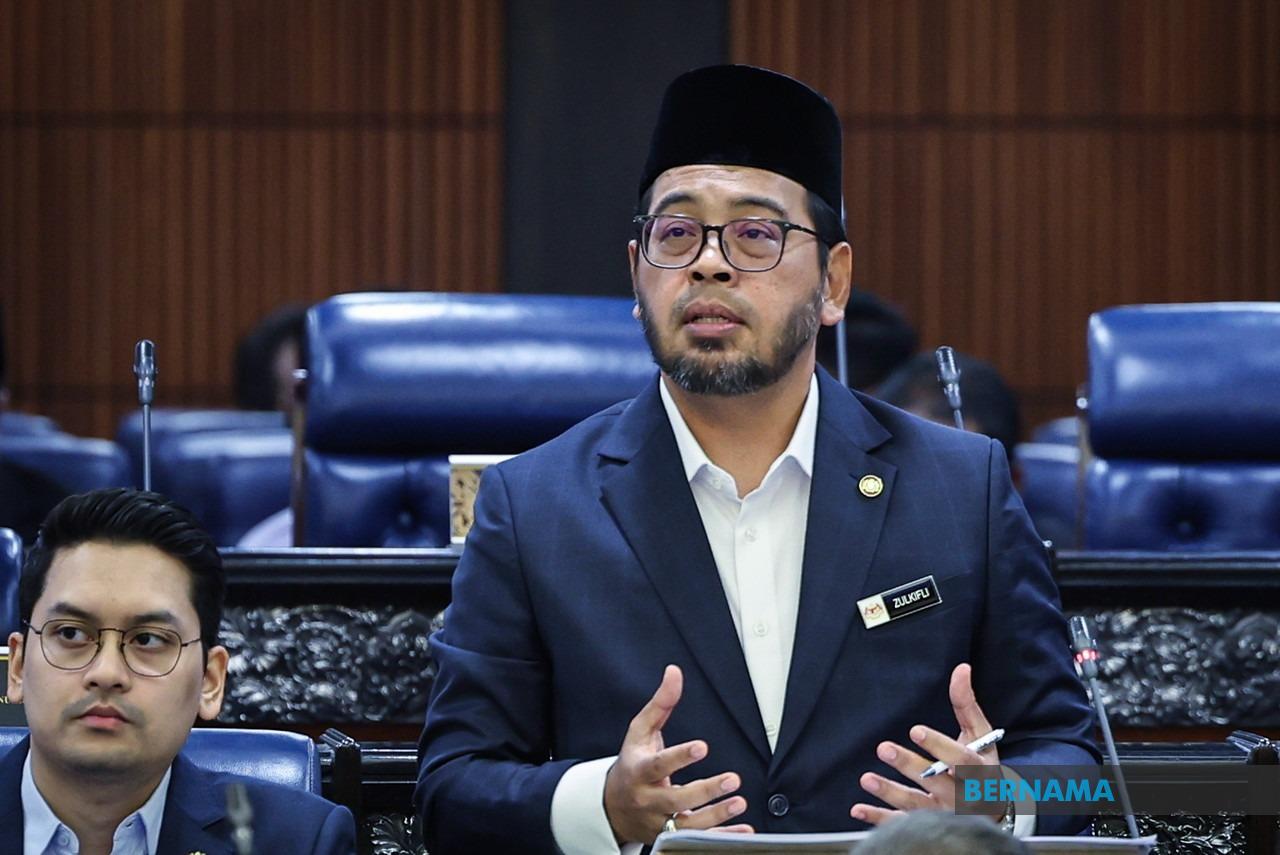
The Malaysian government is moving to significantly overhaul the regulatory framework governing Tabung Haji (TH), the national Islamic pilgrimage fund, through proposed amendments to the Tabung Haji Act 1995 designed to prevent a repeat of the governance failures uncovered during its troubled operational period from 2014 to 2020. Minister in the Prime Minister's Department (Religious Affairs) Dr Zulkifli Hasan announced the reform agenda during a special parliamentary sitting convened to examine the findings of the Royal Commission of Inquiry (RCI) into TH's management, signalling the government's commitment to restoring institutional credibility following years of mismanagement and financial irregularities.
The proposed legislative amendments will introduce clearer legal language defining prescribed accounting standards and establishing explicit penalties for financial misreporting, addressing fundamental deficiencies identified in the RCI's comprehensive investigation. These changes represent a direct response to systemic weaknesses that allowed questionable financial practices to persist within TH's operations, from investment losses to governance lapses that eroded public confidence in an institution entrusted with the savings of millions of Malaysian Muslims preparing for the hajj pilgrimage. The RCI's 211-page report, released publicly on 29 July following government approval to disclose its findings, provided detailed documentation of these institutional failures, which prompted urgent legislative intervention.
A specialized task force chaired by the TH chairman and comprising senior officials from Bank Negara Malaysia (BNM) and the Securities Commission (SC) has been established to examine implementation of the RCI recommendations and oversee the amendment process. The task force has already reached consensus on a critical structural reform: placing TH's fund management and investment activities under the regulatory purview of the Securities Commission, while maintaining hajj pilgrimage operations under the religious affairs ministry's supervision. This bifurcated regulatory model seeks to leverage the SC's established expertise in monitoring investment activities and fund management while preserving the specialized focus on hajj operations within the religious affairs portfolio. Crucially, the government has confirmed that TH will remain a single, unified entity despite this supervisory reorganization, preserving institutional continuity while enhancing sectoral oversight.
The excessive bonus payments that became a hallmark of TH's governance dysfunction have been directly addressed through new personnel compensation policies already implemented by the institution. TH has abandoned its previous practice of awarding disproportionately high bonuses to senior staff and has instead adopted a performance-linked bonus structure tied to institutional financial results and individual achievement of key performance indicators. These revised bonus arrangements now require formal approval from both the religious affairs and finance ministers, introducing ministerial accountability into compensation decisions and reducing the risk of future excess. This supervisory mechanism reflects recognition that internally-driven bonus decisions lacked adequate external checks and had contributed to the perception of institutional self-dealing.
Financial transparency mechanisms have been substantially strengthened in recent years, though now require legislative entrenchment through the proposed TH Act amendments. Since 2022, TH has adopted the practice of announcing profit distribution rates only after completion and audit of annual financial statements, creating a temporal link between verified financial performance and policyholder return announcements. This procedural change directly implements the RCI's recommendation for clearer provisions governing profit distribution calculations and prevents the problematic practice of announcing returns based on unaudited or preliminary financial data. Additionally, TH's financial statements have achieved full compliance with relevant accounting standards since 2018, establishing a baseline of technical financial reporting accuracy that the proposed amendments will enshrine in law.
The RCI's governance recommendations encompass comprehensive restructuring of TH's board and leadership appointment processes, with legislative amendments now being designed to implement these institutional reforms. Future board member selection will be governed by specific eligibility criteria and expertise-based selection procedures emphasizing technical competence and relevant experience. Critically, the amendments will explicitly prohibit active politicians from serving as TH chairman or board members, addressing a fundamental conflict of interest that previous governance arrangements had permitted. This exclusion of serving elected representatives from TH's leadership reflects international best practice for managing government-linked institutions handling public funds and recognizes the inherent tension between political interests and fiduciary duties to policyholders.
In place of politically-connected appointees, TH leadership positions will be filled through merit-based selection emphasizing integrity, capability, and professional experience, aligned with the Bank Negara Malaysia's "fit and proper" criteria framework that has been successfully applied to other financial sector institutions. Dr Zulkifli emphasized that Malaysia possesses sufficient numbers of capable, competent, and trustworthy technocrats and individuals of demonstrated integrity to effectively lead TH without reliance on political connections, suggesting that previous political appointment practices reflected institutional capture rather than genuine necessity. This shift toward professionalized leadership and away from patronage-driven appointments marks a philosophical reorientation in how government views the management of significant public financial institutions handling the savings of ordinary Malaysians.
The timing of these reforms carries significance for Malaysia's broader institutional governance trajectory and its implications for managing government-linked entities. The decision to publicly release the RCI report and its critical findings, rather than suppressing or restricting the document, signalled government acceptance of accountability for past mismanagement and willingness to subject public institutions to external scrutiny. The parliamentary special sitting convened to debate and scrutinize the RCI findings provided MPs opportunity to examine institutional failures in detail and hold government and TH management to account, with Finance Minister II Datuk Seri Amir Hamzah Azizan and Dr Zulkifli scheduled to wind up parliamentary debate, acknowledging the significance lawmakers attached to the matter.
For Malaysian policyholders who have contributed to TH savings accounts intended for hajj financing, these reforms address core concerns about the safety and management of their funds. The enhanced regulatory oversight through Securities Commission involvement, stricter financial reporting standards, explicit penalties for misreporting, and merit-based leadership selection collectively strengthen protections for depositor funds. These measures are particularly significant given TH's role as the primary savings vehicle for millions of Muslims planning to undertake the hajj pilgrimage, a religious obligation requiring substantial financial commitment that many Malaysians begin preparing for years in advance through regular TH contributions.
Regionally, the TH governance reforms reflect broader Southeast Asian patterns of addressing institutional failures through legislative amendment and regulatory restructuring rather than institutional dissolution. The Indonesian hajj fund system and other regional Islamic financial institutions managing pilgrimage savings face comparable governance challenges, making Malaysia's reform approach potentially instructive. By maintaining TH's institutional integrity while fundamentally restructuring its oversight and governance mechanisms, Malaysia demonstrates that institutional failure need not necessitate abandonment of the entire institutional framework, provided underlying causes are identified and systematically addressed.
The proposed amendments represent recognition that governance failures at large public institutions result from specific institutional design failures and human choices, not inevitable characteristics of government-linked entities. By eliminating political interference in leadership selection, introducing professional expertise requirements, establishing clearer financial standards, and creating meaningful regulatory oversight, the reformed TH framework aims to create structural conditions that discourage future mismanagement. Whether these amendments prove effective will depend heavily on consistent implementation and ongoing political commitment to maintaining the separation between political interests and fiduciary duties that the legislation seeks to establish.

