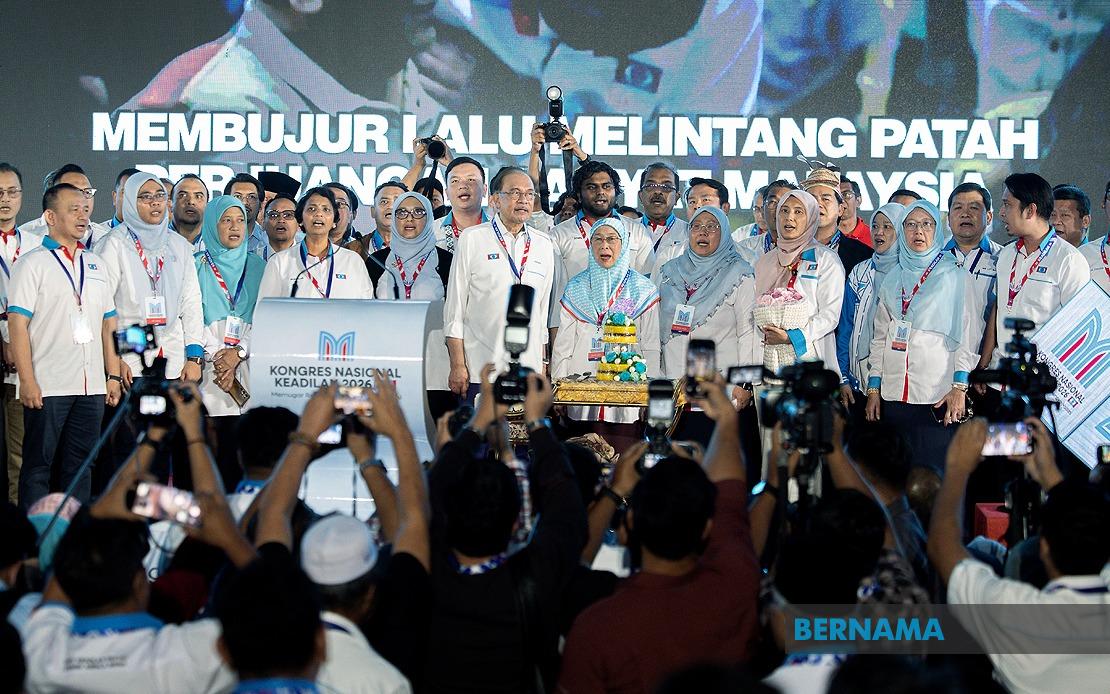
Prime Minister Datuk Seri Anwar Ibrahim has pledged to undertake legislative amendments to the Tabung Haji Act 1995 in a move intended to reinforce safeguards protecting the interests of Muslim depositors and restoring institutional credibility. Speaking as both Finance Minister and leader of the MADANI Government, Anwar framed the proposed changes within a wider programme of administrative reform directed at systematically addressing structural deficiencies across the public sector. The announcement reflects mounting recognition within government circles that institutional weaknesses—whether in regulatory oversight, financial management, or operational transparency—require sustained and deliberate remedial action rather than ad-hoc responses.
Tabung Haji, Malaysia's pilgrimage savings scheme serving millions of Muslim Malaysians accumulating funds for the Hajj pilgrimage, has faced periodic scrutiny regarding fund management practices and investment returns. The scheme operates under a statutory framework that has remained substantially unchanged since 1995, a span during which financial markets, regulatory standards, and public expectations around institutional governance have evolved considerably. By targeting amendments to the governing legislation, the Prime Minister's statement suggests recognition that the current legal architecture may not adequately reflect contemporary standards for fiduciary accountability and transparency. For Malaysian Muslims who entrust their savings to Tabung Haji, such legislative strengthening carries direct implications for the security and management of accumulated pilgrimage funds.
Beyond Tabung Haji, Anwar's remarks pointed toward a comprehensive institutional overhaul encompassing multiple government entities and regulations. Most notably, he indicated that the Universities and University Colleges Act 1971 should face complete repeal without replacement by successor legislation imposing comparable constraints on student expression and political participation. This position signals the government's commitment to dismantling restrictions on campus activism and student freedom of speech—areas where the 1971 Act has historically curtailed student organisations' autonomy. The juxtaposition of Tabung Haji and AUKU reforms within a single statement underscores the administration's view that governance strengthening operates across diverse institutional domains, from financial trusts to educational establishments.
The Prime Minister's emphasis on institutional cleansing reflects a governing philosophy centred on restoring public trust through demonstrable improvements in administrative standards and ethical conduct. He articulated that governance enhancement must involve not merely symbolic gestures but concrete, sustained efforts to identify and remedy operational weaknesses. This framing appeals to constituencies concerned with corruption, mismanagement, and regulatory capture—issues that have featured prominently in Malaysian political discourse and public discourse regarding institutional performance. By prioritising institutional remediation, Anwar positioned the MADANI Government as responsive to public sentiment that previous administrations had permitted governance standards to deteriorate.
Contextualising these reform commitments within the PKR's 2026 National Congress, Anwar reiterated foundational party principles centring on justice, inclusivity, and principled governance. He stressed that PKR, as Malaysia's reformist component within the ruling coalition, must remain uncompromising in its commitment to constitutional reform and institutional accountability. Significantly, the Prime Minister emphasised that the party's authority should serve the Malaysian public comprehensively, regardless of electoral geography or partisan affiliation. This rhetorical positioning—that good governance and institutional strengthening benefit all Malaysians irrespective of state administration or political allegiance—attempts to reframe institutional reform as a non-partisan public good rather than a factional advantage.
The timing of these announcements carries implications for Malaysia's broader governance trajectory and Southeast Asian standards-setting. As regional countries increasingly confront questions surrounding institutional effectiveness, financial sector regulation, and educational freedoms, Malaysia's legislative approach to Tabung Haji and AUKU amendments may influence policy discussions elsewhere. Neighbouring jurisdictions facing comparable institutional challenges may reference Malaysian reform precedents when evaluating their own governance frameworks. Moreover, for Malaysian investors and fund managers, clarity regarding Tabung Haji's regulatory evolution could influence confidence in the scheme's long-term viability and competitiveness relative to alternative savings instruments.
For Muslim depositors accumulating Hajj funds, the amendment process merits close attention regarding specific protective measures incorporated into revised legislation. Previous governance reviews of Tabung Haji have identified concerns spanning investment performance transparency, administrative cost structures, and fund custodianship standards. Amendments addressing these dimensions could materially affect returns and security profiles experienced by scheme participants. The government's commitment to amendment, while indicating recognition of necessity, remains non-specific regarding substantive content. Stakeholder engagement throughout the legislative drafting process will prove essential for ensuring that amended provisions effectively address identified deficiencies rather than introducing alternative complications.
The AUKU repeal proposal, contingent on non-replacement legislation, similarly invites scrutiny regarding implementation mechanics and transitional safeguards. Universities and university colleges would require alternative frameworks governing student conduct, safety, and institutional administration. The absence of replacement legislation creates potential governance vacuums unless existing common law principles, institutional bylaws, and sectoral regulations adequately address matters previously regulated under AUKU provisions. Educational institutions and student organisations consequently face uncertainty regarding the precise legal environment governing future campus operations, necessitating deliberate transition planning by government, institutional leadership, and student representatives.
Anwar's insistence that governmental responsibility encompasses opposition-led states and non-partisan constituencies reflects acknowledgment that institutional reform commands broader legitimacy when perceived as universally beneficial rather than factionally motivated. This positioning distinguishes institutional governance improvements from electoral competition, framing such measures as investments in national institutional quality transcending immediate political calculations. Malaysian states governed by opposition coalitions, including Perak, Terengganu, and Kedah, would ostensibly benefit equivalently from federal institutional reforms alongside coalition-governed jurisdictions. Such inclusive framing theoretically depoliticises institutional improvement agendas, though implementation across diverse political contexts will test whether such commitments translate into consistent practice.
Looking forward, the concrete timeline and legislative pathway for Tabung Haji Act amendments remain unclear from the Prime Minister's announcement. Parliamentary scheduling, stakeholder consultation requirements, and substantive policy deliberations will influence when proposed amendments advance through legislative procedures. Finance Ministry officials and Tabung Haji management will require coordination to ensure that legislative proposals align with operational realities and institutional capacity. Similarly, the complete AUKU repeal without replacement legislation requires careful sequencing to prevent institutional governance vacuums across Malaysia's higher education sector. The coming months will determine whether the government's reform commitments translate into decisive legislative action or extend the dialogue phase characteristic of previous governance reform initiatives.

