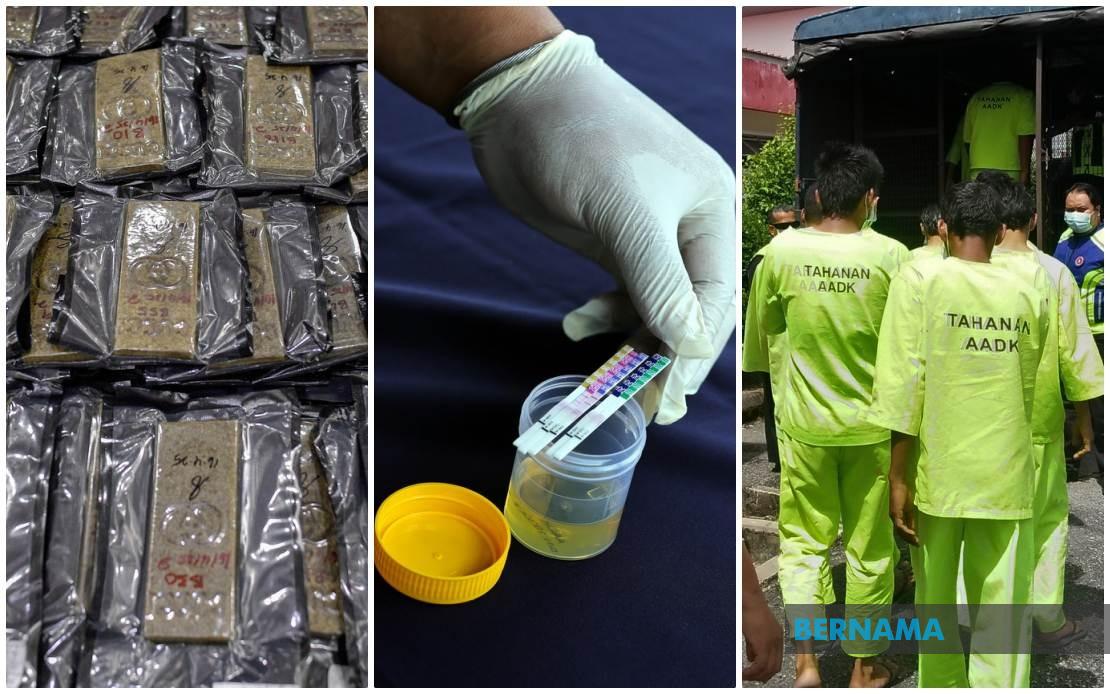
Malaysia's drug abuse crisis has reached alarming proportions, with synthetic substances now dominating the country's narcotics landscape. Home Minister Datuk Seri Saifuddin Nasution Ismail disclosed that 141,817 cases of synthetic drug abuse were documented last year, representing a concerning surge from 145,526 cases in 2023. The trajectory shows no signs of improvement, with 192,852 cases already recorded through 2024, indicating that the problem is accelerating rather than stabilising. These figures underscore a fundamental shift in how Malaysians are abusing drugs, moving away from traditional narcotics toward more potent and more readily available synthetic alternatives.
The dominance of synthetic drugs in Malaysia's abuse statistics cannot be overstated. Amphetamine-Type Stimulants (ATS) and related compounds now account for approximately 70 per cent of all documented drug abuse incidents nationwide, a staggering concentration that reflects changing consumption patterns among users. This shift represents more than a statistical quirk; it signals a fundamental transformation in the nature of Malaysia's drug problem. Where heroin, cannabis, and ketum once dominated illicit markets, synthetic substances have become the preferred choice for abusers across virtually every demographic and geographic region.
Geographic analysis reveals that the problem is far from uniformly distributed across the country. Data compiled from the Ministry of Health, the National Anti-Drugs Agency (AADK), Narcotic Addiction Rehabilitation Centres (Puspen), and the Royal Malaysia Police (PDRM) demonstrates that the east coast region bears a disproportionate burden. The east coast corridor has emerged as the epicentre of synthetic drug abuse, with methamphetamine, locally known as syabu, becoming the substance of choice for users in these areas. This geographic concentration suggests that enforcement strategies may need to be tailored to regional vulnerabilities, with enhanced resources directed toward Kelantan, Terengganu, and Pahang, where the problem appears most acute.
Within the east coast region, specific districts have become particularly notorious as hotspots of drug abuse. Pendang recorded the highest incidence rate, followed closely by Kuala Krai, while Bachok, Besut, and Mersing also rank among the most severely affected areas. These district-level variations point to localised factors—whether related to enforcement capacity, socioeconomic conditions, or supply chain vulnerabilities—that warrant deeper investigation and targeted intervention. The clustering of cases in particular districts suggests that addressing the problem effectively requires understanding the unique circumstances that make these areas attractive to drug manufacturers and distributors.
A particularly alarming development in Malaysia's drug landscape is the emergence of fentanyl as a new threat. Although the substance has not yet reached the epidemic proportions seen with other synthetic drugs, police operations against adulterated vapes have revealed its presence in the market. Fentanyl's potency—dozens of times stronger than morphine—makes it exceptionally dangerous, capable of causing fatal overdoses even in minute quantities. The government has responded by amending the Drug Dependants (Treatment and Rehabilitation) Act and the Dangerous Drugs Act 1952 to classify fentanyl as a scheduled substance, enabling law enforcement to pursue those involved in its manufacture, distribution, and abuse. However, the challenge lies in detecting and preventing the spread of this substance before it gains widespread adoption among the user population.
The demographics of drug abuse reveal that younger Malaysians bear the heaviest burden of addiction. Nearly 75 per cent of the approximately 192,000 drug abuse cases recorded since January this year involved individuals aged between 15 and 39 years old. This concentration among young people carries profound implications for the nation's future, as addiction during formative years can derail educational prospects, employment opportunities, and social development. The fact that a significant proportion of users fall within the school and early career age groups suggests that prevention and early intervention programmes must be substantially strengthened within educational institutions and youth-focused settings.
The prison system reflects the broader societal crisis with stark clarity. Drug-related cases now dominate Malaysia's incarcerated population, with approximately 70 per cent of inmates linked to drug offences, whether serving sentences or awaiting trial. In certain facilities such as Machang, the proportion reaches nearly 100 per cent, effectively transforming these institutions into centres where drug-related criminality is virtually universal. This phenomenon creates a vicious cycle wherein prisons become potential environments for continued drug abuse, rehabilitation, and networking among offenders. The volume of drug-related incarceration also diverts substantial judicial and correctional resources away from other criminal matters, straining the entire justice system.
The National Anti-Drugs Agency has implemented multifaceted approaches designed to address the crisis from prevention through enforcement. Community-based prevention initiatives aim to build grassroots resistance to drug use, while education programmes embedded within schools seek to raise awareness among young people about the dangers of synthetic substances. Family and workplace intervention programmes recognise that addiction affects entire social networks, not merely individual users. Simultaneously, enforcement cooperation between AADK, the Royal Malaysia Police, and the Customs Department targets the supply side, attempting to disrupt production, trafficking, and distribution networks. However, the scale of the problem appears to exceed current operational capacity, suggesting that resource allocation and strategic coordination may require substantial enhancement.
A critical emerging challenge involves the digitalisation of drug markets. Technology has fundamentally transformed how drugs are purchased and distributed, with online platforms enabling transactions that traditional enforcement methods struggle to intercept. These digital marketplaces operate with minimal regulation, creating an environment where buyers and sellers connect without conventional oversight. The shift toward online drug commerce represents a qualitative change in how the drug problem manifests, requiring law enforcement agencies to develop digital expertise, cyber-investigation capabilities, and cooperation with technology platforms. This dimension of the crisis extends beyond Malaysia's borders, as online markets facilitate international trafficking and connect Malaysian users with global supply networks.
Addressing Malaysia's synthetic drug crisis will require sustained commitment across multiple government agencies, civil society organisations, and international partners. The concentration of cases among young people suggests that prevention strategies must begin in primary schools and intensify through secondary education and early workforce entry. Enhanced resources for addiction treatment and rehabilitation services are essential, particularly given the high relapse rates associated with synthetic substances. The emergence of fentanyl and other novel psychoactive drugs demands continuous monitoring and rapid policy adaptation, ensuring that legal frameworks and enforcement tools keep pace with market innovations. Regional cooperation with neighbouring Southeast Asian nations is equally important, given that drug trafficking networks operate across borders and supply chains often originate from regional production centres.