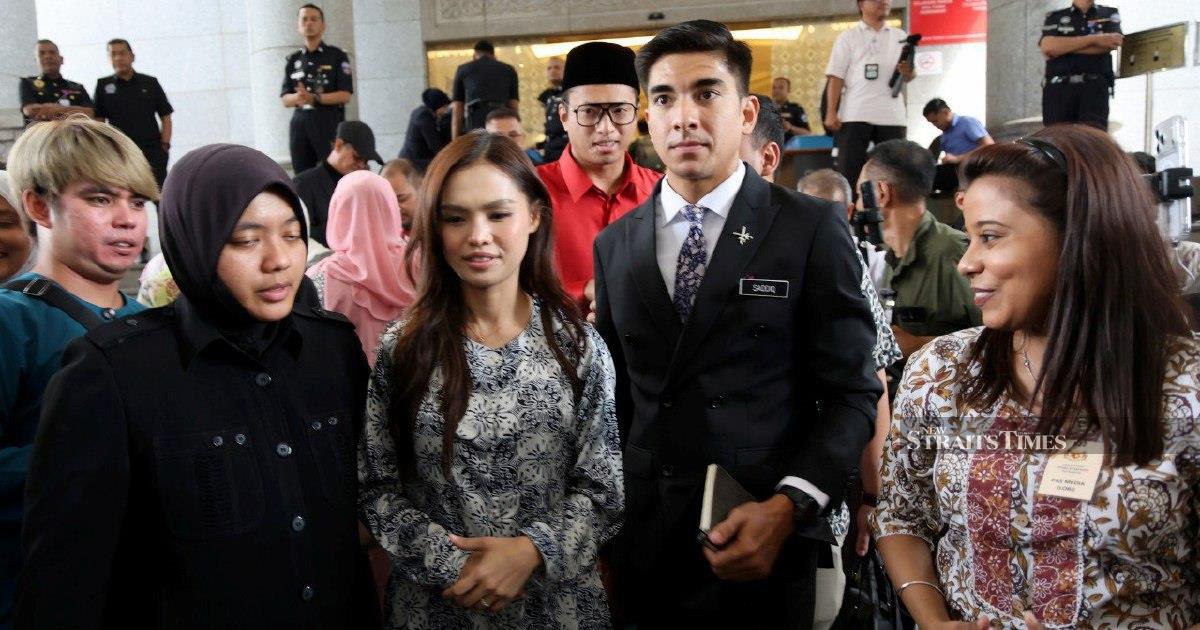
Syed Saddiq Syed Abdul Rahman, the Muar member of parliament, has indicated that he is not yet prepared to contemplate returning to the helm of Muda in the immediate aftermath of his recent court acquittal. The party co-founder, speaking in his constituency, suggested that his immediate priorities lie elsewhere as he navigates a significant personal milestone.
The timing of his remarks comes amid continued speculation within political circles about whether the young politician would seek to reclaim his former position at the youth-centric political movement. His acquittal in court has reignited discussions among party members and observers about the potential for his return to active leadership, yet Syed Saddiq appears content to step back from these conversations for now.
Instead, the Muar MP has made clear that he intends to channel his focus towards his impending marriage, a development that signals a deliberate shift in his priorities away from the intense demands of party leadership. This decision reflects a conscious choice to compartmentalise his professional and personal spheres during what represents a transformative period in his life. For many observers, the announcement underscores how even prominent political figures must balance public responsibilities with private commitments.
Syed Saddiq's position carries particular significance given the current state of Muda, which has experienced considerable turbulence in recent years. The party, which has sought to establish itself as a force in Malaysian politics by appealing to younger voters and promoting reform-minded policies, has faced internal challenges and questions about direction since his step back from the leadership role. His explicit disinterest in an immediate return to the top job may require the party to focus on strengthening its institutional structures and developing alternative leadership options.
The court acquittal itself represents a major turning point for Syed Saddiq, clearing away legal obstacles that had cast a shadow over his political trajectory. For Malaysian politics more broadly, the resolution of legal proceedings against prominent political figures often opens avenues for renewed engagement or repositioning within their respective parties. However, Syed Saddiq's measured response suggests he is not rushing to capitalise on this development to reclaim lost ground.
From a broader political perspective, Muda continues to occupy an evolving space within Malaysia's competitive political landscape. The party has attempted to carve out a distinct identity separate from older established coalitions, targeting demographic groups frustrated with traditional politics. The absence of definitive signals about Syed Saddiq's intentions regarding future leadership may create both challenges and opportunities for Muda as it determines its strategic direction independently of its co-founder's immediate involvement.
The question of succession and future leadership at Muda remains pertinent given the party's relative youth and ongoing efforts to establish deeper roots across Malaysia. While Syed Saddiq's decision to focus on personal matters is understandable and legitimate, it also means the party must accelerate its work in identifying and nurturing alternative leadership talent capable of steering it through the complex terrain of contemporary Malaysian politics. The coming months will likely prove crucial in determining whether Muda can sustain momentum despite this leadership uncertainty.
For Syed Saddiq personally, the decision to defer major political calculations in favour of marriage preparations represents a grounding choice that many might sympathise with. His constituency work as Muar MP will continue regardless, allowing him to maintain his parliamentary responsibilities while attending to his personal life. This separation of duties demonstrates an awareness of the importance of personal relationships and stability, values increasingly prominent in discussions about work-life balance even in high-pressure political careers.
The broader implications for Southeast Asian politics merit consideration as well. Across the region, younger politicians are increasingly finding their way into prominent positions, and how they navigate the intersection of personal development and political ambition offers lessons for their peers. Syed Saddiq's approach—taking time to prioritise a major life transition rather than immediately seizing an opportunity to return to power—may stand as a counterpoint to the perception of relentless political ambition.
Looking forward, whether Syed Saddiq eventually does return to Muda's leadership remains an open question. His recent comments suggest such a decision is not imminent, and may depend on how his personal circumstances evolve and how satisfied he remains with the party's trajectory under its current stewardship. For now, he appears content to watch from a distance while focusing on building his marriage and continuing his work representing Muar's constituents in parliament.

