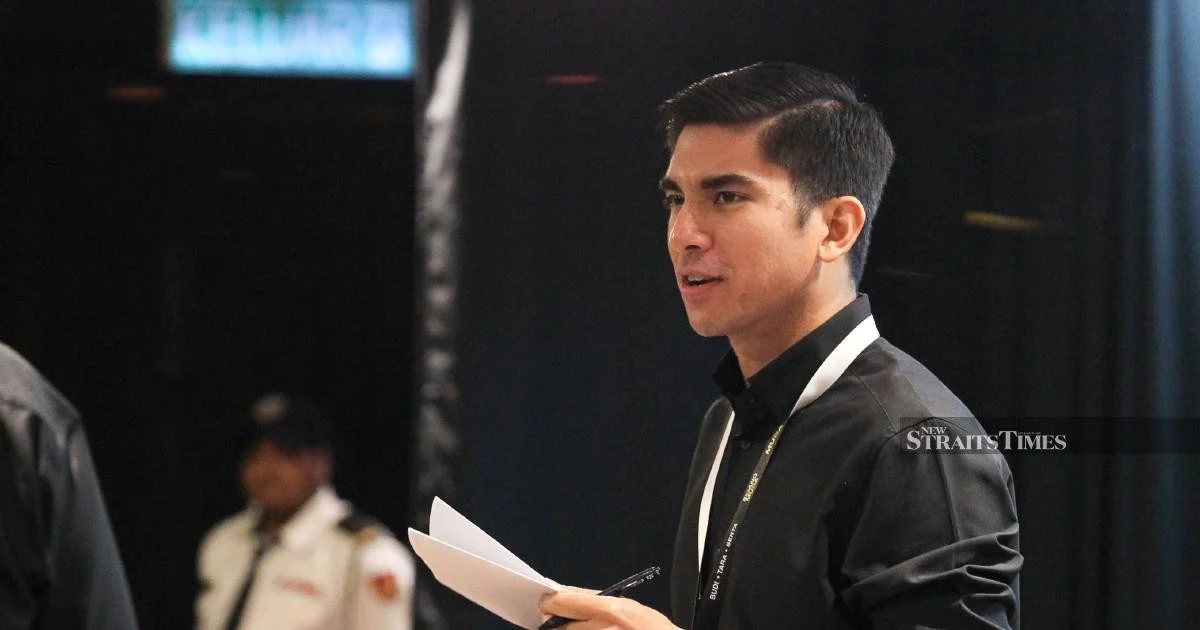
Muar member of parliament Syed Saddiq Syed Abdul Rahman has announced his intention to direct income from a recently undertaken part-time engagement toward community initiatives in his Johor constituency. The sum of RM115,000, derived from this additional professional role, will be allocated to support various constituents' needs and local development endeavours.
The decision reflects broader discussions within Malaysian politics regarding parliamentary representatives balancing multiple income sources with their legislative responsibilities. Syed Saddiq, who represents Muar in the Dewan Rakyat, has positioned this commitment as an extension of his service to the area, ensuring that personal earnings generated outside his parliamentary duties contribute directly to constituent welfare.
Malaysian lawmakers have traditionally faced scrutiny over supplementary income and potential conflicts of interest. The move by Syed Saddiq to publicly commit to channeling these funds demonstrates an attempt to maintain transparency and accountability while pursuing additional professional opportunities. This approach addresses growing public expectations that elected representatives justify and account for external engagements.
The allocation of RM115,000 represents a substantial injection of resources into the Muar constituency. For a parliamentary electorate with diverse socioeconomic needs, such funding can support targeted programmes addressing education, health, economic development, or infrastructure improvements. The specific allocation mechanisms and beneficiary groups have not yet been detailed, leaving questions about implementation and impact assessment.
Within the Malaysian political landscape, particularly in Johor, constituency development and MP engagement remain critical factors influencing electoral fortunes. Constituents increasingly expect their representatives to deliver tangible benefits and demonstrate responsiveness to community concerns. Syed Saddiq's pledge appears calibrated to reinforce his positioning as an active, attentive parliamentarian invested in Muar's progress.
The timing and nature of Syed Saddiq's announcement warrant consideration within broader political contexts. As a younger-generation politician and former Youth and Sports Minister, his actions are often scrutinised by both supporters and detractors seeking to assess his commitment to public service and ethical governance. Such public pledges can either strengthen his constituency base or, if execution falters, generate criticism regarding follow-through.
The sustainability and scalability of this approach remain open questions. If the part-time engagement continues beyond the initial period generating RM115,000, commitments regarding ongoing donations would need clarification. Constituents and observers will likely monitor whether this represents a one-time gesture or the foundation of a recurring arrangement.
For Malaysian voters and political analysts, the broader significance extends beyond individual actions. Discussions surrounding parliamentarians' supplementary income illuminate tensions between compensation levels for elected office and the reality that many MPs pursue additional work to maintain financial viability. This dynamic shapes how politicians allocate time between legislative duties and external commitments.
The commitment also occurs within a context where scrutiny of political financing and personal enrichment among public figures has intensified. Public pledges to redirect earnings toward constituencies serve partly as transparency mechanisms and partly as preventive measures against accusations of self-dealing or profit maximisation at public expense.
Regionally, Malaysia's approach to parliamentary compensation and external income differs across Southeast Asian democracies. Understanding how individual MPs like Syed Saddiq manage these arrangements provides insights into governance practices and accountability mechanisms within the Malaysian political system. The extent to which such commitments become normalised across Johor's delegation and beyond will influence standards for political conduct.
Looking forward, the success of this initiative will depend substantially on transparent implementation and credible reporting of fund allocation. Syed Saddiq's standing with Muar constituents and broader public trust in his leadership will be influenced by whether the pledged RM115,000 manifests in concrete, visible benefits. This reinforces how political credibility ultimately hinges on consistently delivering on stated commitments rather than simply announcing intentions.