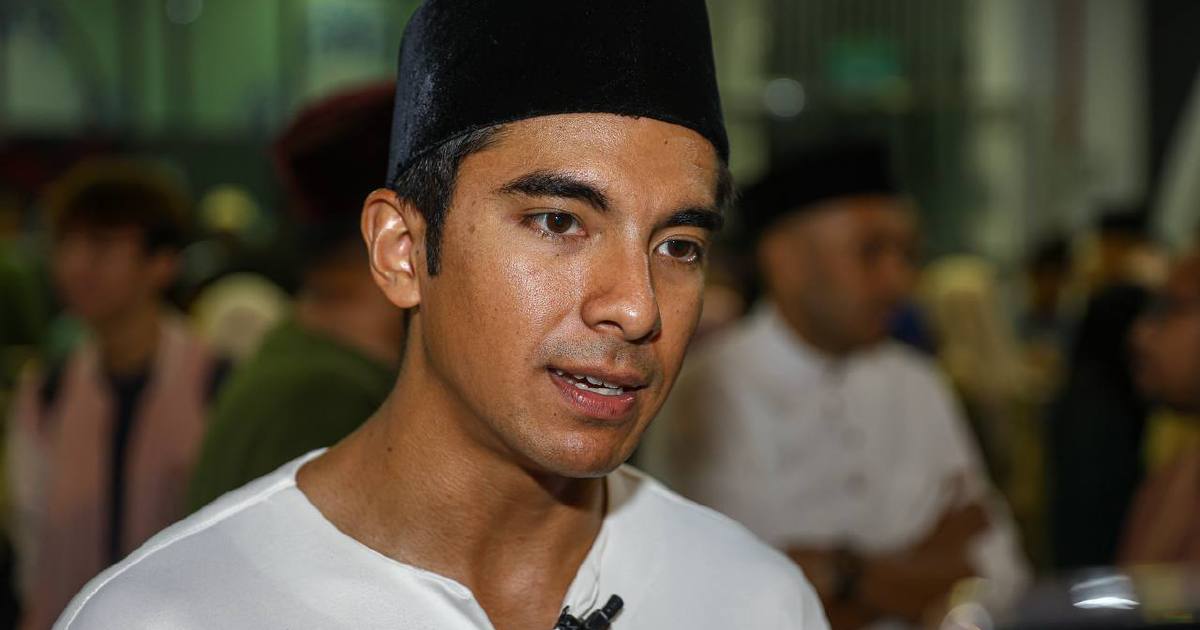
Syed Saddiq Syed Abdul Rahman, the prominent political figure and former Youth and Sports Minister, has struck a contemplative tone regarding an upcoming Federal Court decision that could significantly shape his political future. With the nation's highest court poised to deliver its ruling, the Muar Member of Parliament has opted to frame his uncertainty through a spiritual lens, suggesting he is prepared to accept whatever outcome the judiciary delivers. This stance represents a notable shift in how political figures address potential legal jeopardy in Malaysia's public discourse, where high-profile cases often trigger intense speculation and strategic positioning.
The decision to publicly invoke divine will carries particular weight in Malaysia's political ecosystem, where religious sentiment and personal piety are frequently intertwined with public perception. By adopting this measured approach, Syed Saddiq appears to be signalling both acceptance of judicial authority and a reluctance to wage a public relations battle through media commentary. Such restraint is relatively uncommon in Malaysian politics, where politicians facing adverse legal circumstances frequently mobilise their supporters and mount aggressive defence campaigns through their respective party machinery and social media channels.
Syed Saddiq's political trajectory has been marked by considerable volatility. Once regarded as a modernising force within UMNO and later as an ambitious voice pushing for party reform, his career encountered significant turbulence that ultimately led to his political repositioning. His eventual departure from UMNO and subsequent political movements demonstrated his willingness to navigate Malaysia's complex factional landscape, yet legal challenges have added another dimension to his circumstances. The forthcoming Federal Court judgment represents a critical juncture that could either vindicate his position or impose significant constraints on his political activities.
The timing of such high-profile court decisions carries broader implications for Malaysian political stability. Federal Court rulings involving prominent political figures often serve as indicators of judicial independence and the strength of rule of law within the nation. International observers frequently scrutinise how Malaysia's courts handle politically sensitive cases, viewing such decisions as barometers of democratic health. The institutional independence and credibility of the judiciary remain essential to Malaysia's political credibility, both domestically and internationally.
For Syed Saddiq's supporters and those tracking his political future, the forthcoming verdict will determine the scope of his potential political activities and influence. Malaysian politics operates within carefully calibrated power structures where legal constraints can substantially diminish a politician's effectiveness and viability as a future leader. The consequences extend beyond individual political fortunes, potentially affecting party dynamics within his current political home and the broader opposition landscape.
The invocation of spiritual acceptance also reflects broader patterns within Malaysian political culture, where Islamic faith and personal conviction frequently feature in public discourse. Politicians across the spectrum often reference their trust in Allah and commitment to divine justice, framing their political struggles within a religious context that resonates with the nation's Muslim-majority population. Syed Saddiq's approach aligns with this cultural tradition while simultaneously demonstrating a form of political maturity by declining to engage in adversarial public positioning ahead of the court's decision.
Observers of Malaysian politics recognise that Federal Court decisions affecting prominent figures typically generate substantial reverberations throughout the political system. Party structures, coalition calculations, and leadership succession plans can all be influenced by how such cases conclude. The ruling may also set precedents affecting how future legal challenges involving political actors are adjudicated, potentially shaping the broader relationship between Malaysia's judiciary and political establishment.
The restraint Syed Saddiq has demonstrated in recent months contrasts sharply with the heightened partisan tensions that characterise much of contemporary Malaysian politics. His willingness to place himself in a position of acceptance rather than aggressive advocacy suggests either considerable confidence in the eventual outcome or a pragmatic recognition that public campaign strategies may prove counterproductive in swaying judicial decisions. Both interpretations carry relevance for understanding the current state of Malaysia's political discourse.
As the Federal Court prepares to announce its decision, attention remains focused on how the ruling will influence not only Syed Saddiq's individual circumstances but also the broader political landscape. The verdict will likely be analysed through multiple lenses—as a judgment on specific legal merits, as an indicator of judicial independence, and as a potential catalyst for shifting political alignments. The coming weeks will determine whether Syed Saddiq's spiritual composure reflects genuine equanimity or strategic positioning for whatever consequences may unfold. Regardless of the outcome, the case exemplifies ongoing tensions between Malaysia's legal institutions and its deeply personalised political culture, where individual fortunes remain tightly bound to questions of institutional credibility and judicial authority.

