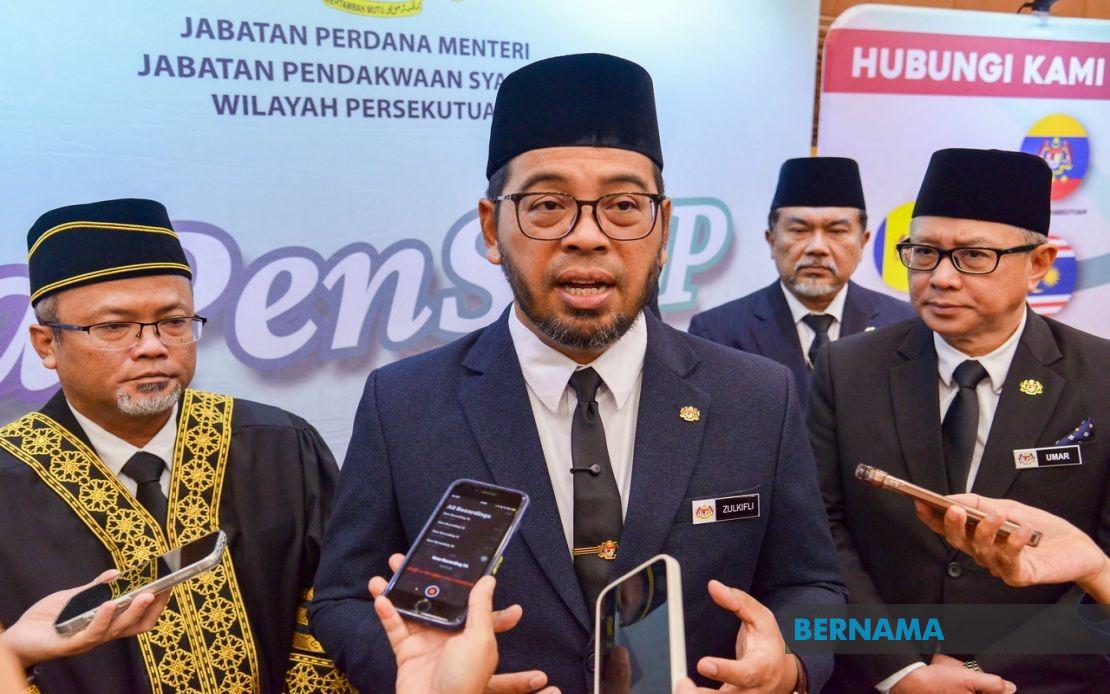
The Malaysian government is moving closer to implementing landmark legislation that would establish a dedicated remuneration framework for Syariah judges, with Dr Zulkifli Hasan, the Minister in the Prime Minister's Department (Religious Affairs), confirming that essential documents are now undergoing final refinement before Cabinet presentation. Speaking at the opening of the second Malaysia Syariah Prosecutors Conference (PePSSM) 2026 in Putrajaya on July 15, Zulkifli described the initiative as being in its conclusive phase, signalling that the long-awaited Syariah Judges' Remuneration Act could move beyond the policy development stage within the coming months.
The proposed legislation represents a significant structural reform within Malaysia's Islamic judiciary system, addressing long-standing concerns about the professional standing and compensation levels of Syariah judges relative to their civil law counterparts. The government's commitment to this initiative reflects broader efforts to strengthen institutional capacity within the Islamic legal framework, recognising that competitive remuneration packages are essential for attracting and retaining qualified judicial talent. This move acknowledges existing gaps in the current system where Syariah judges operate without a unified national pay structure, with compensation previously determined on a state-by-state basis.
Behind the scenes, the Department of Syariah Judiciary Malaysia (JKSM) has been collaborating with various government agencies and religious authorities to conduct comprehensive studies underpinning the proposed act. These investigations extend beyond simple salary calculations, encompassing broader questions about judicial benefits, allowances, pension schemes, and career advancement pathways. The complexity of the undertaking explains why officials emphasise the need for thorough analysis; the legislation must harmonise federal and state interests whilst maintaining fiscal responsibility across diverse economic contexts across Malaysia's thirteen states and three federal territories.
Zulkifli's comments underscore the collaborative nature of the policy development process, particularly regarding consultation with state governments. Since Islamic law and the Syariah courts fall under concurrent jurisdiction in the Malaysian constitutional framework, obtaining buy-in from state administrations is not merely a courtesy but a constitutional necessity. The minister noted that engagement sessions have proceeded successfully, suggesting that preliminary consensus exists amongst key stakeholders about the direction and broad parameters of the proposed remuneration framework. This inter-governmental coordination typically requires months of negotiation to reconcile varying state interests with national objectives.
Parallel to work on judges' remuneration, the government is also advancing a related initiative involving the establishment of a dedicated Syariah Prosecution Department (JPSM). This complementary reform is intended to professionalise the prosecution function within Islamic courts, mirroring structural improvements being made to the judiciary itself. The department proposal remains in policy refinement stages and similarly awaits Cabinet consideration, suggesting that both initiatives may eventually reach the decision-making threshold simultaneously. The linkage between judicial and prosecutorial reform reflects a holistic approach to modernising Malaysia's Islamic legal institutions.
The timeline for these developments gained added momentum in July 2024 when Prime Minister Datuk Seri Anwar Ibrahim publicly committed the government to expediting implementation of the remuneration act. This prime ministerial endorsement elevated the political priority of the initiative, though Zulkifli's subsequent remarks indicate that acceleration must still accommodate the genuine substantive work required for sound policy design. The tension between political urgency and technical rigour appears to be playing out in real time, with officials attempting to maintain momentum whilst ensuring that foundational analysis is neither rushed nor compromised.
For Malaysian legal practitioners and Islamic scholars, the proposed changes carry significant implications regarding the prestige and sustainability of the Syariah judiciary as a career destination. Currently, the profession competes with civil service appointments and private practice opportunities for talented lawyers and Islamic law specialists. Enhanced remuneration and clearer career frameworks could reshape recruitment patterns and potentially elevate decision-making quality within Islamic courts by attracting more accomplished legal minds. The initiative also addresses long-standing complaints from judicial associations about professional parity and working conditions.
From a regional perspective, Malaysia's efforts to modernise its Islamic legal infrastructure merit attention in Southeast Asia and beyond. As Muslim-majority nations grapple with questions about the contemporary relevance and effectiveness of religious legal systems, Malaysia's approach—combining institutional strengthening with professionalisation—offers lessons for other jurisdictions considering similar reforms. The deliberate pace of policy development, emphasising consultation and evidence-based design, contrasts with more hurried approaches adopted elsewhere.
The financial implications of the proposed remuneration act remain an unresolved dimension that will likely shape final Cabinet discussions. Establishing competitive pay scales for potentially hundreds of Syariah judges across the country carries budgetary consequences that must be accommodated within existing religious affairs allocations or justified through supplementary appropriations. Treasury approval will ultimately determine the scope and timing of implementation, meaning that policy consensus alone cannot guarantee swift passage into law. Officials have indicated awareness of these fiscal considerations, though specific budget figures have not been disclosed publicly.
Looking forward, the next critical milestone occurs when the finalised documents reach Cabinet, where ministers will determine whether to approve the legislative framework for parliamentary tabling. Given the current government's stated commitment and the apparent progress in stakeholder engagement, passage appears likely, though the timing remains uncertain. Once Cabinet approves the initiative, parliamentary procedures could extend the timeline further, particularly if the legislation requires amendments to existing statutes or triggers constitutional considerations regarding state-federal jurisdiction.
For observers of Malaysia's governance trajectory, these developments illustrate the government's attempt to address institutional deficiencies within Islamic affairs through systematic reform rather than ad-hoc interventions. The careful, consultative approach contrasts with more dramatic judicial reforms pursued elsewhere, reflecting both constitutional constraints and the minister's evident commitment to building consensus rather than imposing solutions. Whether this measured pace ultimately delivers meaningful institutional improvement will become apparent once implementation commences.

