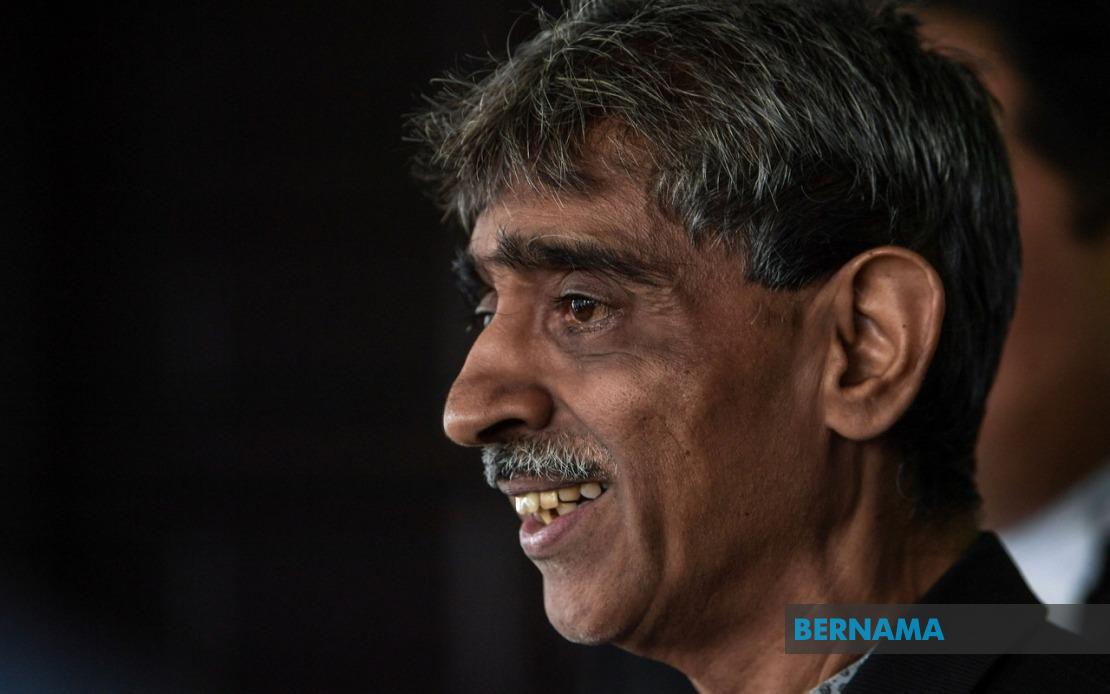
Criminal prosecutions stemming from the Tabung Haji Royal Commission of Inquiry should proceed without delay once investigators have gathered adequate evidence, according to Mohamed Haniff Khatri Abdulla, a lawyer who participated in the inquiry proceedings. Speaking in Kuala Lumpur, he emphasized that resolute action against any wrongdoers, irrespective of their standing or position, represents a critical step in both implementing the RCI's recommendations and restoring faith among the institution's depositors who have endured years of uncertainty.
The strength of public confidence depends fundamentally on visible, decisive follow-through from authorities, Haniff argued. When investigations reach completion and prosecutors determine that sufficient evidence exists to support criminal charges, the legal system must respond promptly by bringing cases before the courts. Such transparency and urgency would demonstrate to Malaysians that their concerns about potential misconduct have been taken seriously and that accountability mechanisms function without favoritism or delay regardless of an individual's rank or political connections.
However, Haniff cautioned that launching prosecutions in specific cases should not be mistaken for the conclusion of the entire investigative process stemming from the RCI report. The distinction matters considerably, he explained, because multiple lines of inquiry remain active simultaneously across different aspects of Tabung Haji's operations. To prevent public misunderstanding or erosion of confidence, authorities must communicate their progress through carefully sequenced announcements that explain the basis for each prosecution while clarifying that broader investigations continue.
The former RCI participant stressed the necessity of strategic public communication to manage expectations and prevent false narratives from taking root. Without proactive explanation from government and enforcement agencies, skeptics might later interpret additional prosecutions as politically motivated rather than evidence-based. By issuing periodic statements demonstrating how criminal action flows directly from investigation findings and admissible evidence, authorities can maintain public trust in the integrity of the process and demonstrate that justice follows facts, not political shifts.
The thoroughness required in such investigations inevitably demands considerable time, Haniff noted. Tabung Haji's complexity spans governance structures, intricate investment transactions, and potential legal violations requiring meticulous examination. Data compiled during the inquiry process indicates that the Royal Malaysia Police and the Malaysian Anti-Corruption Commission have summoned nearly 200 individuals to provide statements. Given this scale and the need to ensure prosecution-grade evidence, Haniff projected that meaningful progress would likely extend across at least another three to six months from the time of his remarks.
To enhance efficiency amid the sprawling investigation, Haniff proposed that the Attorney General's Chambers establish a dedicated unit devoted exclusively to evaluating investigation papers submitted by PDRM and MACC concerning the TH RCI. This specialized team should comprise three Deputy Public Prosecutors with robust experience in both Malaysian Anti-Corruption Commission cases and conventional criminal law. Such coordination would overcome procedural differences between the two enforcement agencies and ensure that investigation papers receive integrated assessment rather than fragmented review by different prosecutors unfamiliar with the complete evidentiary picture.
Former Court of Appeal judge Datuk Yaacob Md Sam reinforced Haniff's perspective, drawing on his extensive experience with Royal Commissions of Inquiry. Yaacob, who served as conducting officer and secretary in multiple RCIs including investigations into significant infrastructure failures, emphasized that RCI findings alone cannot legally form the foundation for prosecution. The Commissions of Inquiry Act 1950 explicitly provides that RCI reports do not constitute legally binding determinations and their contents cannot serve as admissible evidence in either criminal or civil court proceedings.
The practical implication of this legal reality remains critical: enforcement agencies must independently gather, verify, and present evidence through their own investigative procedures before criminal charges can succeed in court. An RCI's role is fundamentally limited to conducting an inquiry within parameters established by the government and formulating findings plus recommendations for subsequent action. This means that even when an RCI identifies apparent misconduct, prosecutors and law enforcement must essentially begin again, conducting fresh investigations to determine whether admissible evidence supports charges for specific criminal offences.
Yaacob underscored that authorities, particularly PDRM and MACC, bear responsibility for thoroughly re-examining all aspects of evidence to establish whether any criminal violations actually occurred among parties involved. This investigative revalidation constitutes an essential intermediate step between the RCI's recommendations and the courtroom. The judicial officer's remarks illuminate why the transition from inquiry findings to successful prosecutions necessarily involves extended investigation periods and cannot be expedited without risking legal vulnerabilities that could undermine cases in trial.
The Tabung Haji situation reflects broader challenges in translating investigative inquiries into criminal accountability within Malaysia's legal framework. The institution has faced mounting criticism over governance lapses, problematic investments, and losses affecting millions of pilgrimage savings accounts. The RCI represented an effort to establish what occurred and identify responsibility, yet that institutional accountability now depends on whether enforcement agencies can construct prosecution-grade cases that withstand judicial scrutiny and satisfy evidentiary requirements that far exceed an inquiry's investigative standards.
For Malaysian citizens, particularly those whose Tabung Haji savings have diminished, the emphasis on patience and procedural integrity may feel frustrating given years of accumulated concern. Yet legal professionals insist that rushing to prosecute without sufficient evidence risks acquittals that would further damage public confidence and potentially allow culpable individuals to escape accountability on technical grounds. The challenge facing authorities involves maintaining momentum and public support while ensuring that prosecutions, when they arrive, rest on foundations sufficiently robust to survive appellate scrutiny.
The coordination structures Haniff recommended could prove essential to accelerating progress without compromising legal quality. By establishing a specialized prosecutorial unit within the Attorney General's Chambers, authorities would create institutional capacity dedicated to TH matters while ensuring consistent evaluation standards across investigation papers from multiple agencies. Such coordination would also reduce delays inherent in routing complex cases through generalist prosecutors juggling numerous unrelated matters, potentially compressing the timeline for bringing cases to trial.
Ultimately, the credibility of Malaysia's approach to Tabung Haji accountability will be measured not only by prosecutions secured but by whether those prosecutions emerge demonstrably from evidence and investigation rather than political calculation. Haniff and Yaacob's counsel suggests that authorities must simultaneously move with urgency in pursuing clear cases while maintaining transparency about ongoing investigations and resisting pressure to accelerate charges lacking adequate evidentiary support.

