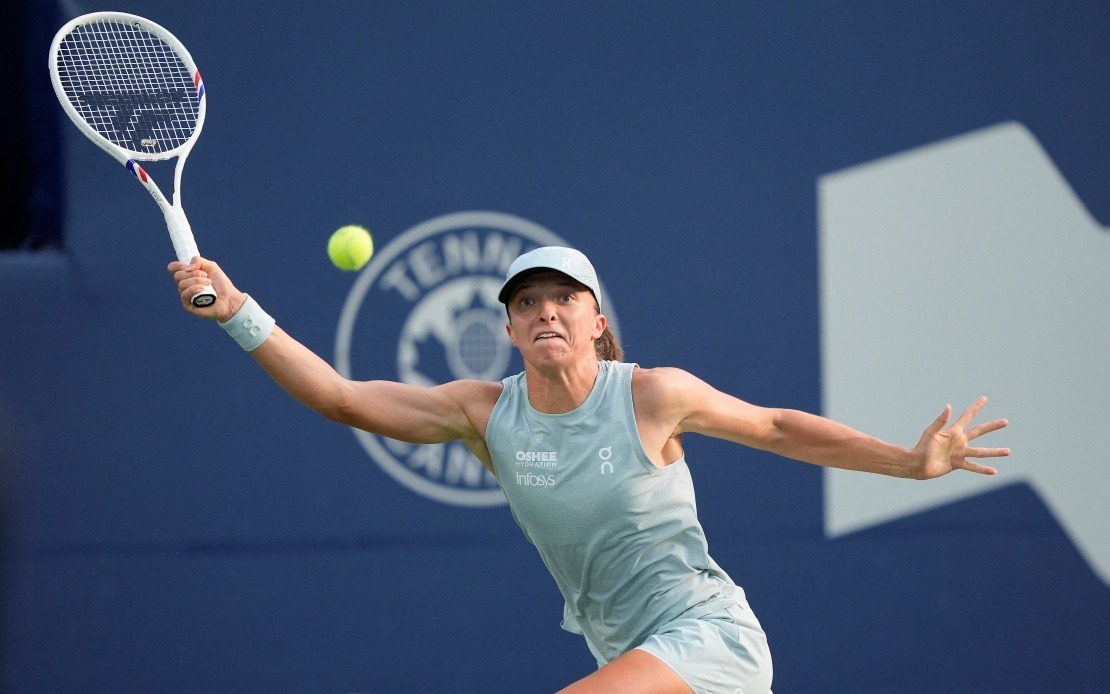
Iga Swiatek has broken an 11-month title drought after a comprehensive victory over Elena Rybakina in the National Bank Open final in Toronto, reasserting her status as one of tennis's elite competitors with a commanding 6-2, 6-3 performance that showcased her consistency and mental fortitude.
The Polish seventh seed's triumph marks a significant milestone in her season, representing not merely a tournament win but a statement of intent following what has been a challenging period marked by injury concerns and form inconsistencies. Swiatek's last title came in September of the previous year, making this victory in Toronto particularly sweet for a player whose ranking and confidence have been questioned by observers and critics alike throughout the earlier months of the campaign.
Rybakina, the world number two seed heading into the match, struggled with fundamental errors that proved costly throughout both sets. The Kazakhstani player's unforced mistake count mounted dangerously as the contest progressed, with particular struggles evident in her backhand wing. Two consecutive double faults gifted Swiatek a crucial early break in the opening set, a gift that the Polish player accepted gratefully and converted into immediate pressure that ultimately carried her through to the first-set conclusion.
Swiatek's performance was characterised by the kind of controlled, relentless tennis that has defined her best form over the years. Rather than explosive displays or dramatic comebacks, she maintained a steady tempo, capitalising on her opponent's mistakes and avoiding unnecessary risk-taking that might have permitted Rybakina an avenue back into the contest. This measured approach proved devastatingly effective, allowing her to consolidate her early advantage and build psychological momentum.
The second set followed a similar trajectory, with Rybakina's continued difficulties with backhand execution proving particularly damaging. She gifted Swiatek another break of serve when two missed backhand shots left her vulnerable at critical moments. The turning point came when Rybakina managed to save one championship point with a strong response, but the reprieve proved temporary as Swiatek seized upon her second opportunity to close out the match and claim the title.
Beyond the statistics and the scoreline, Swiatek's comments during the post-match ceremony offered insight into the mental and emotional dimensions of her journey. She dedicated her victory to everyone experiencing unfair judgment and hatred, a personal statement that resonated with supporters and highlighted the psychological toll that intense professional scrutiny can inflict. Her message to "keep pushing, keep growing, and keep focusing on yourself" reflected a maturity that transcends sport, suggesting she has developed the resilience necessary to navigate the pressures of elite-level competition.
For Southeast Asian tennis enthusiasts and readers, Swiatek's victory holds broader significance as a reminder of the competitive depth at the highest levels of women's tennis. The National Bank Open in Toronto represents one of the sport's marquee events, and Swiatek's performance against the world number two demonstrates that the Polish player remains a formidable competitor capable of defeating the sport's very best on any given day. This has implications for upcoming competitions, including major tournaments where both players are likely to be seeded highly.
The victory also underscores the unpredictable nature of professional tennis, where injury, form fluctuations, and mental state can dramatically alter trajectories. Swiatek's drought of nearly a year made her current triumph more impactful—it is not merely about accumulating titles but about confirming her capacity to return to winning ways after an extended period without capturing major hardware.
Rybakina's performance, despite the loss, does not fundamentally alter her standing as the world number two and one of tennis's most dangerous competitors. However, the manner of defeat—through unforced errors rather than being outplayed by extraordinary shot-making—will likely frustrate her and her coaching team, as it suggests technical issues that require attention ahead of future tournaments.
Looking forward, Swiatek's resurgent form positions her as a genuine contender for remaining major tournaments and season-ending competitions. The confidence gained from ending a significant title drought can provide the psychological platform necessary for success in the sport's biggest stages, where mental strength often determines outcomes as much as technical ability and physical fitness.
For Malaysian readers following international tennis, this tournament exemplifies how professional sport at the highest level combines technical mastery with psychological resilience and emotional intelligence. Swiatek's journey—from struggling through earlier months to claiming a prestigious title—offers an inspiring narrative about perseverance and self-belief that extends beyond the confines of tennis itself.

