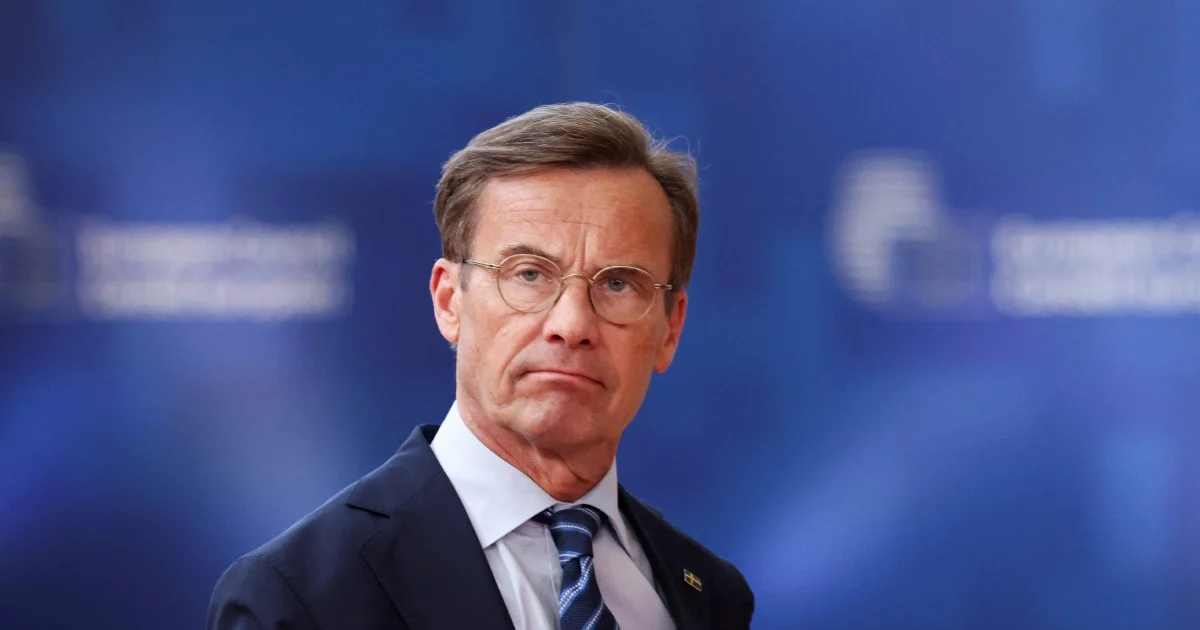
Swedish Prime Minister Ulf Kristersson has built a remarkable track record of deflecting controversy, emerging largely unscathed from a succession of damaging allegations that would have toppled leaders in many democracies. Now, with parliamentary elections looming just three months away, the centre-right politician faces new corruption charges that test whether his ability to dodge accountability will hold firm through the campaign period.
The accumulation of scandals surrounding Kristersson presents a curious case study in political resilience. Throughout his four-year tenure at Sweden's helm, allegations of impropriety have shadowed his administration with regularity, yet he has managed to maintain his grip on power without facing the kind of electoral or legal reckoning that typically follows serious misconduct. This pattern raises questions about the effectiveness of Sweden's institutional checks on executive power, the fragmentation of political opposition, and the Swedish public's apparent fatigue with scandal narratives.
Kristersson's coalition government, formed after the 2022 elections, has navigated turbulent waters marked by internal party tensions, disagreements over welfare policy, and recurrent controversies involving his ministers and close allies. Despite these difficulties, the government has remained in office, suggesting that either the opposition parties lack sufficient coordination to capitalize on these missteps, or that Swedish voters have compartmentalized scandals from their voting calculations.
The fresh corruption allegations represent a potentially more serious challenge than previous controversies, as corruption charges strike at the heart of democratic legitimacy and public trust. Unlike other political missteps that might be dismissed as administrative errors or lapses in judgment, corruption allegations suggest intentional wrongdoing or abuse of office. The timing, arriving just as Swedes prepare to cast their votes, could influence electoral dynamics if the charges gain significant media traction and public attention.
For regional observers in Southeast Asia, Kristersson's ability to weather scandals offers an instructive contrast to political environments elsewhere. Malaysia and other ASEAN nations have witnessed leaders removed from office on corruption charges, with enforcement mechanisms that sometimes operate with vigor. Sweden's apparent difficulty in holding its prime minister accountable, despite democratic institutions and free media, suggests that scandal management depends not merely on having rules and oversight bodies, but on political will to activate them and public engagement with accountability mechanisms.
The Swedish media landscape, traditionally robust in investigating official misconduct, has devoted considerable attention to Kristersson's troubles. However, sustained media coverage alone has proven insufficient to force his departure, pointing to a gap between exposure and consequence in contemporary politics. This disconnect between transparency and accountability reflects broader challenges facing democracies globally, where institutional capacity to punish wrongdoing may lag behind public awareness of it.
Kristersson's political coalition partners, meanwhile, face their own calculation regarding their continued association with his leadership. Coalition governments require constant negotiation and compromise, and abandoning a partner becomes costly in terms of government stability and legislative capacity. This structural reality may explain some of the apparent tolerance for his scandals; removing him risks triggering government collapse and forcing early elections, a prospect that coalition members may view as worse than enduring his controversial tenure.
The timing of the new allegations creates a particularly challenging situation for Swedish voters. Elections represent the primary democratic mechanism for holding leaders accountable, yet voters face a choice between Kristersson's coalition and opposition alternatives without the luxury of a comprehensive trial or judicial determination of guilt. The allegations may sway some voters away from the government, but the electoral outcome depends on whether opposition parties have credible alternatives and appealing policy platforms.
For Kristersson himself, the new charges test whether his previous success in compartmentalizing scandals can continue. Each new allegation potentially erodes public tolerance for controversy, even if his party's core supporters remain loyal. The question becomes whether Swedish voters will ultimately decide that the accumulation of scandals, regardless of individual outcomes, disqualifies a leader from continued trust.
The comparison between Sweden's experience and governance challenges elsewhere in Europe and beyond highlights how scandal outcomes depend on multiple variables: institutional design, media independence, opposition party strength, and public engagement with accountability. Kristersson's persistence in office despite repeated controversies demonstrates that democratic systems alone cannot guarantee consequences without active political and social pressure.
As Sweden approaches its electoral moment, the nation faces a fundamental test of whether accountability mechanisms function as designed. The outcome will resonate beyond Scandinavia, offering insights into how contemporary democracies manage corruption allegations and whether repeated scandals ultimately carry political weight. For Malaysian observers watching regional and global governance challenges, the Swedish experience underscores that having democratic institutions matters less than ensuring they operate with genuine independence and public backing.
The election will provide voters their opportunity to render judgment on Kristersson's record of scandals and his government's policy performance. Whether the new corruption allegations tip the electoral balance or whether he navigates this final challenge as he has others will reveal the true measure of political accountability in modern Sweden.