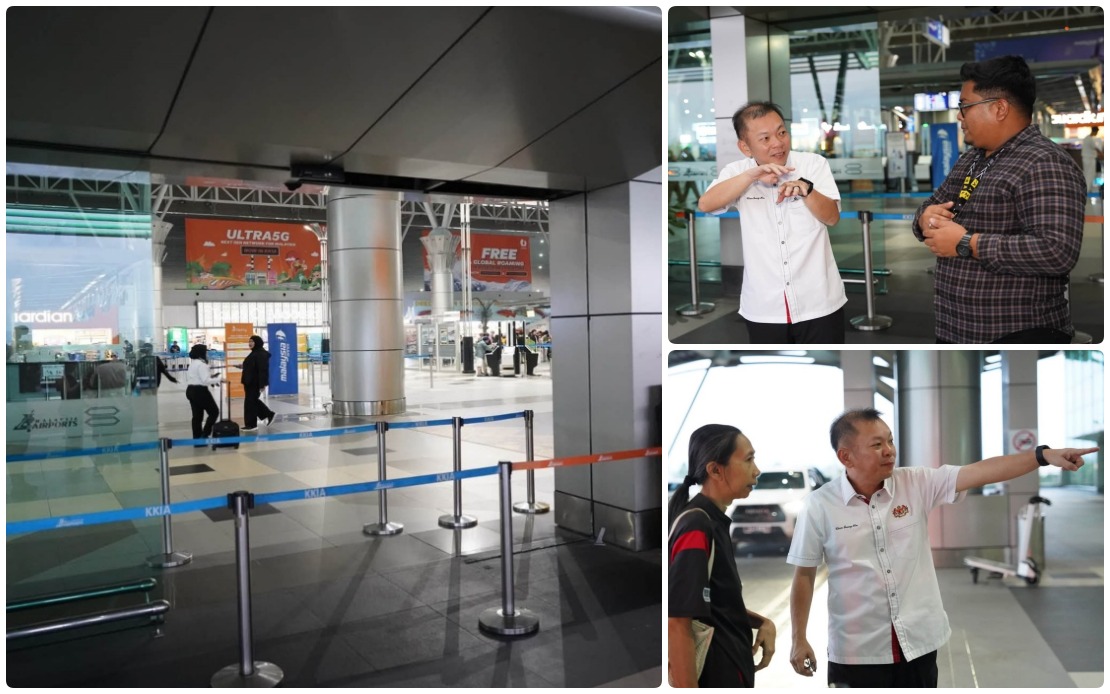
An afternoon incident at Kota Kinabalu International Airport on August 7 saw a female motorist hospitalised after her sport utility vehicle careened into the glass entrance structure serving the Level 3 departure kerbside. The collision, which occurred at approximately 4:20 pm, resulted in substantial damage to the vehicle's front end and shattered the glass door panels at the terminal entrance, yet remarkably caused no injuries among passengers or airport staff members present at the time.
The driver, who sustained only minor injuries in the impact, was promptly attended to by Aviation Security and Customer Service personnel stationed at the facility. Medical responders arrived quickly and transported her via ambulance to a neighbouring hospital for treatment and assessment. Kota Kinabalu District Police Chief ACP Shahrudin Mat Husain confirmed the incident and indicated that authorities have initiated investigations to determine the precise circumstances that led to the vehicle losing control before striking the entrance.
Malaysia Airports, the operator managing Kota Kinabalu International Airport, moved swiftly to contain the situation and restore normal functioning. The company's team cleared the affected area with considerable efficiency, removing the damaged vehicle and associated debris by 6:00 pm—less than two hours after the initial collision. This rapid response prevented significant disruption to the airport's flow of passengers and operations, allowing travellers to proceed through alternative functional entrance points without substantial delays.
Repair work on the damaged entrance doors commenced immediately following the clearance operation, with Malaysia Airports coordinating the restoration of the glass structures. The airport operator issued a formal statement emphasising that the incident did not impede the airport's overall operational capacity, with all other facilities and automated door systems continuing to function normally throughout the afternoon and evening. This resilience demonstrated the airport's ability to manage unexpected events without cascading effects on passenger services.
Deputy Minister of Agriculture and Food Security Datuk Chan Foong Hin, who happened to arrive at the airport shortly after the incident, publicly commended the swift and professional response from the management and personnel. Speaking through social media, he noted that the KKIA team's coordinated efforts ensured the airport's functionality remained intact and that travellers faced minimal inconvenience. His remarks highlighted the importance of emergency preparedness protocols at major transportation hubs, particularly in managing incidents that could otherwise cause significant disruption.
The incident underscores the challenges faced by airport operators in Malaysia when managing unexpected vehicle-related incidents at busy terminals. While vehicle collisions at airport entrances are relatively uncommon, such events raise questions about access control measures, driver safety protocols, and the physical resilience of airport infrastructure. The fact that no passengers or staff were injured speaks to both fortune and the positioning of entry structures that may have prevented more serious consequences had the impact occurred at a different location or time.
Royal Malaysia Police have taken ownership of the formal investigation, with Malaysia Airports pledging full cooperation with law enforcement authorities. The police investigation will focus on determining whether the incident resulted from mechanical failure, driver error, medical emergency affecting the driver, or other environmental factors that caused the vehicle to lose control. Such investigations are crucial for establishing precedents and identifying any systemic issues that might warrant preventive measures at similar facilities across the country.
For Malaysian airport operators and regional aviation authorities, the incident serves as a reminder of the importance of maintaining robust emergency response procedures and ensuring that critical infrastructure remains operational despite unforeseen circumstances. The performance demonstrated by Kota Kinabalu International Airport's management and staff in this instance reflects standard best practices, though it also highlights the vulnerability of modern terminals to vehicle-related incidents. As airports continue to handle increasing passenger volumes, maintaining security while managing vehicular access remains an ongoing operational challenge.
The broader implications for Sabah's aviation sector remain minimal, as the airport returned to full operational status the same day. However, the incident may prompt discussions among airport stakeholders regarding additional safety measures, such as enhanced barrier systems or modified traffic flow protocols at departure kerbsides. Such considerations are increasingly common at major airports worldwide, balancing the need for convenience and accessibility with security and safety imperatives.
The swift recovery and return to normal operations at Kota Kinabalu International Airport demonstrates the infrastructure's resilience and the professionalism of its management during unexpected crises. As investigations proceed into the precise cause of the collision, the focus remains on ensuring that such incidents remain isolated occurrences rather than indicative of systemic vulnerabilities requiring broader intervention.

