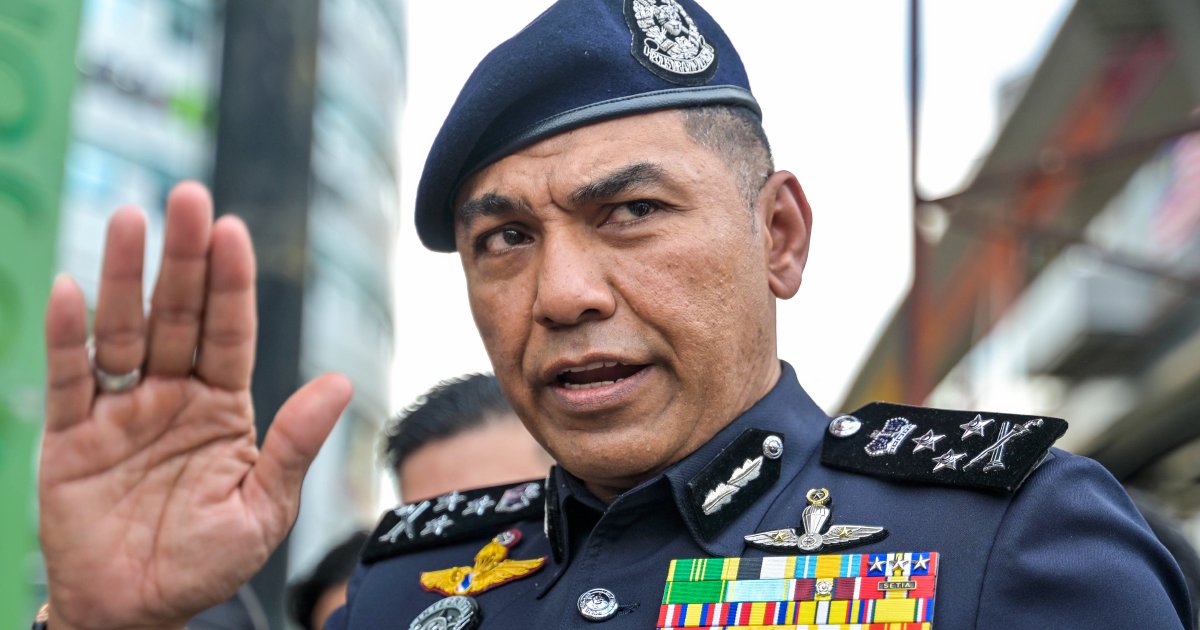
Law enforcement in the Kuala Lumpur metropolitan area have intensified efforts against illegal motorcycle racing networks, securing the arrest of three individuals during a planned operation targeting suspected underground racing organisers. The detentions took place at a residential condominium in Sentul after the suspects attempted to flee the scene upon encountering police personnel, marking another significant development in authorities' ongoing campaign against this persistent urban problem.
Illegal motorcycle racing, colloquially termed as "jockey" operations in Malaysia, represents a substantial public safety concern that extends beyond mere traffic violations. These clandestine racing activities frequently occur on public roads during late evening or early morning hours, creating hazards for unsuspecting motorists and residents. The individuals involved coordinate elaborate networks encompassing not only riders but also organisers, spectators, and betting operations that generate substantial underground revenue. Malaysian authorities have previously identified these activities as contributing factors to fatal road accidents and territorial disputes amongst rival racing factions.
The Sentul location is particularly significant given its proximity to densely populated urban neighbourhoods and major traffic corridors. This residential and commercial zone has historically experienced multiple enforcement challenges, with police conducting sporadic raids to dismantle racing meetup points and disruption zones. The decision to target a condominium suggests evolving tactics by police, moving beyond street-level interventions to investigate suspected organisational hubs where racing operations are coordinated and planned.
The identification of a suspected "jockey" among the arrested individuals points to the hierarchical nature of these underground racing networks. These organisers typically occupy central roles, managing communications between participants, coordinating venues and times, arranging betting mechanisms, and overseeing logistics for racing events. Their removal from circulation is considered strategically more impactful than apprehending individual riders, as dismantling command structures carries greater potential for disrupting ongoing criminal enterprises. Law enforcement agencies recognise that targeting higher-level operatives offers more sustainable effectiveness in combating these operations compared to addressing symptoms through street-level enforcement alone.
The attempted escape by all three suspects adds an additional dimension to police interpretation of their suspected involvement. Flight responses during law enforcement operations are commonly treated as indicators of consciousness of guilt, potentially influencing both investigative direction and prosecutorial strategy. This behavioural element, combined with the operational location and composition of those detained, strengthens the investigative foundation for potential charges relating to organising illegal racing activities, which carry significantly harsher penalties than simple participation or spectatorship offences.
Malaysia's legal framework addresses illegal motorcycle racing primarily through the Road Transport Act and associated regulations, with provisions establishing penalties including vehicle seizure, substantial fines, and imprisonment terms. Recent amendments and enhanced enforcement protocols reflect governmental acknowledgement that conventional approaches have produced insufficient deterrence. The arrest of suspected organisers signals law enforcement commitment to prosecuting cases at levels likely to result in custodial sentences, representing a more aggressive stance than historical practice focused predominantly on rider apprehension.
The condominium-based operation discovered during this intervention reflects adaptation strategies employed by racing networks responding to increased street-level surveillance. Intelligence gathering increasingly focuses on identifying residential and commercial spaces serving as coordination centres, recognising that digital communications combined with physical headquarters enable larger-scale orchestration of racing activities. Police surveillance capabilities and informant networks have evolved accordingly, enabling authorities to trace operational infrastructure rather than merely responding to visible street events.
Beyond immediate criminal implications, these enforcement operations carry significance for urban safety perceptions and residential community confidence. Residents in areas experiencing repeated motorcycle racing disturbances frequently report severe quality-of-life impacts, including noise disruption, perceived security threats, and property damage concerns. Successful police operations translating into sustained prosecutions and convictions publicly demonstrate responsiveness to community grievances, potentially strengthening public cooperation with law enforcement and reporting of illegal racing activities.
The case reflects broader regional challenges with illegal street racing spanning multiple Southeast Asian jurisdictions, including Indonesia, Thailand, and the Philippines, where similar networks operate across metropolitan areas. Cross-border coordination and international movement of participants in high-profile racing events necessitate increasingly sophisticated law enforcement intelligence-sharing and jurisdictional coordination mechanisms. Malaysian authorities' sustained focus on this issue positions the country within a region-wide enforcement context addressing common organised illegal activity patterns.
Immediate investigative priorities following the arrests will encompass digital device analysis, financial transaction examination, and interrogation aimed at identifying additional network participants and organisers. Police will likely pursue charges encompassing illegal racing coordination, unlicensed betting operations, and potentially related offences depending on evidence emerging during investigation. The detention of a suspected high-level organiser simultaneously opens investigative pathways toward other operational nodes within broader racing networks, potentially enabling enforcement cascades extending beyond these three individuals.
Institutional responses to illegal motorcycle racing have gradually escalated over recent years, reflecting recognition that isolated enforcement efforts achieve limited sustainability against entrenched underground cultural phenomena. Integration of technology-based surveillance, community reporting mechanisms, and intelligence-led policing targeting organisational structures rather than solely visible participants represents evolving strategic sophistication. These Sentul arrests exemplify this transition toward network-focused interventions designed to dismantle operational infrastructure supporting illegal racing enterprises across Malaysian urban centres.

