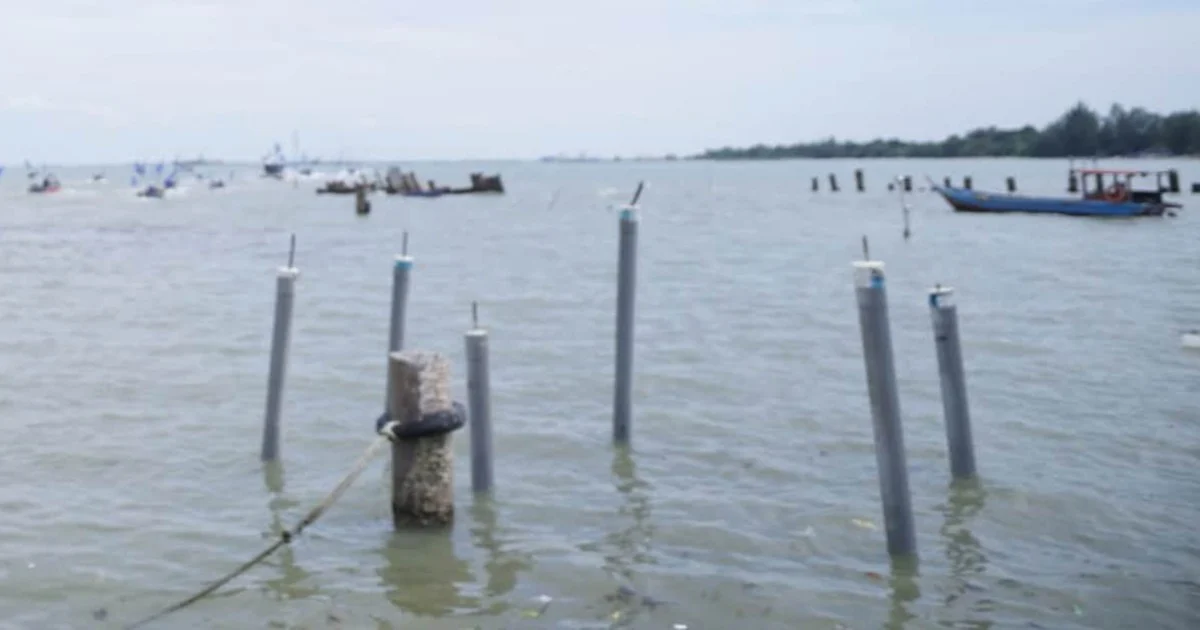
The community operating at Medan Selera Sungai Rengit in Kota Tinggi is entering a critical period as they look to the elected representative from the 16th Johor state election to finally address the grinding infrastructure deficiencies and security concerns that have characterised their existence for close to a decade. Traders and fishermen at the site have endured prolonged uncertainty about their future, conducting business from what was always meant to be a temporary location while fundamental services remain inadequate.
The Medan Selera Sungai Rengit operates as an informal commercial hub where a mixture of food vendors and fishing-related traders serve both regular customers and passing traffic. Despite the apparent vibrancy of commercial activity at the site, the underlying challenges have steadily accumulated over the years. The absence of permanent infrastructure—from basic utilities to proper market facilities—has created a precarious operating environment that leaves vendors vulnerable to disruptions and unable to invest meaningfully in improving their businesses.
What distinguishes this particular situation is the compressed timeline that has seen a temporary arrangement calcify into a permanent condition. Nine years is a substantial period in commercial terms, sufficient for small operators to have built lives and livelihoods around their stalls, yet the uncertainty persists. This extended limbo has created psychological strain alongside practical hardship, as traders remain unable to plan with confidence or expand their operations knowing their tenure remains contingent.
Security represents another dimension of the problem that extends beyond mere physical infrastructure. A marketplace that lacks proper lighting, clear access routes, and visible supervision becomes vulnerable to petty crime and disorder. For traders who work long hours and fishermen who may arrive or depart at irregular times, these vulnerabilities translate into constant stress and potential financial losses from theft or damage. Customers may also hesitate to visit a location perceived as unsafe, further undermining commercial viability.
The appeal to the newly elected assemblyman reflects a broader reality in Malaysian governance where local representatives often become the primary point of escalation for grassroots concerns. This concentration of responsibility on a single elected official—rather than systematic, responsive institutions—places considerable weight on individual initiative and political priority-setting. The traders' optimism suggests they believe this particular representative will treat their predicament as urgent rather than perpetually deferring it to future terms or higher authorities.
From a broader economic perspective, the situation at Sungai Rengit illustrates how informal and semi-informal trade sectors often operate in Malaysian towns. These markets serve essential functions in providing affordable goods and services to local communities while offering modest livelihoods to entrepreneurs with limited capital. Yet their informal status sometimes leads authorities to treat them as temporary expedients rather than permanent economic features deserving proper planning and investment. The result is persistent underinvestment and neglect.
The Kota Tinggi district context adds another layer to understanding this issue. As a municipality in Johor that encompasses both urban and rural elements, infrastructure challenges here are likely replicated across numerous similar locations throughout the state and region. The way the new assemblyman responds to this particular constituency's needs will establish a pattern for how he approaches governance more broadly, particularly regarding marginalised commercial communities.
For traders and fishermen at Medan Selera Sungai Rengit, the change in representation offers both opportunity and uncertainty. A representative genuinely committed to resolving their situation would need to navigate complex processes involving multiple government agencies—local council, state administration, perhaps federal bodies depending on land tenure. This requires political will, technical competence, and the ability to forge consensus among institutions that may have competing priorities or budgetary constraints.
The fundamental appeal being made is straightforward: after nearly a decade of temporary status, the community deserves clarity about its future. This clarity could mean either permanent facilities with proper infrastructure and security arrangements, or if relocation is inevitable, transparent timelines and support for transition. The current state—indefinite limbo with deteriorating facilities—serves neither business viability nor community stability.
For Malaysian policymakers observing similar situations across the country, the Sungai Rengit case raises important questions about how informal commerce is governed and supported. Rather than treating these markets as nuisances to be tolerated or cleared, a more productive approach would acknowledge their economic and social value while providing systematic infrastructure upgrades and formalisation pathways. This would benefit operators through improved security and services while giving municipalities better oversight and revenue opportunities.
The traders' faith in their newly elected representative will be tested as months progress and visible progress either materialises or fails to appear. In the Malaysian political context, such grassroots expectations represent both an opportunity for responsive governance and a potential source of frustration if institutional barriers or political priorities prevent action. The outcome here will matter not only for Sungai Rengit's traders but as an indicator of how state government handles the concerns of its most vulnerable commercial constituencies.

