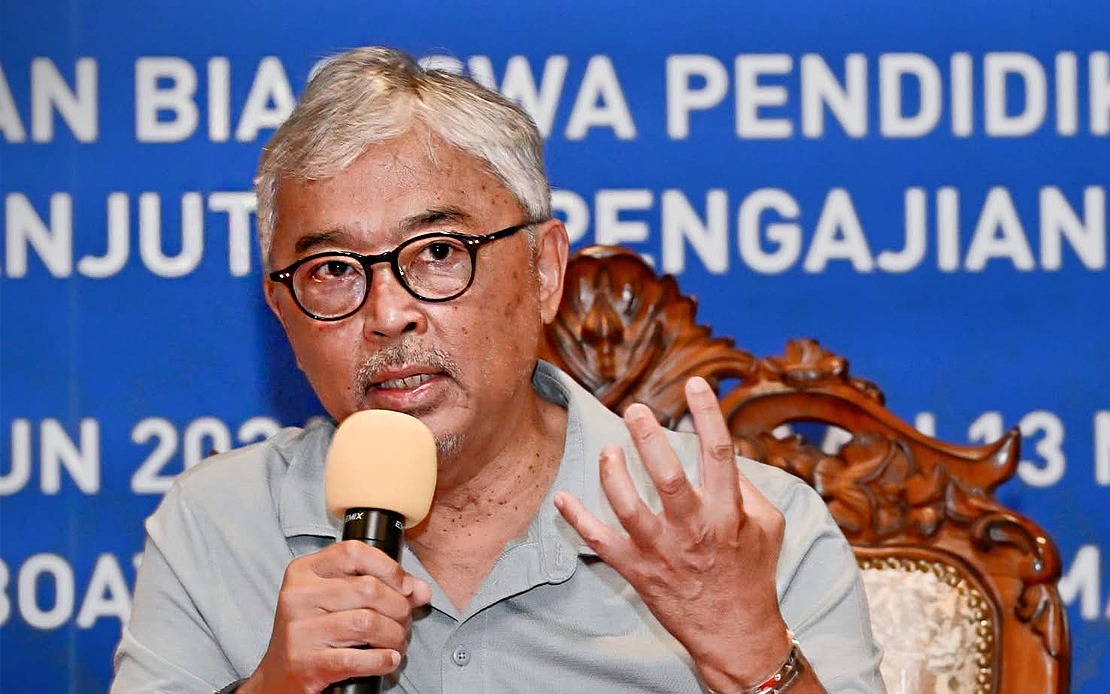
The Sultan of Pahang, Al-Sultan Abdullah Ri'ayatuddin Al-Mustafa Billah Shah, has made an impassioned appeal to higher education institutions across the state to expand scholarship opportunities for students hailing from Tioman Island. Speaking through an official statement, His Royal Highness emphasised that such initiatives remain crucial for developing talent pools and human capital from underserved rural and island communities, areas that have historically faced geographical and economic barriers to educational advancement.
The Sultan's intervention comes on the heels of Institut Jantung Negara University College (IJNUC) awarding scholarships to two exceptional Tioman Island students, an accomplishment His Royal Highness has publicly praised as worthy of emulation. By highlighting IJNUC's contribution, the Sultan effectively positioned the medical institution as a benchmark for corporate social responsibility within Pahang's higher education landscape, signalling that other universities in the state should view such scholarship schemes not merely as charitable gestures but as institutional obligations toward equitable development.
In remarks delivered during the IJNUC scholarship presentation ceremony, Al-Sultan Abdullah articulated a vision of inclusive educational access that transcends geographical isolation. His emphasis that "even though they are far from the mainland, they are still our children" underscores an important principle often overlooked in policy discussions: that proximity to economic centres should not determine eligibility for quality education. This framing reintroduces social equity as a foundational concern for Pahang's development agenda, particularly relevant given Malaysia's ongoing commitment to regional balance and inclusive growth.
The Sultan directed pointed expectations toward both scholarship recipients, invoking language that reflects broader societal hopes invested in their success. By declaring that "failure is not an option" and positioning the scholars as benchmarks for their island community, His Royal Highness elevated their academic journey beyond individual achievement to collective aspiration. This rhetorical strategy underscores a critical reality: students from marginalised communities often carry disproportionate psychological and social weight, representing not only their own futures but perceived possibilities for their entire regions.
Practical guidance offered to the recipients—maintaining discipline, managing time effectively, and sustaining academic focus during their studies in Kuala Lumpur—acknowledges the transition challenges faced by island-born students entering urban tertiary institutions. These concerns reflect genuine obstacles: adaptation to unfamiliar environments, financial pressures, and psychological distance from support networks. By explicitly addressing these dimensions, the Sultan demonstrated nuanced understanding of the barriers scholarship recipients typically encounter beyond mere tuition coverage.
The Sultan's commendation of IJN extended beyond its immediate scholarship initiative to encompass the institution's broader engagement with Pahang communities. His recognition of IJN's annual corporate social responsibility programmes, particularly those reaching remote settlements like Kampung Bantal, positioned philanthropic outreach as integral to institutional legitimacy and excellence. This framing carries implications for other universities and corporations: that community investment represents not peripheral activity but core institutional purpose, especially for organisations claiming regional leadership.
International dimensions of IJN's recognition further contextualise the Sultan's endorsement. By highlighting the institution's status as one of Asia's premier cardiac care centres with globally acknowledged expertise, His Royal Highness drew a connection between medical excellence and community responsibility. This alignment matters for Malaysian higher education discourse, challenging any notion that institutional prestige and service to underserved populations operate in tension. Instead, IJN's example suggests these dimensions reinforce one another, with genuine excellence encompassing both advanced medical capabilities and equitable access.
The Sultan's personal acknowledgment of IJN's role in his own healthcare created an additional layer of institutional legitimacy while humanising the relationship between leadership and educational institutions. This personalisation, however subtle, reinforces patronage networks characteristic of Malaysian institutional culture while underscoring the Sultan's active engagement with development initiatives across his state. Such demonstrated interest typically generates follow-on commitments from other institutions seeking to align with royal priorities.
For Tioman Island specifically, the scholarship initiative addresses longstanding educational accessibility challenges. The island, despite its proximity to Peninsular Malaysia, has experienced historical educational underinvestment relative to mainland areas. Expanding tertiary education access directly counters brain drain patterns, whereby talented youth have historically left for mainland education without necessarily returning. Scholarship programmes that simultaneously cover tuition and provide pathways to recognised institutions strengthen retention capacity while building local professional expertise.
The broader policy implications extend across Southeast Asia, where archipelagic and remote geography creates analogous educational access problems. Malaysia's experience with targeted scholarships for island communities potentially offers replicable models for Indonesian, Philippine, and Thai counterparts facing similar challenges. The Sultan's public championing of this approach elevates it from isolated charitable gesture to strategic development priority, signalling that regional governments should institutionalise rather than circumstantialise support for geographically marginalised populations.
Moving forward, the Sultan's call likely creates normative pressure on other Pahang institutions to launch comparable initiatives. Universities interpreting royal preferences as implicit expectations frequently accelerate programme development, particularly regarding scholarship expansion. Public and private institutions may now view Tioman-focused scholarship schemes as important for demonstrating institutional commitment to the Sultan's development vision, creating competitive dynamics that benefit prospective island students.
The emphasis on academic excellence and merit as selection criteria remains significant, avoiding purely need-based approaches that might inadvertently stigmatise recipients. By celebrating "academic excellence" alongside opportunity provision, the Sultan reinforced that scholarship recipients represent genuine talent rather than charity cases, an important psychological distinction affecting both recipient self-perception and institutional peer recognition. This framing matters for integration into university communities and long-term professional prospects.

