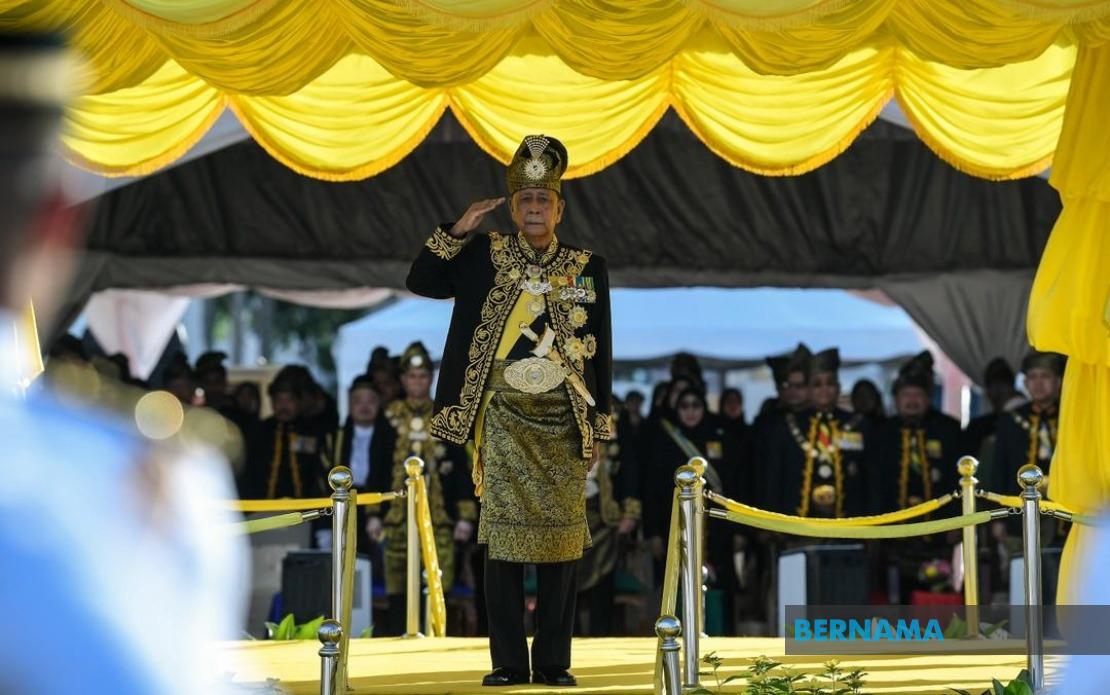
The state capital of Kedah marked a significant occasion when Al Aminul Karim Sultan Sallehuddin Sultan Badlishah, the reigning Sultan, received a ceremonial tribute in recognition of his 84th birthday. The formal event took place at Dataran Medan Bandar in Alor Setar, drawing together key political figures and military representatives to pay their respects to the royal dignitary.
The parade constituted a formal military ceremony, reflecting the traditional protocols observed across Malaysian states when honouring reigning monarchs. The occasion underscored the constitutional position of the sultanate within Kedah's governance structure and the ceremonial importance attached to such milestones within the state's institutional framework. Tengku Sarafudin Badlishah Sultan Sallehuddin, the Raja Muda of Kedah, joined the proceedings, ensuring the royal family's presence across multiple generations during the celebration.
State-level political leadership demonstrated their commitment to the observance by participating directly in the ceremony. Kedah Menteri Besar Datuk Seri Muhammad Sanusi Md Nor and State Secretary Datuk Seri Norizan Khazali were among those present, alongside members of the State Executive Council. Their attendance highlighted the importance placed on such occasions within the state administration's calendar and reflected the close working relationship between the executive branch and the constitutional monarchy.
The military dimension of the celebration involved substantial resources and personnel deployment. The 6th Battalion of the Royal Malay Regiment contributed 103 soldiers and three officers to the proceedings, demonstrating the military establishment's role in state ceremonial functions. Major Muhammad Nasrullah Abdullah led the contingent, while the colour bearer and standard bearer positions were filled by Lieutenant Mohamad Aiman Hanif Samsudin and Warrant Officer 1 Mohd Fairuz Ramli respectively. These assignments reflected the careful consideration given to rank and responsibility in formal military protocols.
Musical accompaniment formed an integral component of the ceremonial proceedings. The RAMD Central Band, under the direction of Captain Muhamad Fauzee Japar with Sergeant Mohd Shahrilaizad Bakhtiar providing support, provided the acoustic backdrop for the guard of honour. Such musical elements serve both practical and symbolic functions, marking the rhythm of ceremony while adding grandeur to state occasions that resonate with cultural and institutional significance.
The celebration expanded beyond ground-based formations to include aerial dimensions that captured public attention and demonstrated operational capability. Two EC120B aircraft from the Flying Training Institute's second campus conducted a ceremonial flypast, while three PC-7 MK II aircraft from the first institute location participated in the aerial display. These aviation elements represented a coordinated effort between multiple military training establishments and illustrated the breadth of resources mobilised for senior state occasions in Malaysia.
Artillery components added traditional pomp to proceedings, with the 41st Battery of the Royal Artillery Regiment (Ceremonial) executing a 21-gun salute. Major Hafizan Md Ghani, stationed at the Sungai Buloh Camp in Selangor, commanded this element, which involved precision timing and coordination. The ceremonial gun salute tradition traces back centuries in British Commonwealth military practice and remains one of the most recognisable and formal expressions of military respect for dignitaries across Malaysia and the wider region.
Birthday celebrations of senior state rulers carry significance beyond personal commemoration, functioning as moments when the political establishment collectively affirms its respect for constitutional institutions. For a state like Kedah, which has maintained its sultanate throughout Malaysia's modern history, such occasions reinforce continuity and institutional stability. The Sultan's longstanding tenure—now reaching 84 years of age—represents a substantial connection to the state's historical development and governance evolution.
The elaborate ceremonial framework deployed for this celebration reflects broader Malaysian and Commonwealth traditions regarding the treatment of constitutional monarchs and senior dignitaries. Kedah's approach aligns with ceremonial practices observed across other Malaysian states and demonstrates how administrative machinery, military resources, and political participation converge around formal state occasions. These gatherings serve functions beyond immediate celebration, subtly reinforcing hierarchies and institutional relationships that structure Malaysia's political system.
For observers of Malaysian governance and ceremonial practice, such events illuminate how the federation balances modern democratic governance with inherited monarchical traditions. The participation of elected officials alongside military representatives and the careful orchestration of multiple institutional elements demonstrates the sophisticated coordination required to maintain Malaysia's unique constitutional framework. The occasion also provided visible affirmation of Kedah's continued commitment to its royal institution during a period of broader political activity and change across the Malaysian peninsula.

