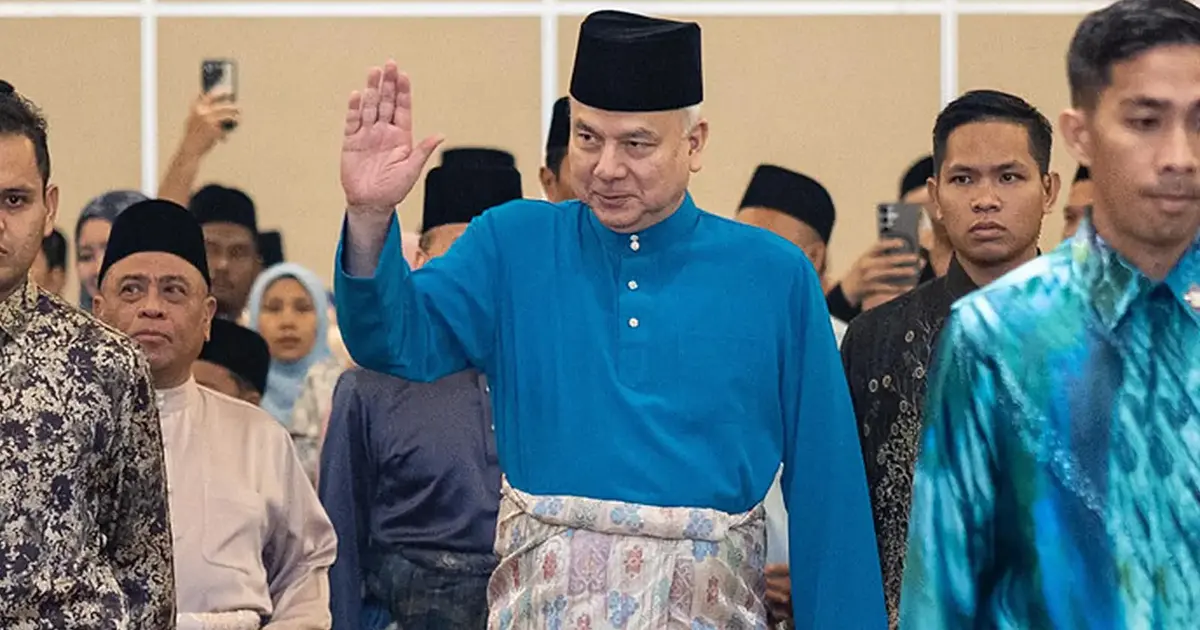
Sultan Nazrin Shah, the Deputy Agong, has issued a significant warning to the nation's political leadership, urging them to resist the temptation of making rash or emotionally charged decisions in their pursuit of governance. The call reflects deepening concerns about the nature of policy-making in an increasingly polarized political environment where knee-jerk responses have sometimes taken precedence over measured, deliberative approaches to complex national challenges.
The Deputy Agong's intervention touches on a fundamental governance principle that resonates deeply across Southeast Asian democracies: the notion that sustainable nation-building requires restraint and wisdom rather than reactivity. In Malaysia's context, where political transitions have occasionally been marked by rapid shifts in power and swift policy reversals, such counsel carries particular weight coming from the constitutional monarchy, which serves as a stabilizing institutional anchor.
Sultan Nazrin Shah has grounded his appeal in a broader philosophical foundation that extends beyond immediate political calculations. According to his statements, a nation's ultimate success is fundamentally dependent upon the willingness of its people to work together constructively, to demonstrate respect across different communities and viewpoints, and to create conditions where diverse groups can coexist peacefully. This emphasis on cooperation and harmony addresses a persistent challenge in Malaysian politics: the tendency toward adversarial positioning that can overwhelm consensus-building efforts.
The timing of this intervention appears deliberate, coming amid a period of significant political realignment in Malaysian politics. The Deputy Agong's reminder serves as a counterweight to the pressures that often push leaders toward dramatic gestures or confrontational stances designed to mobilize their political bases. By contrast, his message advocates for the harder work of genuine dialogue, compromise, and the patient construction of agreements that can withstand the test of time.
Respect emerges as a central pillar in Sultan Nazrin's framework for national progress. This encompasses not merely formal courtesies or constitutional deference, but a deeper commitment to acknowledging the legitimacy of different perspectives and the contributions that various communities make to Malaysia's social fabric. When political actors approach disagreements with genuine respect for their opponents, they create space for negotiation rather than entrenchment. This principle holds particular significance in a multiethnic, multireligious democracy where the stakes of political conflict can extend into communal relations.
The imperative for harmonious living carries implications that extend beyond parliament or ministerial offices. Social harmony underpins economic activity, educational achievement, and the investment climate that attracts both domestic and international capital. When political uncertainty or intercommunal tension rises, businesses hesitate to expand, families question their long-term plans, and the overall trajectory of national development can be derailed. Sultan Nazrin's emphasis on this dimension reflects an understanding that political stability is not merely an abstract virtue but a prerequisite for tangible improvements in citizens' lives.
Malaysia's constitutional framework places the institution of monarchy in a distinctive position relative to partisan politics. While the Yang di-Pertuan Agong and the Deputy Agong operate within clear constitutional boundaries, they retain the capacity to shape national discourse through carefully calibrated public statements. Such interventions carry authority precisely because they emanate from an institution that stands above the fray of party competition, making Sultan Nazrin's words difficult for political leaders to dismiss as mere partisan positioning.
The call against impulsive decisions also speaks to the quality of governance and the importance of institutional processes. When leaders succumb to emotional reactions or short-term political pressures, they often bypass the careful analysis, stakeholder consultation, and legal review that characterize sound decision-making. The consequences can include poorly crafted policies that generate unintended consequences, legislation that courts subsequently overturn, or regulations that fail to achieve their stated objectives. Conversely, deliberative approaches, while sometimes slower, tend to produce more durable outcomes.
Cooperation among Malaysia's diverse political actors remains a prerequisite for addressing major national challenges. Whether confronting economic headwinds, managing infrastructure development, or addressing social inequality, no single political faction possesses sufficient authority or resources to solve these problems unilaterally. Leaders who approach their counterparts with a collaborative mindset rather than a zero-sum competitive framework create opportunities for genuine problem-solving. Sultan Nazrin's counsel subtly reminds politicians that their constituents ultimately benefit more from effective governance produced through consensus than from symbolic victories achieved through exclusionary tactics.
The Deputy Agong's message also carries particular resonance for younger voters and those who came of age during periods of intense political division. By articulating a vision of governance based on restraint, respect, and collective progress, Sultan Nazrin models the kind of mature, thoughtful leadership that can transcend electoral cycles and partisan allegiances. This positioning helps establish standards of political conduct that extend beyond what the law technically requires, appealing instead to a shared commitment to Malaysia's wellbeing.
As Malaysia navigates complex domestic and regional challenges, the emphasis on avoiding emotional decision-making becomes increasingly vital. Global economic volatility, technological disruption, and geopolitical tensions demand responses grounded in careful analysis rather than reactive impulses. Sultan Nazrin's intervention serves as a timely reminder that the nation's greatest asset lies not in any single leader or party, but in the collective capacity of Malaysians to work together toward common purposes while respecting their differences.