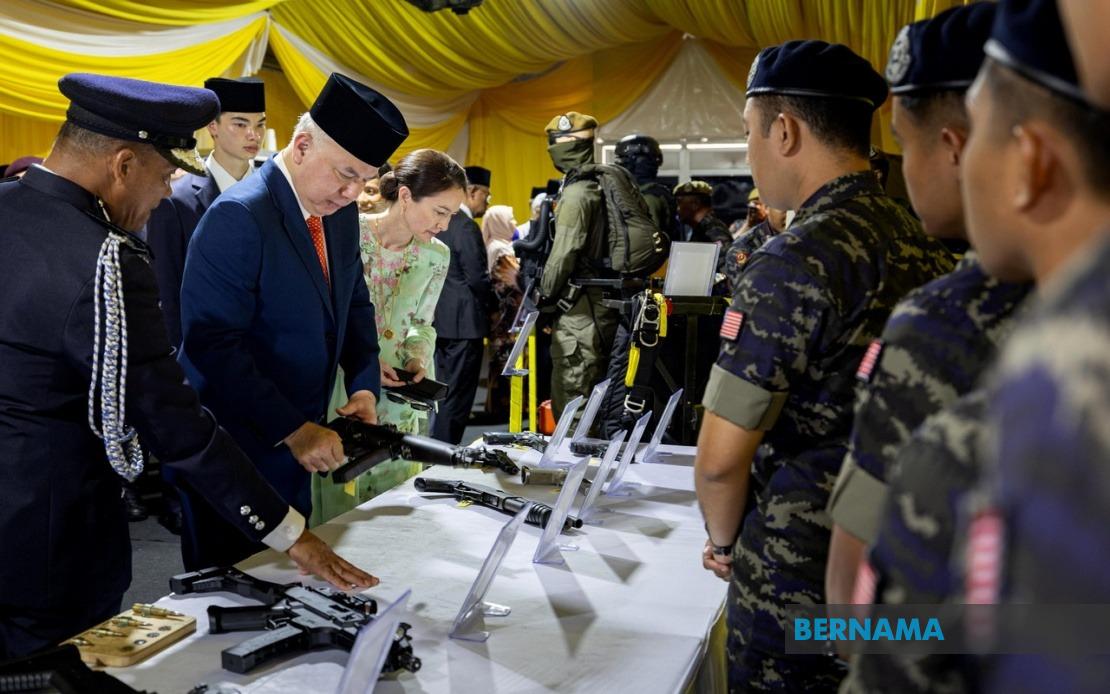
Sultan Nazrin Shah, the Sultan of Perak, has formally inaugurated the Sultan Nazrin Shah 69 Commando Camp in Ulu Kinta, marking a significant milestone in Malaysia's defence infrastructure. The ceremony, held in early July, was attended by senior members of the royal household, including Raja Permaisuri Tuanku Zara Salim, and key government and security officials. The presence of Home Minister Datuk Seri Saifuddin Nasution Ismail and Inspector-General of Police Tan Sri Mohd Khalid Ismail underscored the national importance accorded to the facility's launch.
The establishment of this new commando facility represents a substantial financial commitment from the government, with construction costs exceeding RM206 million across a sprawling 338-hectare site. The camp was meticulously designed to accommodate the operational needs of Malaysia's 69 Commando unit, one of the country's most elite and operationally demanding military formations. The decision to invest in such modern infrastructure reflects a deliberate policy choice to equip the nation's security apparatus with contemporary facilities that meet the demands of contemporary security challenges.
The 69 Commando unit has maintained an operational presence in Malaysian security operations for over five decades, having been established in 1969. Throughout this extended service history, the unit has been deployed across a spectrum of critical operations that have defined Malaysia's internal and external security posture. From the protracted campaign against communist insurgency to more recent counter-terrorism deployments, the unit has consistently positioned itself at the forefront of complex security operations requiring specialised training and capabilities.
During the formal opening ceremony, Home Minister Saifuddin Nasution articulated the government's strategic vision for the facility, characterising it as emblematic of the MADANI administration's commitment to reinforcing the nation's security infrastructure. He emphasised that the camp represents more than merely physical infrastructure; rather, it embodies the government's recognition of the sacrifices made by security personnel and its determination to provide them with world-class facilities and training environments. This framing positions the facility as part of a broader policy agenda centred on modernising Malaysia's security establishment.
Malaysia's standing in global security metrics was highlighted during the opening, with the country currently ranking 12th out of 163 nations in the latest Global Peace Index. This ranking, while reflecting Malaysia's relative stability compared to many nations, also underscores the continued relevance of well-equipped and professionally trained security forces in maintaining that peaceful status. The 69 Commando unit has been instrumental in preserving this record through its participation in crucial operations that have prevented security threats from destabilising the nation.
The unit's operational record extends across several significant episodes in Malaysian security history. Its involvement in combating communist insurgency established its credentials as a capable counter-insurgency force, while subsequent operations including the response to the Al-Maunah incident in 2000 demonstrated its versatility in addressing unconventional security threats. The unit's deployment during Operation Daulat in Lahad Datu, Sabah, in 2013 represented a critical moment in Malaysian security operations, tasking the commando force with addressing armed incursion and maintaining territorial sovereignty. Additionally, the unit's special deployment related to the MH17 tragedy in 2014 illustrated its capacity to respond to incidents with international dimensions and security implications.
Beyond these historically significant operations, the 69 Commando unit has developed substantial expertise in counter-terrorism operations, hostage rescue missions, and responding to complex security threats characterised by high operational risk. The breadth of operational demands placed upon the unit necessitates not only rigorous training but also access to sophisticated facilities that can replicate operational scenarios and develop tactical competencies. The Sultan Nazrin Shah Camp has been engineered specifically to meet these training and operational requirements, providing purpose-built facilities for the full spectrum of activities undertaken by commando personnel.
The transfer of the facility to the Royal Malaysia Police in 2024 signals an important institutional development. The camp will serve as the primary operational base for the 69 Commando unit, consolidating training activities, administrative functions, and operational planning within a single, comprehensively equipped complex. This consolidation is expected to enhance operational efficiency by reducing the fragmentation of facilities and enabling better coordination between training, planning, and operational deployment phases.
From a broader strategic perspective, the opening of the Sultan Nazrin Shah Camp represents a continued investment in maintaining Malaysia's security capabilities during a period of evolving regional security dynamics. Southeast Asia has experienced increasing complexity in security challenges, ranging from transnational terrorism to maritime security concerns and sophisticated cyber threats. By investing in modern commando training facilities and operational infrastructure, Malaysia is positioning its security forces to address these multifaceted challenges with the equipment, training environment, and institutional support necessary for effective operations.
The naming of the facility after Sultan Nazrin Shah constitutes a deliberate symbolic choice, linking the facility and the unit's operations to the institution of the monarchy and reinforcing the commando unit's role as a defender of national sovereignty and constitutional order. This naming convention also serves to elevate the status and public recognition of the 69 Commando unit, acknowledging its contributions to national security and framing the facility as a national investment rather than merely a military infrastructure project.
For regional observers, the opening of this facility illustrates Malaysia's commitment to maintaining professional security forces with contemporary capabilities and training standards. The investment signals confidence in Malaysia's ability to manage security challenges and maintain the stability that has underpinned the nation's economic and social progress. The facility also demonstrates how individual Southeast Asian nations are addressing the imperative to modernise their security infrastructure in response to evolving threats and operational requirements that extend beyond traditional warfare paradigms.
The Sultan Nazrin Shah Camp will serve as the institutional anchor for the 69 Commando unit's operations for decades to come, providing the physical infrastructure necessary to train successive generations of commando personnel. This long-term institutional perspective reflects recognition that security challenges are enduring and require sustained investment in human capital development and facility maintenance. The camp is positioned as a catalyst for continuously enhancing the unit's capabilities, ensuring that Malaysia's elite commando force remains prepared to address the security challenges of the coming decades.

