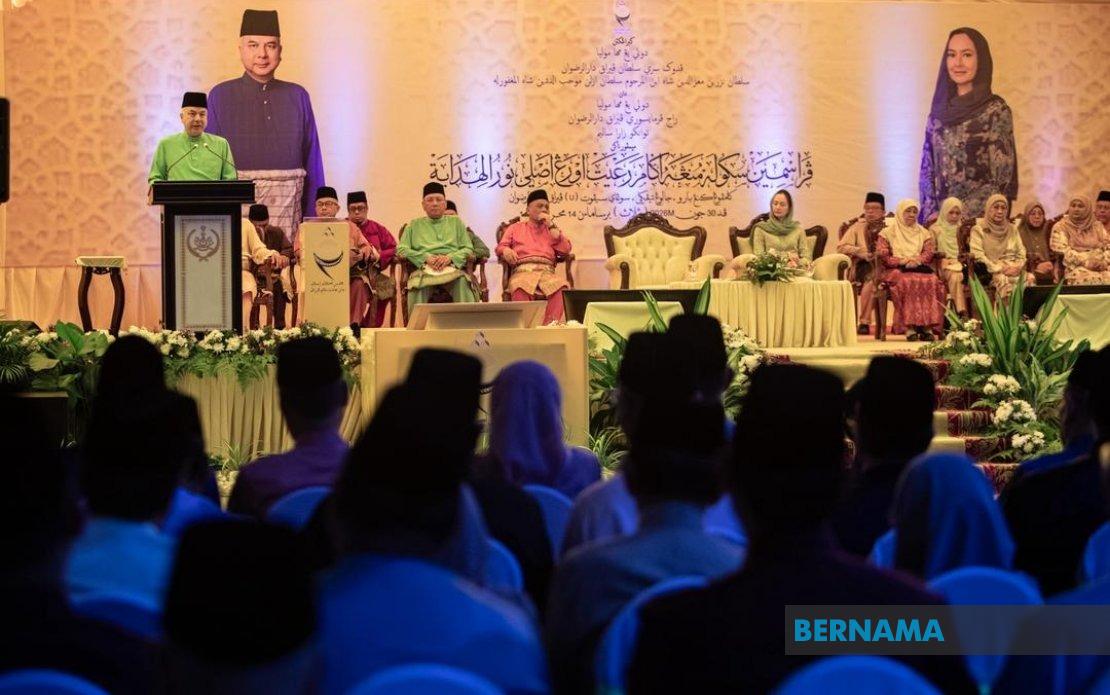
Sultan Nazrin Shah, the Ruler of Perak, has formally inaugurated Sekolah Menengah Agama Rakyat (SMAR) Orang Asli Nurul Hidayah in Kampung Kenang, Sungai Siput Utara, underscoring the significance of this educational venture for the Orang Asli community in the state. The ceremony, held on June 30, drew prominent dignitaries including Raja Jaafar Raja Muda Musa and Raja Iskandar Dzurkarnain Sultan Idris Shah, alongside Perak Menteri Besar Datuk Seri Saarani Mohamad and senior officials from the Perak Islamic Religious and Malay Customs Council and the Perak Islamic Religious Department. The opening marks a turning point in addressing long-standing educational disparities facing Malaysia's indigenous populations, particularly in Perak where opportunities for quality schooling have historically been limited.
As the nation's pioneering Orang Asli Islamic secondary school, SMAR Nurul Hidayah represents a watershed moment in indigenous education policy. The institution evolved organically from modest beginnings as a dakwah and religious learning centre, eventually expanding into a comprehensive secondary facility that blends rigorous academic curricula with Islamic religious instruction. This integrated model addresses a critical gap in educational provision, offering Orang Asli students pathways to both secular qualification and spiritual development within a structured school environment. The three-decade journey from community initiative to formal educational institution demonstrates the persistence required to bring quality schooling to marginalised populations in Malaysia.
In his address, Sultan Nazrin characterised the school's founding not merely as infrastructure development but as a substantial investment in the future prospects of Orang Asli children. His framing reflects growing recognition among policymakers that educational access directly determines whether indigenous youth can participate fully in Malaysia's economic and social institutions. The Sultan's emphasis on equal opportunity regardless of background speaks to fundamental questions about equity that continue to challenge Malaysian development agendas. By positioning the school as a catalyst for community transformation, the ruler acknowledged both the school's immediate educational function and its broader signalling effect within Orang Asli settlements.
The Perak Islamic Religious and Malay Customs Council's involvement in the school demonstrates how mainstream Islamic institutions are increasingly engaging with indigenous communities traditionally positioned at the margins of formal religious structures. This institutional commitment reflects the MAIPk's alignment with national aspirations to ensure universal educational access, an objective enshrined in Malaysia's constitutional commitments and development frameworks. The council's support also signals a shift toward recognising indigenous communities not as separate from broader Malaysian society but as integral constituents deserving equivalent educational opportunities and resources.
Sultan Nazrin highlighted the school's notable achievement in producing graduates who subsequently returned to their communities as educators and awareness champions. This alumni return phenomenon carries particular significance for Orang Asli development, as it creates indigenous-led capacity within communities rather than merely extracting talented individuals into external opportunities. Such circularity strengthens community institutions and demonstrates that quality education can simultaneously serve individual advancement and collective benefit. The Sultan's recognition of these returning alumni subtly reframed the school's success metric beyond conventional examination results to encompass social contribution and community leadership.
The Ruler's articulation of education's multidimensional character moved beyond narrow instrumentalism to encompass intellectual, spiritual, emotional and physical development. This holistic conception aligns with contemporary educational philosophy while also reflecting Islamic pedagogical traditions emphasising character formation alongside knowledge transmission. By presenting education as character-building rather than merely credential-conferring, Sultan Nazrin addressed persistent concerns about whether schooling systems adequately prepare indigenous youth for meaningful civic participation and personal fulfillment. The framework implies that SMAR Nurul Hidayah aspires to graduate individuals grounded in both knowledge and values, a particularly important objective for communities historically underrepresented in professional and leadership positions.
The school's positioning within Perak's educational landscape carries implications beyond its immediate catchment. As a pioneering model combining indigenous outreach with Islamic religious education, SMAR Nurul Hidayah could influence policy approaches toward other marginalised communities seeking culturally responsive schooling. The institutional model potentially offers templates for addressing educational disparities among other indigenous populations across Malaysia and the broader region, though adaptation would necessarily account for distinct cultural and geographic contexts. Policymakers observing this venture may increasingly consider how mainstream educational structures can accommodate indigenous populations without imposing assimilationist frameworks.
The school's evolution from informal learning centre to formal secondary institution reflects broader patterns in Malaysian indigenous education, where community-initiated grassroots efforts frequently precede government institutional development. This trajectory suggests that sustainable solutions to indigenous educational access often emerge through sustained local engagement rather than top-down imposition. The three-decade timespan between foundation and official royal inauguration indicates the protracted nature of institutionalising educational change, a reality relevant for other development initiatives targeting indigenous communities facing entrenched structural barriers.
Sultan Nazrin's emphasis on preserving faith and syariah values among younger generations reflected concerns about cultural continuity amid modernisation pressures. For Orang Asli communities navigating rapid social change and external institutional encroachment, schools capable of maintaining indigenous-specific religious and ethical frameworks represent rare institutional spaces. SMAR Nurul Hidayah's success in this regard demonstrates feasibility of educational models that do not require indigenous students to choose between cultural rootedness and contemporary knowledge. This integration carries particular resonance across Southeast Asia where indigenous communities frequently confront tensions between tradition and modernity within educational contexts.
The Sultan's vision for future cohorts of Orang Asli students achieving academic excellence while maintaining strong religious and moral foundations directly addresses historical perceptions that indigenous communities somehow require lesser educational standards. By articulating expectations for sustained high performance combined with character development, the Ruler rejected narratives suggesting indigenous students cannot meet rigorous academic and ethical demands. This aspirational framing potentially influences how educators within the institution and beyond conceptualise indigenous educational potential, with implications for resource allocation and pedagogical approaches.
The gathering of senior Perak officials and religious authorities at the inauguration ceremony underscored institutional commitment to the school's sustainability and development. Official attendance at this level signals that SMAR Nurul Hidayah is no longer a peripheral community initiative but rather an entity commanding attention from state leadership and mainstream religious bureaucracies. Such institutional embedding provides foundations for continued resource provision and political support crucial for long-term viability. For indigenous communities accustomed to institutional neglect, this prominent official recognition represents tangible acknowledgement of their educational concerns and aspirations.
Looking forward, SMAR Nurul Hidayah's new infrastructure improvements represent opportunities for pedagogical enhancement and expanded capacity. The Sultan's hope that improved facilities would inspire educators to elevate teaching quality reflected understanding that infrastructure alone proves insufficient without corresponding investments in teacher development and curricular innovation. For other indigenous communities contemplating educational institution establishment, the Perak experience demonstrates that sustainable change requires aligned attention to facilities, personnel, and pedagogical approaches. The school's trajectory from community initiative to state-supported institution offers valuable lessons for indigenous education advocacy across Malaysia and the region, particularly regarding persistence, institutional partnership, and maintaining community agency throughout formal integration.

