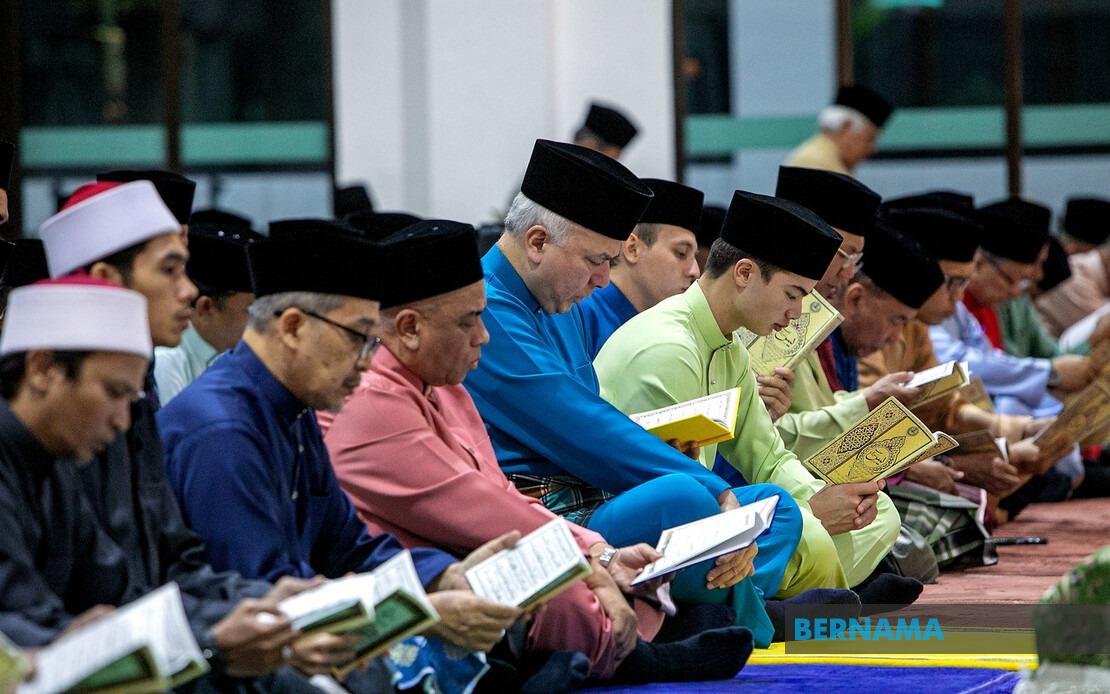
Sultan Nazrin Shah, the Sultan of Perak, presided over spiritual observances at Masjid Imam As Syafie in Ipoh on August 30, participating in recitation of Yasin, tahlil and doa selamat prayers as part of the state's National Day commemoration. The occasion drew together prominent state figures and a substantial congregation, underscoring the place of Islamic observance in Malaysia's patriotic calendar and the role of royal leadership in religious and civic matters.
The mosque's official inauguration by Sultan Nazrin marked the completion of a substantial religious infrastructure project for the state. Constructed at a cost of RM8.7 million, the facility represents a significant investment in Perak's Islamic institutions and demonstrates the ongoing expansion of prayer facilities to accommodate growing congregations across Malaysian states. The building's capacity of approximately 1,600 worshippers positions it as a major community hub for religious and social activities in Ipoh.
Joining Sultan Nazrin in the ceremony were Menteri Besar Datuk Seri Saarani Mohamad and Tan Sri Mohd Annuar Zaini, president of the Majlis Agama Islam dan Adat Istiadat Melayu Perak (MAIPk). Their attendance highlighted the alignment between state political leadership and religious governance structures, reflecting how Malaysia's constitutional monarchy intertwines temporal and spiritual authority. The gathering of approximately 1,000 congregants demonstrated substantial community engagement with both the religious ceremony and the symbolic weight of National Day observances.
The formal inauguration followed established ceremonial protocols. Sultan Nazrin unveiled the mosque's dedication plaque in a symbolic gesture, performing the honours traditionally reserved for heads of state or their equivalents at such momentous occasions. This public unveiling carried significance beyond the merely functional—it represented formal state recognition of the mosque's completion and readiness to serve the Muslim population of Ipoh and surrounding areas.
Following the official proceedings, Sultan Nazrin participated fully in the religious observances, joining congregants for the recitation of Yasin, one of Islam's most significant chapters, and engaging in tahlil—the rhythmic repetition of Islamic declarations of faith. These spiritual practices form the backbone of communal Islamic worship in Malaysia and demonstrate the Sultan's personal commitment to religious observance alongside his constitutional duties.
The evening's devotional programme concluded with Sultan Nazrin joining the congregational Isyak prayer, the final obligatory prayer of the day in Islamic tradition. By participating throughout rather than merely performing ceremonial duties, Sultan Nazrin demonstrated active engagement with his religious leadership role, a model increasingly valued in contemporary Malaysian Islamic practice where authority figures exercise both symbolic and substantive religious functions.
The timing of the mosque's inauguration during National Day celebrations carried particular resonance. In Malaysia's constitutional framework, August 31 represents the anniversary of independence and national sovereignty. Linking the opening of a religious institution to this patriotic observance reinforces the interweaving of Islam and national identity that characterises Malaysian public life. For many Malaysian Muslims, such ceremonies affirm that Islamic practice remains central to national purpose and state governance rather than peripheral to it.
Masjid Imam As Syafie joins an extensive network of modern prayer facilities across Perak, a state long regarded as a stronghold of Islamic learning and practice. The mosque's substantial capacity reflects demographic realities and urbanisation patterns in Ipoh, where congregations have expanded significantly over recent decades. Investment in large-scale, modern facilities addresses practical challenges of accommodating growing numbers of worshippers while maintaining spiritual sanctuary.
For Malaysian and regional audiences, such occasions illustrate the distinctive character of Malaysia's approach to Islamic governance. Unlike secular states that treat religion as purely private, or theocratic systems where religious authority supersedes other governance forms, Malaysia's constitutional monarchy positions sultans as key figures bridging Islamic spiritual authority and secular state governance. This balance remains actively managed through ceremonies like the Masjid Imam As Syafie inauguration, where religious observance and state commemoration merge seamlessly.
The investment of RM8.7 million in mosque construction reflects broader allocations toward Islamic infrastructure across Malaysian states. Such spending decisions carry political dimensions, as they signal state commitment to Muslim constituencies and demonstrate that governance extends beyond secular administration to encompass spiritual wellbeing. In Perak's particular context, major religious infrastructure projects underscore the state's positioning within Malaysia's Islamic landscape and its responsiveness to communal needs.
The presence of Menteri Besar Saarani alongside Sultan Nazrin reflected the collaborative relationship between executive and constitutional governance structures at state level. While sultans hold ceremonial precedence and religious authority, Mentri Besar control executive administration and budget allocation. Joint participation in such occasions demonstrates operational harmony between these parallel hierarchies, essential for effective governance in Malaysia's system.
Looking forward, Masjid Imam As Syafie will serve not merely as a prayer facility but as a community institution, likely hosting religious education programmes, social welfare initiatives, and interfaith dialogue. Modern Malaysian mosques increasingly function as civic anchors, and this facility's substantial capacity and professional design position it to fulfil this expanded role effectively.
The occasion underscores Malaysia's continuing emphasis on visible religious leadership from the highest levels of authority. In an era of rapid social change and competing institutional loyalties, the presence of sultans and chief ministers at Islamic observances signals that religious identity and practice remain central to Malaysian governance narratives. For audiences across Southeast Asia observing Malaysia's institutional practices, such ceremonies illustrate the unique constitutional architecture through which the nation balances Islamic practice with multicultural pluralism.

