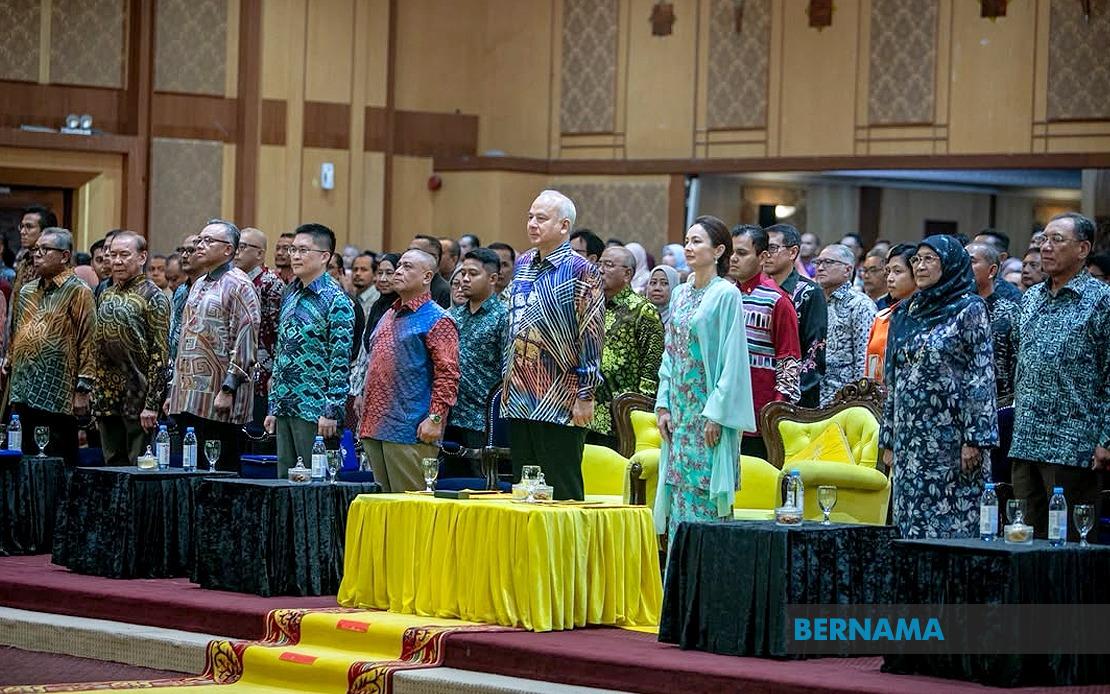
Sultan Nazrin Shah, the Sultan of Perak, opened the state-level Merdeka Month programme at Bangunan Perak Darul Ridzuan in Ipoh on Thursday evening, underscoring the royal household's commitment to fostering national loyalty among the younger generation during Malaysia's independence month celebration. Alongside the Sultan were his consort Tuanku Zara Salim, Menteri Besar Datuk Seri Saarani Mohamad, and Deputy Education Minister Wong Kah Woh, reflecting both state and federal backing for the initiative. The attendance of senior government figures signals the importance placed on grassroots efforts to instil patriotic values and leadership qualities in students across Perak's schools.
This year's Merdeka Month festivities achieved unprecedented scale, with educators reporting that 214,095 students submitted entries to various competitions and programmes—representing an impressive 83.6 per cent coverage of primary and secondary school enrolment across the state. Zulkafli Mohamed Mokhtar, director of the Perak Education Department, delivered remarks highlighting that the uptake reflected far more than mere administrative participation. He characterised the programme as a substantive platform where young Malaysians could showcase emerging talents, develop self-assurance, and refine capabilities across multiple disciplines, from academic pursuits to performing arts and creative expression.
The growth trajectory proves particularly instructive for policymakers across Southeast Asia grappling with youth engagement in civics. Participation surged 15 per cent year-on-year, demonstrating that carefully structured initiatives anchored in local identity and cultural pride can sustain momentum rather than become rote exercises. This expansion suggests that when schools embed independence month celebrations within competitions offering genuine recognition and developmental value—rather than treating them as obligatory observances—students and families respond with genuine enthusiasm. For Perak and indeed Malaysia more broadly, the numbers validate the approach of tying patriotic education to tangible achievement frameworks.
Education officials framed the drive squarely within the broader Malaysia Education Plan 2026-2035, a comprehensive blueprint aimed at nurturing learners who excel both academically and morally. Zulkafli articulated the vision as producing citizens not merely equipped with subject knowledge but grounded in integrity, capable of independent critical thought, devotion to nation, and informed appreciation of Malaysia's historical journey and cultural inheritance. By positioning Merdeka Month activities as instrumental to this long-term vision, authorities stressed that short-term festivals serve deeper institutional aims: cultivating the ethical foundations and intellectual resilience expected of future leaders.
The Sultan's presentation of awards lent ceremonial weight to student achievement and recognised institutional excellence. The Kinta Utara District Education Office received the special prize for Best Achievement by District Education Office, accompanied by a RM20,000 cash grant. This recognition acknowledges not merely student success but the administrative and teaching infrastructure that enables participation, signalling that the broader education ecosystem warrants celebration. Such awards serve dual purposes: motivating continued investment by local education authorities while validating their efforts before the highest state leadership.
Among the individual accolades distributed, Ifwat Arrafi Mohd Amin from Sekolah Menengah Kebangsaan Tun Abd Razak in Bagan Datuk captured the upper secondary Malay Language Public Speaking Competition title, whilst E Johnnes Abysia from SMK Sungai Pari in Kinta Utara prevailed in the English-language speaking category. These bilingual competition pathways reflect Malaysia's educational commitment to multilingual proficiency and expression skills—capabilities increasingly valued in the region's growing knowledge economy. Beyond simple linguistic achievement, public speaking competitions cultivate confidence, civic articulation, and the ability to communicate complex ideas persuasively—assets that benefit both personal development and democratic participation.
The breadth of competitions encompassed across the programme underscores a deliberately inclusive approach to talent identification. Choral speaking, choral recitation, choral performance, caricature drawing, essay composition, poetry creation, and poster design competitions spanned primary, lower secondary, and upper secondary categories, ensuring that students with diverse aptitudes and interests found outlets for recognition. This multiplicity matters particularly in contexts where traditional academic metrics dominate school hierarchies; creative and performative competitions validate alternative forms of intelligence and expression that conventional examinations often overlook.
Tuanku Zara's active participation in presenting prizes for certain categories—specifically essay, poetry, and poster competitions—reflected the royal household's integrated engagement with the programme rather than ceremonial window-dressing. The distribution of recognition across both Sultan and Raja Permaisuri demonstrated shared investment and symbolically positioned the Perak monarchy as genuinely engaged custodians of youth development and cultural continuity. For students receiving honours from the Raja Permaisuri herself, the experience likely carries heightened meaning and memory.
The evening concluded with the royal couple touring an exhibition showcasing student artwork and caricatures, a gesture that extended their involvement beyond presentation ceremonies into authentic engagement with the creative outputs produced. Such walkabouts provide informal moments where distinguished visitors can observe student work directly, ask questions, and acknowledge individual effort in ways that formal ceremonies cannot accommodate. These interactions, though brief, often leave lasting impressions on young participants and reinforce that their contributions matter beyond securing certificates.
For Perak specifically, this Merdeka Month initiative represents a measurable success in achieving one of education's most elusive targets: widespread student engagement across socioeconomic and geographic boundaries. The 83.6 per cent participation rate from such a large absolute number (214,095 students) indicates effective mobilisation across rural and urban schools, suggesting that the state education system has successfully communicated opportunities and removed logistical barriers. Similar programmes in other Malaysian states and neighbouring territories may find Perak's approach instructive as they seek to strengthen connections between national narratives, educational outcomes, and youth agency.
Looking forward, sustaining this momentum requires continued investment in programme quality, recognition mechanisms, and administrative support at district levels. The year-on-year growth trajectory, whilst encouraging, cannot be assumed to continue indefinitely without deliberate effort to refresh competitive categories, expand opportunities, and ensure that participation remains genuinely voluntary and sufficiently distributed that no student population feels excluded. As Malaysia contemplates its educational priorities through 2035, state-level initiatives like Perak's Merdeka Month programme offer evidence that culturally rooted, locally administered celebrations can serve serious pedagogical aims when structured thoughtfully and resourced adequately.

