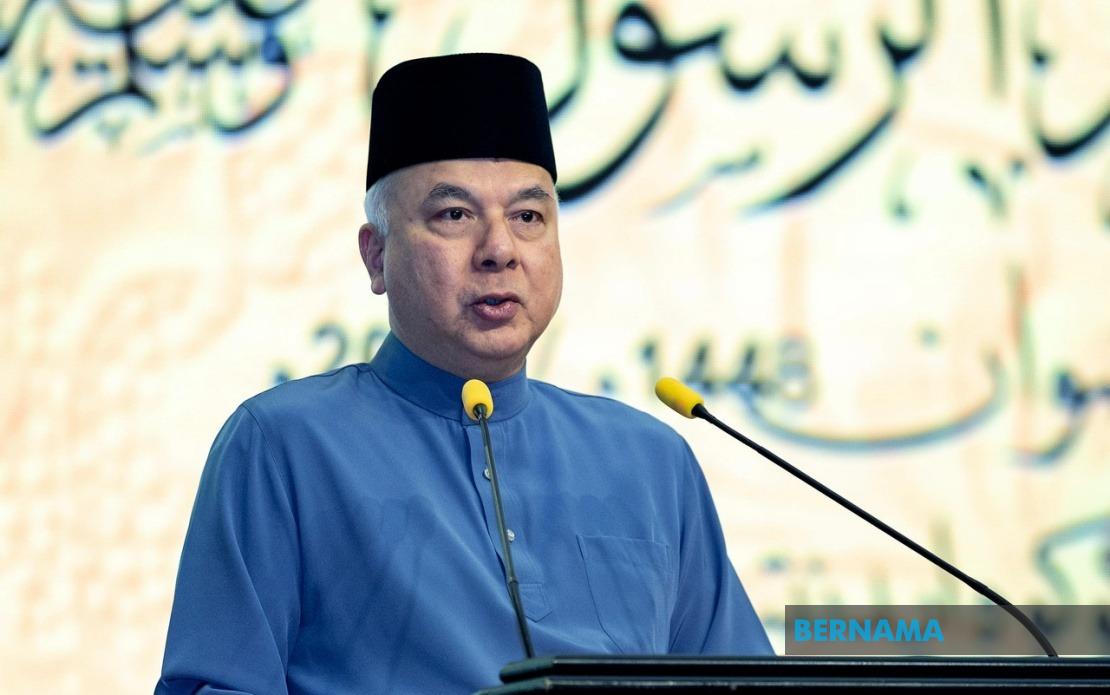
The Sultan of Perak, Sultan Nazrin Shah, delivered a stark assessment of contemporary Muslim society during Perak's Maulidur Rasul celebration in Ipoh on August 25, identifying a troubling disconnect between the ideals of Islamic brotherhood and the lived reality of contemporary Muslim communities. Addressing concerns that transcend state and national boundaries, he pointed to a widening chasm between religious principle and social practice, one driven by forces both within Muslim society and from external pressures bearing down on the ummah globally.
According to Sultan Nazrin, the sources of fracture are multifaceted and deeply rooted. Political ambitions, conflicting interpretations of Islamic jurisprudence, ethnic and racial considerations, and the personal interests of individuals have combined to erode the cohesive bonds that ought to characterise the Muslim community. These divisions are not merely doctrinal disputes confined to academic circles; they manifest in daily competition for influence, status, material wealth and the creature comforts that modern life promises. The Sultan's observation suggests that the gravitational pull of worldly pursuits has overwhelmed the gravitational pull of shared faith and common purpose.
The royal address, delivered in the presence of Perak's royal household including Raja Permaisuri Tuanku Zara Salim and state administrators including Menteri Besar Datuk Seri Saarani Mohamad, carried particular weight given the constitutional role of Malaysian sultans as custodians of Islam at the state level. Sultan Nazrin's intervention on this matter signals concern at the highest levels of regional leadership about the trajectory of Muslim community cohesion, a concern likely shared across other state capitals in Malaysia where similar tensions simmer beneath the surface.
Crucially, the Sultan did not simply diagnose the problem but prescribed a remedy: Muslim leaders, Islamic organisations and movements must deliberately reduce their engagement in unnecessary disputes and dampen the competitive impulses that fuel political rivalry. Instead of expending energy on internal conflict, these actors should redirect resources toward initiatives that demonstrably strengthen Islamic identity and advance the collective progress of the Muslim community. This reframing represents an implicit critique of zero-sum thinking within Muslim leadership circles, suggesting that victory obtained through factional competition comes at the cost of larger communal interests.
Sultan Nazrin singled out several promising domains where Muslims have demonstrated capacity for constructive progress despite the broader climate of division. Islamic economics and Islamic finance have developed sophisticated intellectual and practical frameworks that offer alternatives to conventional systems. The halal industry, now a major global market worth hundreds of billions of dollars, represents Muslim entrepreneurship and innovation at scale. The revival of waqf—religious endowments—as a mechanism for social welfare and investment demonstrates how traditional Islamic institutions can address modern needs. Digital dakwah, or Islamic outreach through digital platforms, harnesses technology to disseminate religious knowledge and foster spiritual engagement among younger generations. Initiatives to strengthen family institutions, widely regarded as fundamental units of social stability, signal understanding that Islamic renewal must begin at the household level.
These examples are instructive because they demonstrate that Muslim societies possess the intellectual capital, organisational capacity and spiritual motivation to address contemporary challenges when unified in purpose. The Sultan's implicit argument is that the comparative success of these initiatives proves that unity generates productivity, whereas fragmentation dissipates energy and resources. For Malaysian policymakers and Islamic leaders, this suggests that strategic focus on unifying projects might yield better returns than managing endless cycles of factional dispute.
Yet the Sultan identified a second category of challenge, one arising not from internal Muslim dynamics but from the external environment in which Muslims operate. The acceleration of globalisation has exposed Muslim communities to an unprecedented volume and variety of influences—social media algorithms that fragment information environments, popular culture that often embodies values at odds with Islamic teaching, entertainment industries that project lifestyles incompatible with Islamic practice, and modern consumer society that privileges individual gratification over community obligation. These forces operate with enormous sophistication and virtually unlimited resources, working to reshape preferences, values and self-conception among Muslim youth particularly.
The Sultan's warning here reflects a tension recognised across Muslim-majority societies worldwide: how does a community pursue the genuine benefits of technological progress and economic development while insulating itself against cultural influences perceived as corrosive to religious identity? His counsel to pursue "wise approaches and strategies" acknowledges that rejection of modernity is neither feasible nor desirable, yet uncritical embrace of every modern innovation carries its own hazards. The challenge lies in selectivity and discernment—adopting technological and economic advances while maintaining conscious, deliberate fidelity to Islamic principles.
For Malaysia specifically, this royal intervention arrives at a moment when the nation continues negotiating its identity as a Muslim-majority democracy within a globalised world. The country's experience with Islamic education systems, Islamic banking sector, and halal certification—all mentioned favourably by Sultan Nazrin—positions it as a potential model for how Muslims can engage with modernity while preserving religious identity. Yet internal disputes over Islamic governance, competition between different Islamic movements and organisations, and occasional tensions between Islamic law and secular governance frameworks suggest that Malaysia too grapples with the very divisions the Sultan identified.
The Sultan's call for expanded and reinforced implementation of these positive initiatives carries implications beyond Perak. As the nation's spiritual leadership ponders questions of Islamic identity, social cohesion and the ummah's trajectory in coming decades, the convergence of royal concern from different quarters signals widespread unease about current trajectories. The challenge now lies in translating royal exhortation into concrete institutional change—ensuring that Malaysian Islamic institutions, from schools to financial systems to civil society organisations, genuinely operate as unifying forces rather than focal points for competing interests.
Ultimately, Sultan Nazrin's address represents both diagnosis and invitation: diagnosis of fragmentation threatening Muslim collective interest, and invitation to all Muslim leaders and organisations to consciously reorient toward unity as both means and end. Whether these institutions prove capable of answering that invitation, resisting the gravitational pull of political rivalry and material ambition in favour of community-building, will significantly shape the Muslim world's capacity to address the genuine challenges it faces in an increasingly complex global environment.

