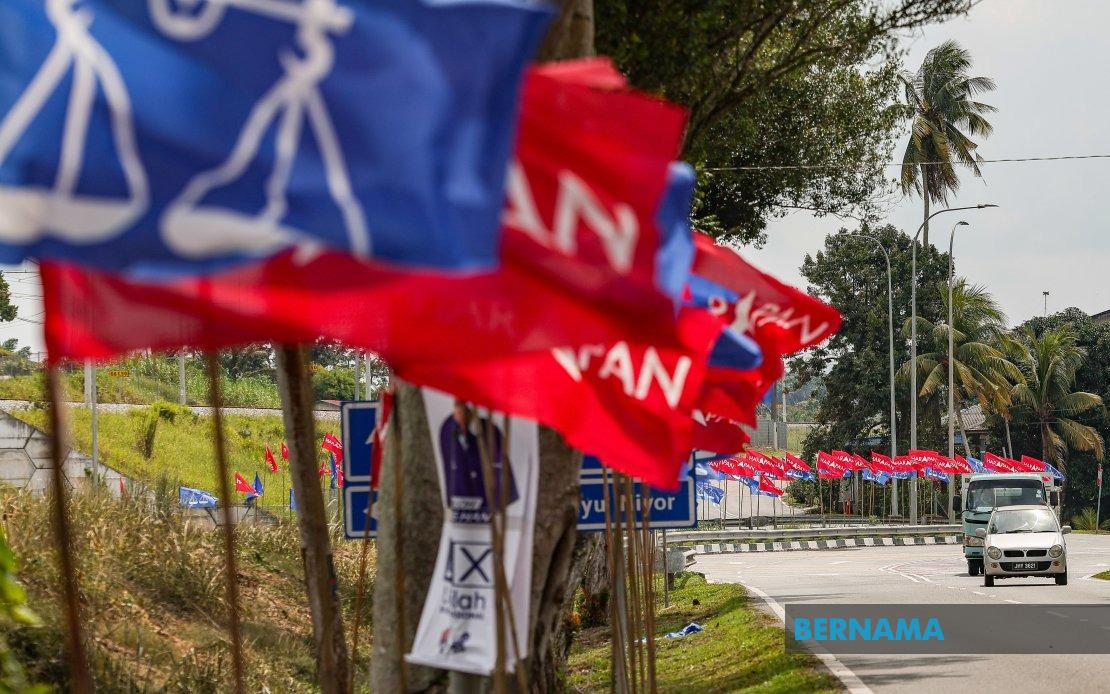
Pakatan Harapan's bid to recapture the Larkin state seat hinges on voter participation, according to the coalition's candidate Suhaizan Kaiat, who expressed confidence ahead of the 16th Johor state election scheduled for July 11. The Pulai Member of Parliament contends that improving turnout from previous state polls could fundamentally shift the electoral dynamics in this closely watched constituency, where BN currently holds the seat with a margin of 6,178 votes from the 2022 contest.
Suhaizan grounded his optimism in the 14th General Election results, when the Larkin seat fell to PH-allied Bersatu's Datuk Mohd Izhar Ahmad. This historical precedent suggests the constituency is not inherently hostile to the opposition coalition and can swing PH's way under the right circumstances. The difference, he argues, lies in voter participation rates rather than fundamental voter preference. When constituents actually turn out to vote, the data indicates greater receptiveness to PH's message and platform.
The 2022 Johor state election, which saw incumbent Mohd Hairi Mad Shah of BN reclaim the seat, cannot serve as a reliable predictor of future outcomes, Suhaizan contends. That contest was hampered by a turnout of merely 51 per cent, largely due to pandemic-related constraints that prevented normal campaigning and reduced public engagement with political activities. Such depressed participation naturally skews results towards incumbent parties that benefit from voter apathy and lower mobilisation against them.
Suhaizan's strategic calculation extends beyond PH's traditional support base. He identifies a potential pool of Bersatu voters who might be persuadable to back PH, particularly given the fracturing relationship between Bersatu and PAS—the Islamist party that has shifted closer to UMNO in recent months. The prior alliance between PH and Bersatu created institutional relationships and voter familiarity that could be reactivated. Notably, Bersatu is not fielding its own candidate in Larkin this time, effectively removing a competing voice from the anti-BN camp and potentially consolidating opposition support.
This three-cornered contest now features Suhaizan against Bersama candidate Norsinah Abu and the sitting member Mohd Hairi. The introduction of Bersama adds an unpredictable element, though its electoral presence and voter appeal remain uncertain. As a nascent party, Bersama's performance in Johor state elections will be instructive for broader Malaysian politics, testing whether new political vehicles can gain meaningful traction or whether voters remain anchored to established coalitions.
The broader Johor state election context provides additional perspective on Larkin's significance. With 172 candidates competing across 56 seats, the poll represents a substantial political exercise with implications for federal politics. The Johor electorate's preferences will influence perceptions of momentum heading into any potential future general election, making individual seats like Larkin important barometers of shifting voter sentiment across the nation.
Voter turnout dynamics merit particular attention in the Malaysian electoral context. Historically, higher participation rates have benefited opposition coalitions, as they tend to reflect greater political engagement and weaker incumbent consolidation. Conversely, low turnout typically advantages ruling parties and incumbents who can rely on more motivated or obligated voter bases. Suhaizan's emphasis on turnout improvement thus represents both a strategic insight and a tacit acknowledgment that PH's path to victory depends on activating constituencies beyond its core supporters.
The political landscape surrounding Larkin has shifted markedly since 2018 and 2022. The collapse of the Sheraton Move coalition, the subsequent repositioning of Bersatu, and the realignment of Malaysian politics have created fluidity that may work in PH's favour. Voters who supported Datuk Mohd Izhar under the PH-Bersatu banner may view Suhaizan as a continuation of that political current, even as the formal coalition structures have changed. This narrative continuity could prove valuable in persuading swing voters.
For Suhaizan personally, a Larkin victory would strengthen his standing within PH leadership and validate his grassroots engagement efforts in the constituency. He has been systematically building relationships with constituents through engagement sessions, positioning himself as accessible and responsive to local concerns. Such ground-level political work, combined with strategic messaging about voter participation, creates multiple pathways for PH's outreach.
The Malaysian electorate has demonstrated increasing sophistication in distinguishing between state and federal elections, with voters sometimes supporting different coalitions at different levels. Some Larkin voters may have supported BN in the 2022 state poll while backing PH candidates federally, or vice versa. Understanding this split-voting behaviour will be crucial for both coalitions' campaign strategies in the final weeks before polling day.
Early voting is scheduled for July 7, potentially giving campaigns additional insight into turnout patterns before the main election day. Mobilisation efforts in the week preceding the election will likely intensify, with both PH and BN seeking to maximise their respective voter turnout. For Suhaizan, every incremental improvement in participation rates mathematically improves PH's winning prospects, making get-out-the-vote operations absolutely essential to his electoral strategy.

