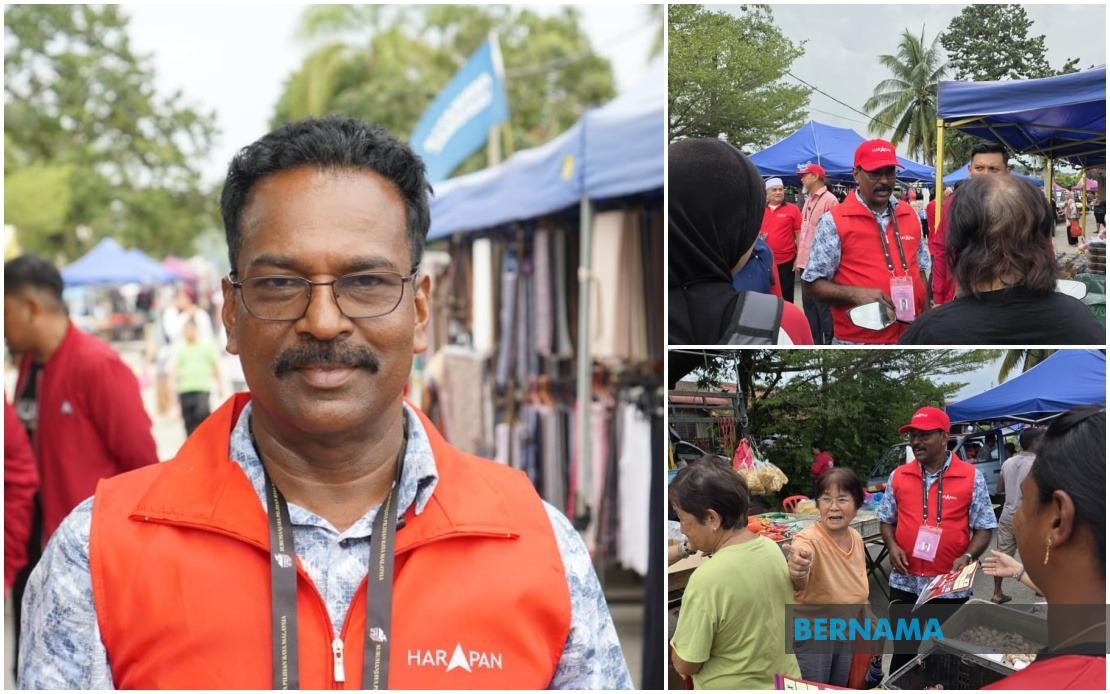
C. Subramani is gambling on a groundswell of discontent to achieve an improbable victory in the Bukit Kepong state assembly seat during Johor's 16th electoral contest. The Pakatan Harapan standard-bearer has been energised by what he describes as encouraging interactions with voters across the constituency, particularly those expressing frustration with the status quo and appetite for fresh political representation. Speaking in Pagoh, the candidate projected confidence despite facing a three-cornered battle against both Barisan Nasional and Perikatan Nasional competitors—a crowded field that typically makes independent or opposition gains more difficult in Malaysia's electoral landscape.
Subramani's optimism rests partly on his assessment of local sentiment during the campaign trail. He has spent considerable time engaging residents across various neighbourhoods and has made particular efforts to visit the constituency's Orang Asli settlements. These fieldwork visits, he argues, have revealed tangible infrastructure deficiencies and socioeconomic pressures that communities want addressed. The Pagoh native believes this direct contact has positioned him as someone genuinely attuned to grassroots concerns, a message he hopes will resonate with voters seeking demonstrable commitment to local improvement rather than token campaign appearances.
A cornerstone of Subramani's pitch involves leveraging closer coordination between state and federal governments. He contends that administrative alignment between Putrajaya and Kuala Lumpur would unlock faster resolution of constituency-level problems that currently stall at bureaucratic interfaces. Education initiatives, irrigation and drainage complications, and matters requiring intervention from federal agencies could be expedited through direct ministerial channels if both tiers of government operated in tandem. This framing appeals to frustrated voters who perceive their concerns trapped in inter-governmental gridlock, a sentiment particularly acute in constituencies where state and federal representatives belong to opposing coalitions.
Among his specific priorities for Bukit Kepong is repositioning the Bukit Kepong Gallery as a destination for heritage tourism. Subramani views this historical asset as an underdeveloped economic resource that, with proper investment and marketing, could inject visitor spending into the local economy. Beyond this signature initiative, he has identified more prosaic but consequential issues affecting daily life: inadequate street lighting in residential areas, structurally narrow bridges creating transport bottlenecks, and acute housing shortages for lower-income households. These concrete concerns—practical rather than ideological—form the basis of his appeal to ordinary constituents navigating the costs of living and basic infrastructure deficits.
Subramani's electoral background adds a layer of persistence to his ambition. He previously contested the Buloh Kasap seat in the 2022 Johor state election, meaning he brings campaign experience and established networks to his current bid. However, shifting to Bukit Kepong represents a new constituency with distinct demographics and challenges requiring localised outreach. He has invested time building familiarity with the Orang Asli communities particularly, recognising that indigenous populations often face compounded disadvantages in development distribution and service delivery. His visits to these settlements signal an attempt to address a segment frequently marginalised in electoral politics.
The three-way contest in Bukit Kepong reflects broader fragmentation in Malaysian state politics. Perikatan Nasional's presence adds unpredictability to traditional Barisan-Pakatan competition. In 2022, the seat returned Datuk Dr Sahruddin Jamal of Perikatan Nasional-Bersatu with a razor-thin majority of just 710 votes. This slender winning margin indicates a highly competitive constituency with potential fluidity between election cycles. Such narrow victory margins frequently signal constituencies where organisational effort, local sentiment shifts, and turnout mechanics can significantly influence outcomes—conditions Subramani believes he can exploit through intensive ground engagement and messaging tailored to current voter frustrations.
The broader Johor electoral context frames individual constituency battles within larger political tectonic shifts. Some 2.7 million voters across the state will cast ballots for 56 state assembly seats, with 172 candidates competing overall. Johor's significance in Malaysian politics means state-level competition often previews national sentiment, and results here typically influence perceptions of party momentum heading into future federal contests. A surprise result in a seat like Bukit Kepong would transcend local importance, potentially signalling unexpected voter behaviour patterns or coalition vulnerabilities that national strategists monitor closely.
Subramani's emphasis on administrative harmony between state and federal governments carries particular resonance given Malaysia's recent political volatility. Constituencies where unified governance exists—both state and federal representatives from the same coalition—frequently experience faster project implementation and resource allocation. Conversely, constituencies divided between different coalitions often suffer from zero-sum politics where development becomes leveraged for partisan advantage rather than genuine constituent benefit. By highlighting this coordination imperative, Subramani is implicitly critiquing whatever governance fragmentation currently characterises Bukit Kepong's administration.
The candidate's political experience within the Pagoh PKR infrastructure provides organisational scaffolding, though party machinery strength varies considerably across constituencies. Pakatan Harapan's electoral challenge in Johor has consistently centred on translating policy platforms and administrative competence into local constituency gains, particularly against entrenched Barisan networks and newly ascendant Perikatan operations. Subramani's strategy—emphasising grassroots contact, practical development priorities, and administrative efficiency—represents a relatively orthodox opposition playbook, though its effectiveness hinges on whether voters genuinely perceive incumbent administration failings as compelling enough to warrant political change.
The Orang Asli dimension merits particular attention in understanding Subramani's electoral calculus. Indigenous communities historically vote in blocs influenced by traditional leadership and local opinion-makers, meaning their support can swing constituency margins meaningfully. By demonstrating specific awareness of Orang Asli concerns and dedicating campaign time to these settlements, Subramani attempts to build trust among constituencies sometimes overlooked by mainstream politicians. Should he successfully mobilise this demographic alongside disaffected urban or suburban voters, the combination might generate sufficient support to overcome Perikatan's 2022 incumbency advantage and Barisan's traditional machinery.
Ultimately, Subramani's declared confidence reflects either genuine optimism based on perceived grassroots momentum or calculated messaging intended to energise supporters and project a narrative of inevitable victory. Malaysian electoral history contains examples of unexpected opposition breakthroughs in constituencies previously considered secure, typically driven by specific local issues, organisational intensity, and voter demand for political change. Whether Bukit Kepong becomes such a case depends on whether his campaign activities translate into sufficient persuasion and mobilisation among the 2.7 million Johor voters preparing to cast ballots this election cycle.

