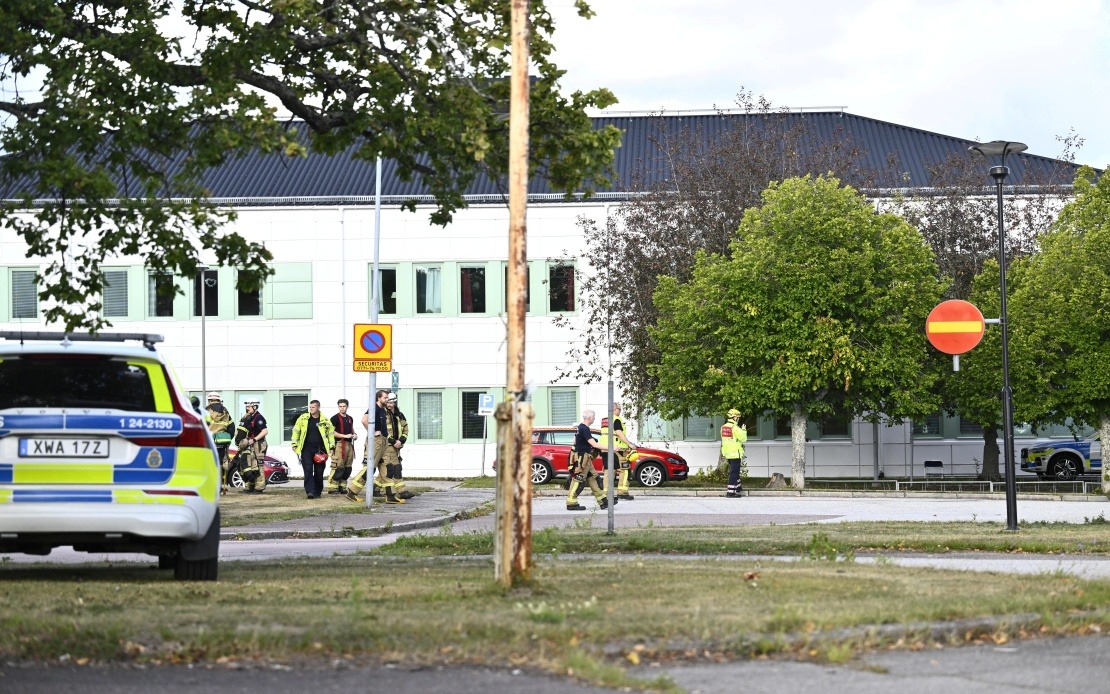
A violent sword attack at a school in central Sweden has claimed one life and left multiple victims hospitalised, prompting an immediate lockdown across the municipality and raising fresh concerns about school security in Nordic nations. The incident unfolded at Brinell School in the town of Fagersta when an armed assailant entered the premises in the early afternoon, triggering a swift emergency response that involved both police and medical personnel arriving at the scene within minutes of the first distress call.
Emergency services were dispatched to Brinell School at 2.06 pm local time on August 22, according to notifications from the Fagersta Municipality. The assault resulted in one fatality, while two male pupils under 18 years of age sustained serious injuries and were transported to hospital in what authorities described as stable but grave condition. A fourth individual experienced minor injuries during the chaotic episode. The rapid intervention of emergency responders and medical teams likely prevented further casualties, though the severity of the injuries sustained by the young victims underscores the ferocity of the attack.
Police moved quickly to apprehend a suspect linked to the violence. The arrested individual is 18 years old and has been identified as a former student of Brinell School, according to public broadcaster SVT. Investigators have established connections between the suspect and two residential addresses within Fagersta, providing authorities with key leads as they piece together the motive and circumstances surrounding the assault. The fact that the perpetrator had prior attendance at the school raises questions about whether known grievances or unresolved conflicts may have precipitated the attack.
In response to the immediate threat, municipal authorities implemented comprehensive lockdown procedures across multiple educational and civic institutions throughout Fagersta. Seven facilities were secured, including Olympen, Fagerstahallen, Risbroskolan, Skogsglantan, Bjorksta, Prastkragen, and Norrbybacken. This precautionary measure, while disruptive to normal operations and causing significant alarm among students and staff, reflects standard crisis management protocols designed to contain threats and prevent any escalation or secondary incidents.
The Swedish government has acknowledged the gravity of the situation with senior officials closely monitoring developments. Justice Minister Gunnar Strommer issued a public statement confirming that authorities were maintaining direct oversight of the police investigation. "We have been informed of a serious incident in Fagersta. The police are on site and are working very intensively on the incident. The government is in close contact with the police and is monitoring developments on an ongoing basis," Strommer said. This high-level engagement signals the political weight attached to school safety and the government's commitment to understanding how such violence can occur within an educational setting.
Sweden, despite its reputation for social stability and low violent crime rates, has experienced periodic incidents of mass violence, making this attack a significant departure from the nation's generally peaceful character. School attacks, though relatively rare in Nordic countries compared to other developed nations, carry substantial psychological and political consequences when they do occur. The incident will likely prompt renewed discussions within Swedish policymaking circles regarding school security measures, mental health support systems, and threat assessment protocols in educational institutions.
For Malaysian observers and regional audiences, this incident provides a sobering reminder that sophisticated welfare states with robust social safety nets are not immune to episodic violence involving young perpetrators. The involvement of an 18-year-old former student suggests complex personal or institutional factors that warrant examination, though authorities have not yet disclosed details regarding potential motives. Understanding such incidents through a regional lens is valuable, as it reinforces the universal necessity for comprehensive school safety frameworks and accessible mental health resources across educational systems.
The broader implications extend beyond Fagersta and Sweden itself. School security remains an ongoing concern across Southeast Asia and globally, with administrators constantly balancing the need for protective measures against maintaining welcoming, open educational environments. The involvement of a weapon as primitive yet deadly as a sword—rather than firearms, which are heavily restricted in Sweden—demonstrates that determined individuals can cause catastrophic harm regardless of stringent weapons regulations. This underscores the importance of holistic approaches encompassing psychological intervention, threat assessment, and security protocols working in concert.
As the investigation progresses, Swedish authorities will focus on reconstructing the sequence of events, identifying any warning signs that may have been missed, and determining whether systemic failures in threat detection contributed to the tragedy. The trauma experienced by the school community, including surviving students and staff who witnessed the violence, will require substantial psychological support and counselling services. Educational institutions across Sweden are likely to review their security procedures and crisis response training in light of this incident, seeking to enhance preparedness while maintaining the open, trust-based environments that characterise Nordic educational philosophy.

