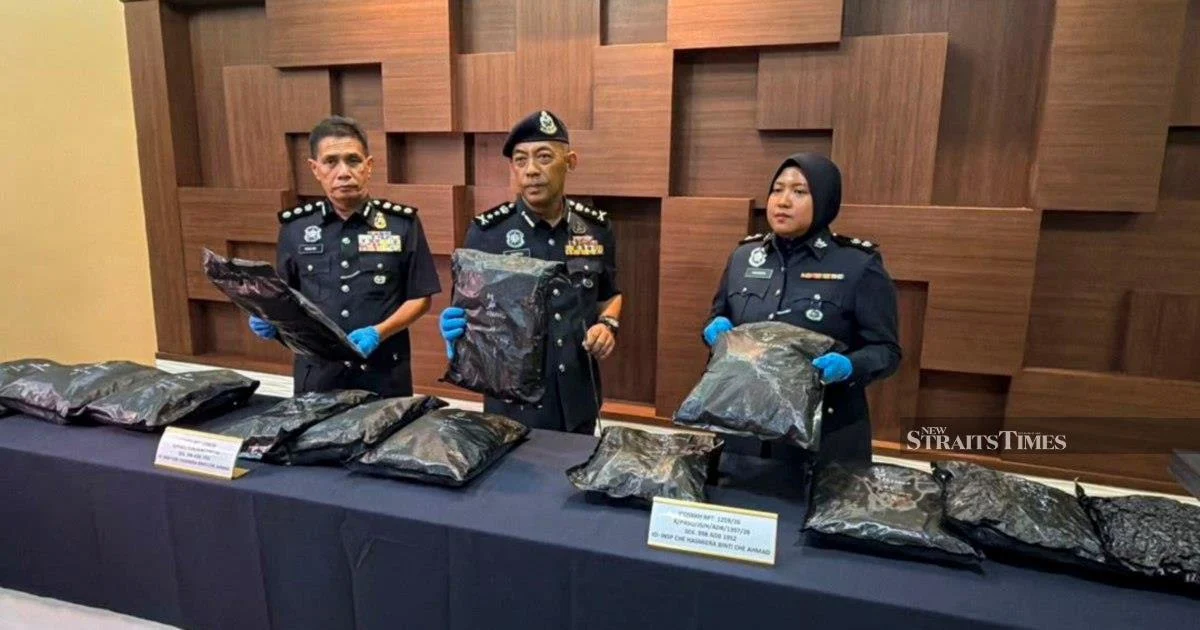
A student attending a private higher education institution fell into the hands of law enforcement at Bukit Kayu Hitam checkpoint on Monday, facing serious drug trafficking charges after authorities discovered a substantial quantity of cannabis buds concealed during cross-border transit.
The contraband, weighing 14.63 kilogrammes and valued at approximately RM1.17 million in street value, represents one of the more significant drug seizures recorded at the busy northern border crossing point. The arrest highlights the persistent challenge authorities face in combating organised drug smuggling operations that exploit both local and international courier networks to move illegal substances through Malaysia's porous frontiers.
The suspect, whose identity as a student has raised fresh concerns about the recruitment of young people by drug syndicates, was apprehended while attempting to transport the narcotics from a neighbouring country into Malaysian territory. The case underscores a troubling pattern whereby criminal networks increasingly target university and college students, leveraging their mobility and perceived lower risk profile compared to professional smugglers to move drugs across international borders.
The Bukit Kayu Hitam checkpoint, located in Kedah along the Thailand-Malaysia border corridor, serves as one of the nation's primary entry and exit points for both legitimate cross-border commerce and illicit trafficking operations. The volume of daily traffic through this gateway creates significant enforcement challenges, making it an attractive route for drug smuggling syndicates seeking to circumvent detection by authorities.
Cannabis remains one of the most widely trafficked controlled substances in Southeast Asia, with organised crime groups operating sophisticated supply chains that source the drug from cultivation sites in the region and distribute it through multiple markets. The RM1.17 million valuation of this particular haul reflects the substantial profit margins that drive criminal investment in drug logistics across the region, creating powerful incentives for individuals and networks willing to accept the legal and personal risks associated with trafficking.
The recruitment of student couriers represents a strategic evolution in smuggling methodology, as criminal syndicates recognise that younger individuals often attract less law enforcement scrutiny at border checkpoints and may be easier to coerce through debt obligations or threats. University and college students, with legitimate reasons to cross borders for education or travel, provide valuable cover for illegal operations while maintaining deniability about their involvement in serious crimes.
Law enforcement agencies across Malaysia have escalated awareness campaigns highlighting the dangers of border smuggling, particularly targeting young people who may be manipulated into transporting drugs. The federal government has emphasised that individuals caught carrying narcotics face severe penalties, including mandatory minimum sentences and substantial fines, regardless of whether they claim to be unwitting couriers or victims of coercion.
The arrest comes amid broader regional concerns about the expanding capacity of drug trafficking networks to source and distribute controlled substances, particularly to markets in Southeast Asia where demand continues to rise. The proximity of Malaysia to major drug production areas in the Golden Triangle and other source regions makes the country an unavoidable transit hub for trafficking operations spanning multiple nations and criminal jurisdictions.
Investigative authorities are likely to examine whether the apprehended student was part of a larger smuggling network, given the significant volume and value of the contraband seized. Such investigations often reveal complex operational structures involving recruitment handlers, logistics coordinators, and distribution networks operating across multiple countries, though individual couriers typically occupy the lowest tiers of these organisations and possess limited knowledge about wider operational details.
The case reinforces the importance of sustained interdiction efforts at border checkpoints and maintains pressure on criminal networks attempting to exploit Malaysia's geography and transportation networks. Customs and anti-narcotics officials continue to employ detection technologies and intelligence-led targeting strategies to identify suspicious travellers and shipments, though the ongoing cat-and-mouse dynamic between law enforcement and organised crime ensures that new smuggling routes and methodologies continually emerge.
For Malaysian universities and colleges, this incident serves as a sobering reminder of the vulnerabilities their student populations face to exploitation by criminal organisations. Educational institutions have begun implementing awareness programmes to educate students about trafficking risks and to encourage reporting of suspicious recruitment attempts, recognising that prevention through education may prove more effective than relying solely on enforcement at border points. The broader implications underscore the need for coordinated international approaches to drug trafficking that address both supply-side interdiction and demand-reduction strategies across the region.