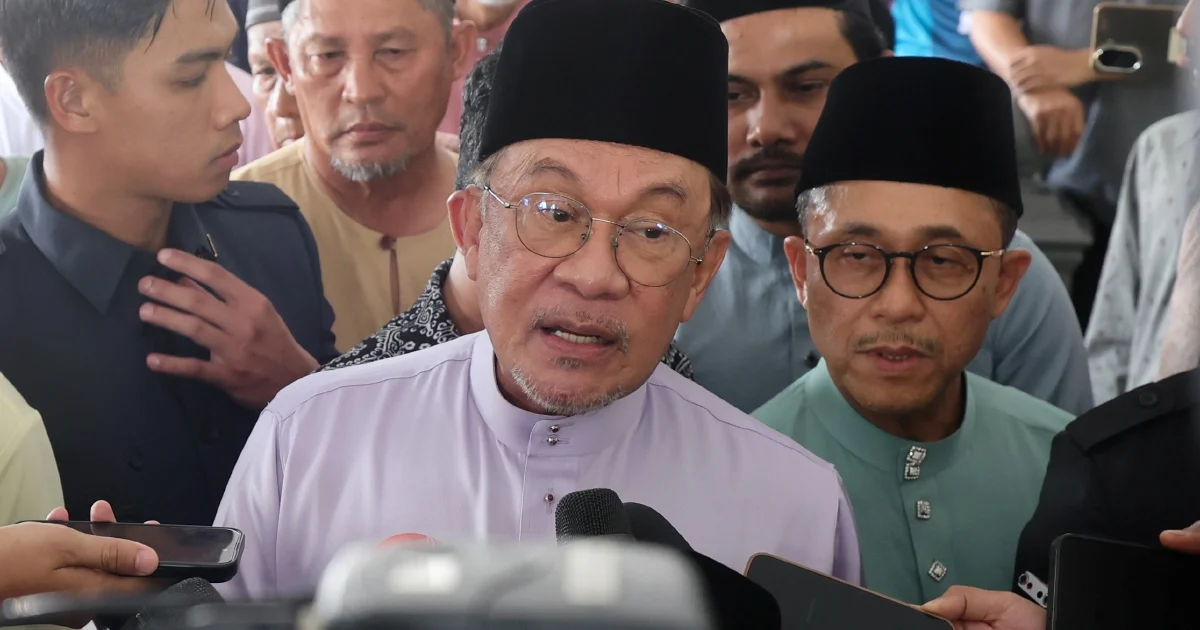
Prime Minister Datuk Seri Anwar Ibrahim moved to reassure Malaysia's non-Muslim communities on Tuesday, declaring that institutional efforts aimed at reinforcing the Syariah court framework will operate within constitutional boundaries and pose no threat to existing religious liberties. Speaking from Putrajaya, the Prime Minister sought to calm apprehensions that have surfaced regarding the scope and potential reach of measures designed to enhance the Syariah judiciary's authority and operational capacity.
The clarification comes as Malaysia navigates a complex constitutional landscape in which religious jurisdiction sits alongside civil law structures. The dual system, enshrined in the Federal Constitution, has long been a defining feature of Malaysia's legal architecture, with Syariah courts exercising authority exclusively over matters pertaining to Islam and Muslims. Concerns from non-Muslim groups have periodically emerged whenever discussions around judicial elevation or expanded resources for religious courts materialise, reflecting underlying anxieties about institutional encroachment.
Anwar's statement underscores the government's intention to maintain the existing constitutional equilibrium. According to Malaysia's fundamental law, the jurisdiction of Syariah courts is strictly limited to Muslims and covers specific domains including family law, inheritance, religious offences, and charitable endowments. Non-Muslims fall entirely outside this jurisdiction, their personal and civil matters remaining the preserve of civil courts operating under secular legal codes. The Prime Minister's remarks implicitly reaffirm this demarcation, suggesting that strengthening institutional capacity does not translate into jurisdictional expansion.
The discourse surrounding Syariah court enhancement reflects broader demographic and political realities in Malaysia. As a nation constitutionally defined as an Islamic state with a Muslim-majority population exceeding eighty percent, the government faces persistent pressure from religious constituencies to elevate the standing and resources available to Islamic institutions. Simultaneously, Malaysia's significant non-Muslim minorities—comprising roughly one-fifth of the population and encompassing Chinese, Indian, and indigenous communities professing Buddhism, Christianity, Hinduism, and other faiths—represent constituencies whose concerns about religious accommodation and equal constitutional treatment carry considerable weight.
The Prime Minister's assurance carries particular resonance given Malaysia's experience with religious tensions and occasional friction between majority and minority communities. Previous episodes involving perceived judicial overreach, particularly concerning apostasy cases and the legal status of individuals claiming to have left Islam, have generated contentious public debates and constitutional litigation. These precedents explain the vigilance with which non-Muslim groups monitor developments affecting religious institutions, viewing such matters through the lens of minority protection.
From a practical governance perspective, enhancing Syariah court systems typically involves administrative improvements, additional financial allocation, expanded infrastructure, improved training for judicial officers, and streamlined case management procedures. These measures, by themselves, do not alter jurisdictional boundaries or expand the substantive scope of Islamic law within the Malaysian legal order. The distinction between institutional elevation and jurisdictional expansion proves crucial to understanding Anwar's differentiation between strengthening capacity and infringing rights.
Malaysia's constitutional framework, particularly Article 121 and the Ninth Schedule, establishes a clear hierarchy in which civil courts possess supervisory jurisdiction over Syariah courts on constitutional matters. This arrangement ensures that any Syariah court decision deemed to conflict with fundamental rights guaranteed under the Constitution remains subject to civil court review. The mechanism provides a safeguard against jurisdictional overreach, though its effectiveness depends on judicial willingness to intervene when constitutional rights appear jeopardised.
The Prime Minister's intervention reflects a governance calculus that recognises the need to address both majority aspirations and minority anxieties. By publicly articulating that institutional strengthening operates within constitutional limits, Anwar attempts to build consensus around reforms that might otherwise generate controversy. This rhetorical strategy proves particularly valuable in Malaysian politics, where religious matters carry both electoral and social significance.
For Malaysia's non-Muslim communities, the statement offers conditional reassurance tempered by historical caution. While Anwar's words carry authority as Prime Minister, implementation details and subsequent judicial interpretation ultimately determine whether institutional changes genuinely respect constitutional boundaries. The Indian, Chinese, and indigenous Christian communities have learned from past episodes that written assurances sometimes require vigilant monitoring to ensure fidelity.
Regionally, Malaysia's approach to balancing majority religious interests with minority protections carries implications for other Southeast Asian nations navigating similar tensions. Countries including Indonesia and Thailand grapple with analogous challenges of accommodating Islamic constituencies while safeguarding non-Muslim rights. Malaysia's constitutional mechanisms, though imperfect, provide a framework that other nations sometimes study as they design their own legal accommodations.
Moving forward, the practical test of Anwar's commitment will emerge through specific policy announcements, budget allocations, and legislative proposals. How the government translates the Prime Minister's assurances into concrete measures, how it responds if Syariah court decisions appear to transgress constitutional boundaries, and how it balances resources between religious and civil judicial systems will all illuminate whether institutional elevation genuinely remains jurisdictionally neutral. For now, the Prime Minister's statement marks an important checkpoint in Malaysia's ongoing navigation of religious federalism and constitutional democracy.

