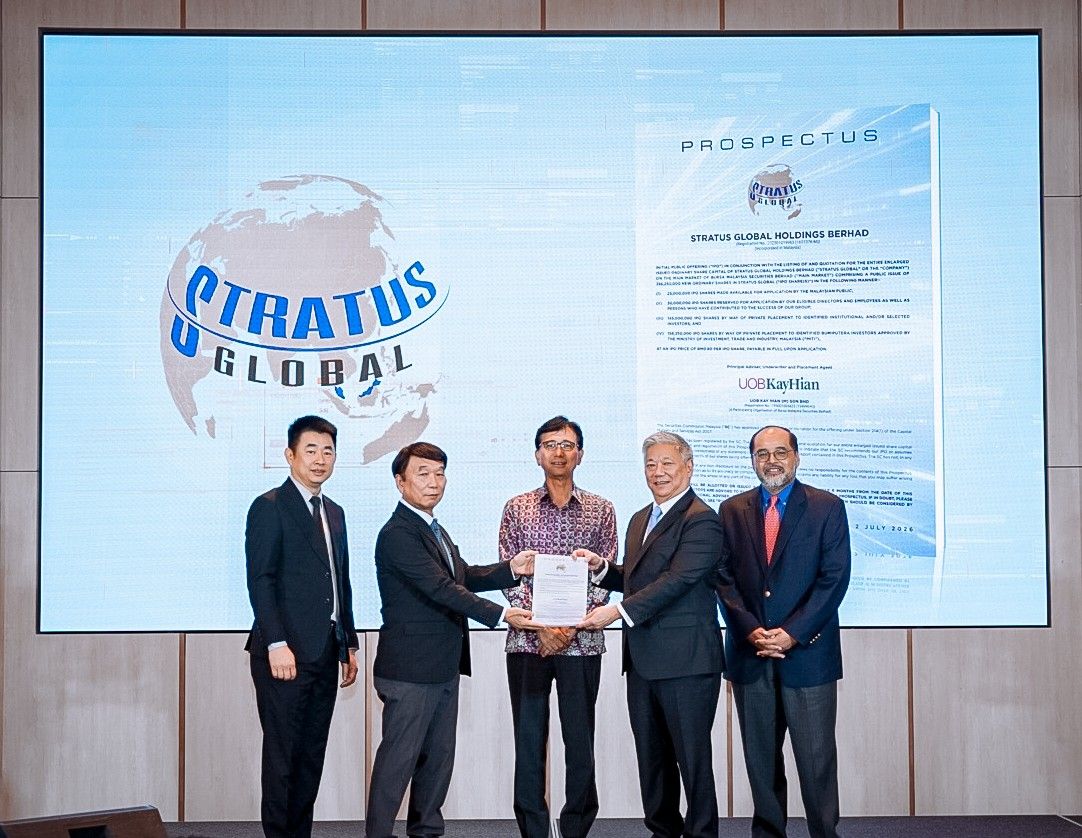
Stratus Global Holdings Bhd, a specialist in semiconductor automated material handling system solutions, has officially opened its prospectus for a Main Market initial public offering on Bursa Malaysia, seeking to raise RM285mil to finance an ambitious expansion programme. The company's timing positions it to tap growing demand from the semiconductor industry, which has become increasingly vital to Malaysia's technology ecosystem and regional manufacturing networks.
The IPO mechanism involves the creation of 356.25 million new shares priced at 80 sen apiece, without any existing shareholders selling down their holdings. This structure means all capital raised flows directly into the company's operational expansion plans. Based on the enlarged capital base of 1.25 billion shares following the listing, Stratus Global will command a market capitalisation of RM1bil, positioning it as a meaningful player within Malaysia's technology-focused public markets.
The allocation of IPO proceeds reflects a carefully calibrated strategy balancing infrastructure development with innovation. The largest component, RM122.6mil, is earmarked for constructing a new manufacturing facility in Penang, Malaysia's primary semiconductor manufacturing hub and a region increasingly competitive with other Asian production centres. This investment signals confidence in Malaysia's continued relevance as a semiconductor production destination and builds upon existing concentrations of chipmaking activity and supporting services already present in the state.
Secondary allocations demonstrate the company's international ambitions. Research and development will receive RM45mil, essential for maintaining technological edge in a sector where rapid innovation determines market viability. Overseas business expansion commands RM20mil, acknowledging that customer bases for specialised semiconductor equipment increasingly demand global footprints and localised support. Working capital of RM82.4mil provides operational flexibility, while RM15mil covers listing-related expenses.
Stratus Global's heritage stretches back to 1998, affording it more than two decades of operational experience within a highly technical field. The company supplies comprehensive AMHS solutions encompassing the entire lifecycle from initial design through fabrication, installation, and post-commissioning support. This full-spectrum approach differentiates it from narrower competitors and creates deeper customer relationships within semiconductor manufacturing environments, where equipment reliability and technical support prove critical to production schedules.
The company's customer roster includes major multinational semiconductor manufacturers operating across Malaysia and spreading into Asia, Europe, and North America. This geographic diversity reduces dependency on any single region and positions Stratus Global to benefit from ongoing semiconductor industry consolidation and relocation trends, particularly as companies diversify manufacturing away from concentrated locations and governments worldwide emphasise domestic chip production capacity.
Executive director and chief executive officer Ryo Narisawa articulated the strategic rationale for the listing, positioning it as enabling the next growth phase for the organisation. His emphasis on expanding manufacturing capabilities acknowledges competitive pressures within equipment provision, while highlighting research and development underscores recognition that technological leadership determines long-term viability in semiconductor support services. International market strengthening reflects realistic assessment that Malaysian operations alone cannot absorb total growth potential.
The IPO timeline demonstrates efficient execution. Applications commenced immediately following prospectus launch and conclude on July 10, allowing just nine days for investor decisions. Listing on July 21 provides minimal delay after the subscription period closes, suggesting strong confidence in market reception and allowing the company to commence capital deployment quickly. This compressed schedule typical of well-received IPOs indicates advance institutional interest and underwriter confidence in the offering.
UOB Kay Hian (M) Sdn Bhd serves as principal adviser, underwriter, and placement agent, roles combining strategic counsel, risk management, and investor introduction responsibilities. The bank's involvement brings institutional credibility and distribution capabilities essential for successful Main Market flotations, particularly among institutional investors whose participation provides stability beyond retail subscription bases.
For Malaysian investors, the listing represents an opportunity to gain exposure to a niche but strategically important semiconductor support sector. The semiconductor equipment supply chain constitutes critical infrastructure underpinning Malaysia's semiconductor manufacturing industry, which contributes substantially to export earnings and employment. Stratus Global's expansion could strengthen Malaysia's entire semiconductor ecosystem by improving domestic equipment availability and reducing import dependencies.
The offering also carries broader implications for Southeast Asia's technology ambitions. As regional governments pursue semiconductor self-sufficiency and manufacturing diversification, companies supplying specialised equipment become strategically valuable. Stratus Global's growth, facilitated through this capital raise, contributes to building indigenous technical capabilities rather than remaining entirely dependent on foreign equipment providers.
Investors evaluating the opportunity should weigh management's two-decade operational track record against competitive dynamics within semiconductor equipment sectors and macroeconomic sensitivities affecting semiconductor manufacturing investment cycles. The dual-pronged strategy emphasising both capacity expansion and innovation suggests balanced prioritisation, though execution risks attending manufacturing facility construction and international market penetration remain material considerations in evaluating investment merit.

