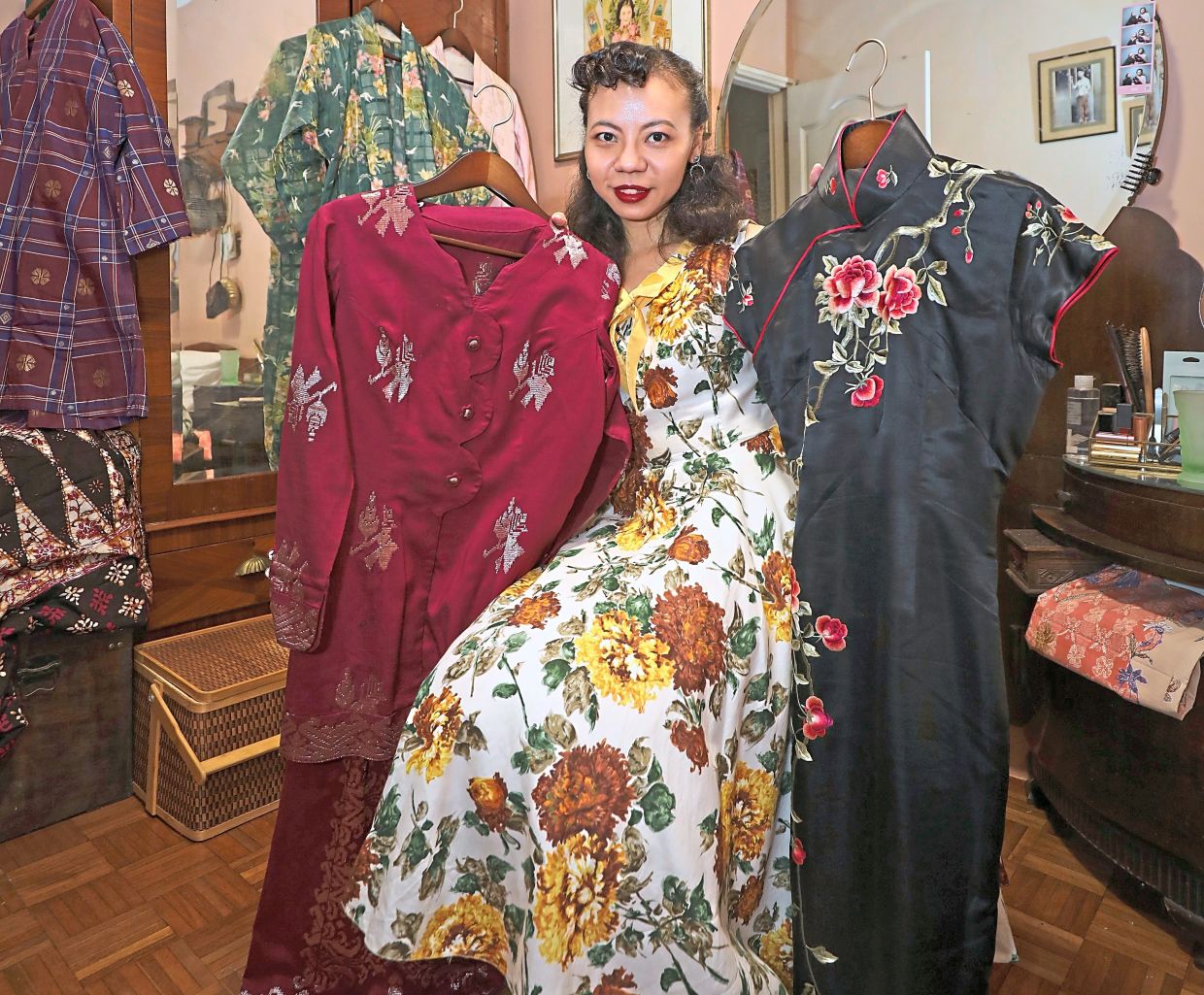
For Suzanne Lim, the spark ignited from a single photograph. A black-and-white image of her grandparents mid-dance inside a 1950s dance hall, dressed impeccably and lost in the moment, hangs in her room as a constant reminder of where her passion for vintage Malaysian clothing originated. The 33-year-old graphic designer traces her fascination with fashion history directly to this window into their lives—her grandfather's devotion to rock and roll, her grandmother's career as a taxi dancer connected deeply to local movement and music. Those figures, frozen in time yet so alive in her imagination, set her on a trajectory that would eventually define how she engages with Malaysia's material culture.
That childhood exposure to her grandparents' world of music and dance extended naturally into Lim's own early years. Beginning dance lessons at just four years old, she progressed through Latin and ballroom competitions, absorbing not merely the steps but the entire ecosystem of dress and presentation that surrounded these activities. Later, during her secondary school years, involvement in the cultural club introduced her to traditional Malaysian performance wear. The elaborate costumes required for these productions—complete with intricate accessories—planted seeds that would eventually blossom into a deliberate collecting practice. What started as practical costume requirements transformed into genuine curiosity about the garments themselves and what they represented about Malaysian society at different points in time.
By her twenties, Lim's casual interest had crystallized into serious passion. Her first vintage acquisition proved transformative, marking the moment when collecting transitioned from occasional hobby to consuming drive. She now curates an expanding personal archive of pieces spanning kebaya, cheongsam, batik and songket, each item selected for both aesthetic appeal and historical significance. Rather than keeping these treasures locked away, she documents herself wearing them against heritage backdrops, creating visual narratives that offer contemporary perspectives on how Malaysians actually dressed in previous eras. Her social media presence functions not as fashion performance but as active historical interpretation, making the past accessible to audiences who might never enter a museum or consult scholarly sources.
Lim articulates a sophisticated understanding of what clothing reveals beyond mere aesthetics. Historical garments, she explains, function as primary historical documents that illuminate economic conditions, social hierarchies and cultural values of their time periods. A particular batik pattern, the cut of a kebaya, the materials chosen for songket—these details encode information about trade routes, available resources, social conventions and aesthetic preferences that textbooks often fail to convey. This perspective transforms her collection from personal indulgence into something approaching curatorial work, where each piece contributes to a larger narrative about Malaysian identity and heritage.
Mohamad Alif Daniel Mohammad Nor, at 25, approaches historical clothing through a somewhat different pathway, yet arrives at similar conclusions about its educational power. His engagement with the past began through his late grandmother's storytelling, conversations that organically led him toward music, historical cinema and eventually military uniforms and period dress. Beginning in his mid-teens, he commenced collecting historical artifacts, starting with Japanese occupation-era currency notes before expanding into broader material culture. His involvement with Persatuan Reka Ulang Sejarah (PRUS), a historical re-enactment organization, pushed his interest far deeper, transforming casual enthusiasm into structured historical study where accuracy and context became paramount.
For young historians like Mohamad Alif Daniel, the advantage of learning through tangible objects and living history becomes immediately apparent. Textbooks and classroom instruction, while valuable, remain fundamentally abstracted from the embodied experience of history. Wearing garments from a particular period, understanding how they functioned practically within daily life, grappling with the physical reality of historical fashion—these activities generate insights that passive reading cannot replicate. He has discovered through this hands-on engagement that history teaches far more than dates and events; it reveals identity formation, cultural values and the actual thought processes of previous generations navigating their own complex social worlds.
While Lim's work differs fundamentally from Mohamad Alif Daniel's re-enactment approach, both practitioners share a conviction that historical clothing serves as compelling evidence for a past increasingly distant from contemporary experience. They function as informal educators, leveraging digital platforms to reach audiences who have drifted from traditional heritage institutions. Lim particularly notes that fewer young Malaysians visit museums or engage with historical resources through reliable channels, making her social media documentation function as alternative pedagogy. By presenting garments in contexts where their beauty and cultural significance become visually apparent, she attempts to draw viewers into deeper engagement with their own heritage.
The tension between historical authenticity and creative interpretation occupies considerable mental space for both collectors. Lim readily acknowledges that not all her styling choices prioritize period accuracy; she occasionally applies contemporary twists to vintage pieces, blending aesthetics across temporal boundaries. When she has access to genuinely authentic materials and textiles, however, she consciously maintains fidelity to original presentation. This balancing act reflects broader questions about how younger generations should relate to tradition—as static objects to be preserved unchanged, or as living cultural resources capable of reinterpretation. Simply demonstrating that certain local textiles and garment types existed, Lim believes, can substantially contribute to making heritage feel tangible and relevant rather than relegated to distant history.
The digital age, Lim observes, has paradoxically generated nostalgia and appetite for tactile, physical connection to the past. Young Malaysians increasingly seek escape from the dematerialized nature of contemporary life through collecting objects that carry weight, texture and historical resonance. Vintage clothing and historical artifacts offer this sensory engagement while simultaneously grounding users in local cultural identity. Yet this impulse toward the past needn't mean rejecting modernity wholesale. Rather, contemporary collectors can draw inspiration from historical sources while applying individual creativity and aesthetic sensibility, creating hybrid forms that honor tradition without demanding slavish replication. For many young people, this creative freedom represents a significant appeal—the opportunity to forge personal connections with heritage rather than passively receiving pre-determined representations.
Lim emphasizes, however, that creative reinterpretation requires maintaining certain foundational principles about how traditional garments function and what they signify. Boundaries remain necessary even within this flexible framework, she insists, otherwise historical pieces risk becoming so decontextualized that they contribute to cultural misrepresentation rather than preservation. The distinction between respectful adaptation and trivialization matters considerably when heritage identity remains contested and fragile in increasingly globalized contexts. Young collectors thus navigate between honoring ancestors through authentic engagement and claiming personal agency through creative expression—a balance requiring both knowledge and cultural sensitivity.
Mohamad Alif Daniel has observed how his own posts documenting traditional attire have catalyzed broader participation within his community. Individuals who previously felt self-conscious wearing traditional clothing in public spaces have found confidence through seeing it presented positively and with obvious intentionality. This phenomenon suggests that heritage preservation operates not merely as individual collecting practice but as social force capable of shifting community attitudes toward cultural identity. When young people publicly embrace traditional garments through thoughtful documentation and respectful styling, they communicate powerful messages about pride in Malaysian identity and the continued relevance of historical culture within contemporary life. This visibility can gradually erode shame and embarrassment around traditional dress, particularly among younger generations navigating competing pressures toward globalization and Westernization.
The emerging movement of young Malaysians engaging deliberately with historical clothing and objects reflects deeper questions about belonging and identity in rapidly transforming societies. As urbanization accelerates and digital communication dominates social interaction, tactile connections to cultural heritage become increasingly precious and intentional rather than automatic. These collectors and re-enactors function as culture brokers, translating historical significance for audiences who might otherwise remain disconnected from their own heritage. Through vintage pieces displayed on social media platforms, through careful re-enactment of historical moments, through the simple act of wearing kebaya or songket into public spaces, they assert that Malaysian cultural identity remains vital, meaningful and worthy of contemporary engagement. Their work demonstrates that preserving heritage need not mean rejecting progress, but rather creating conscious, informed relationships between past and present that allow both to enrich each other.

