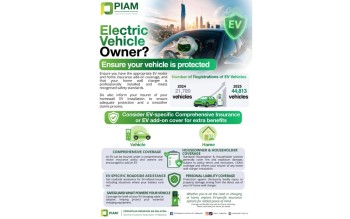
Electric vehicle ownership continues expanding across Malaysia, yet confusion persists about insurance coverage for home charging infrastructure and related fire risks. The General Insurance Association of Malaysia has moved to clarify this uncertainty, confirming that homeowners with standard fire and property insurance need not fear automatic coverage denial if an EV-related incident damages their homes, provided the policies are maintained in good standing and no deliberate wrongdoing is involved.
According to PIAM's chief executive officer Chua Kim Soon, standard domestic fire insurance policies customarily protect against specified perils, fire damage included, irrespective of what caused the initial ignition. This foundational principle applies broadly across the Malaysian insurance market and extends to damage originating from electric vehicle charging equipment, whether the fire starts within the charger itself or spreads from it to surrounding structures. The reassurance comes with important caveats—coverage remains subject to each policy's specific terms, conditions, and exclusions, and insurers retain the right to deny claims where evidence suggests fraud, intentional damage, or material breach of the policy holder's obligations.
The clarification follows a concerning incident in Cheras earlier this year involving a residential EV home charger fire that caused substantial property damage, prompting questions about whether standard policies would provide adequate protection. The accident highlighted a growing gap between the proliferation of home charging installations and public understanding of how existing insurance frameworks address them. With more Malaysians installing charging equipment at home rather than relying solely on public charging networks, this knowledge gap poses both consumer and insurer challenges.
The categorisation of charging equipment within insurance policies depends significantly on its physical nature and installation method. Permanently installed chargers—those hard-wired into a building's electrical system—typically fall under the 'buildings' classification within home insurance policies, listed as fixtures and fittings much like permanent appliances or built-in fixtures. Conversely, detachable or portable charging cables generally do not qualify under standard home policies and instead require coverage through specialised EV-focused motor insurance policies or optional add-on packages that insurers now routinely offer to EV owners.
Insurers across Malaysia maintain consistent expectations regarding homeowner behaviour before and after incidents. They require policyholders to exercise reasonable care and maintain compliance with electrical safety standards, particularly when modifying or upgrading residential electrical infrastructure. When evaluating whether to pay fire-related claims, insurers will scrutinise official investigation reports from fire departments and other authorities to establish whether the loss resulted from deliberately set fires, fraudulent claims, or breaches of legal requirements such as installation of uncertified or illegal electrical modifications. This investigative approach protects the insurer against bad faith claims while simultaneously incentivising proper installation practices among property owners.
Chua emphasised that homeowners face a straightforward obligation with significant downstream benefits: they must notify their insurance provider whenever permanently installing an EV charger on their property. This notification serves multiple functions beyond mere administrative formality. Declaring electrical upgrades allows the insurer to recalibrate the property's sum insured to reflect genuinely current rebuilding costs, accounting for the value of permanent modifications made to the structure. Without such notification, homeowners risk finding their coverage inadequate if a total loss occurs, or alternatively, they might face claim denials for non-disclosure of material information. Proactive notification also establishes a clear record should a charging-related incident later occur, eliminating potential disputes about whether the installation existed when the policy was underwritten.
Beyond the building itself, homeowners must consider the potential for fire or electrical incidents to spread beyond their property boundaries, particularly in densely configured residential settings. Terrace houses, semi-detached homes, and high-rise apartment units all present heightened risk of damage spreading to neighbouring properties through shared walls, common areas, or electrical systems. Standard home owner policies typically cap public liability coverage—which covers legal responsibility for injury or damage to others' property—at RM50,000. While this baseline protection covers many scenarios, homeowners concerned about exposure from EV charging incidents can and should explore optional liability extensions offered by most insurers to increase their limits substantially, providing stronger protection against potentially substantial claims from affected neighbours.
The relationship between motor insurance and property insurance adds another layer of complexity for EV owners. A vehicle's motor insurance policy covers the vehicle itself and its standard equipment, including the battery and onboard charging systems. However, a permanently installed home charger represents property rather than vehicle equipment, falling instead within the home insurance domain. The distinction matters because gaps can emerge—an EV owner might possess comprehensive motor coverage while lacking adequate property coverage for the charger and resulting structural damage. Chua advised EV owners to conduct thorough reviews of both their motor and home policies, identifying any coverage gaps and addressing them through policy amendments, increased limits, or additional riders before an incident occurs.
For Malaysia's growing EV community, the PIAM guidance provides both reassurance and a clear action plan. Fires originating from EV charging equipment will not automatically fall outside standard insurance coverage simply because the ignition source involves new technology. However, coverage certainty depends on proper disclosure, reasonable care, legal compliance, and absence of fraudulent behaviour. Homeowners who have already installed permanent chargers without notifying their insurers should do so immediately, providing an opportunity to adjust coverage levels before any incident. Those planning installations should complete notification as part of the installation process. Beyond notification, maintaining electrical systems according to manufacturer specifications and legal standards, using only certified equipment and installers, and ensuring adequate public liability limits represent the most prudent approach to protecting both one's home and financial security in an era of expanding electric vehicle adoption.

