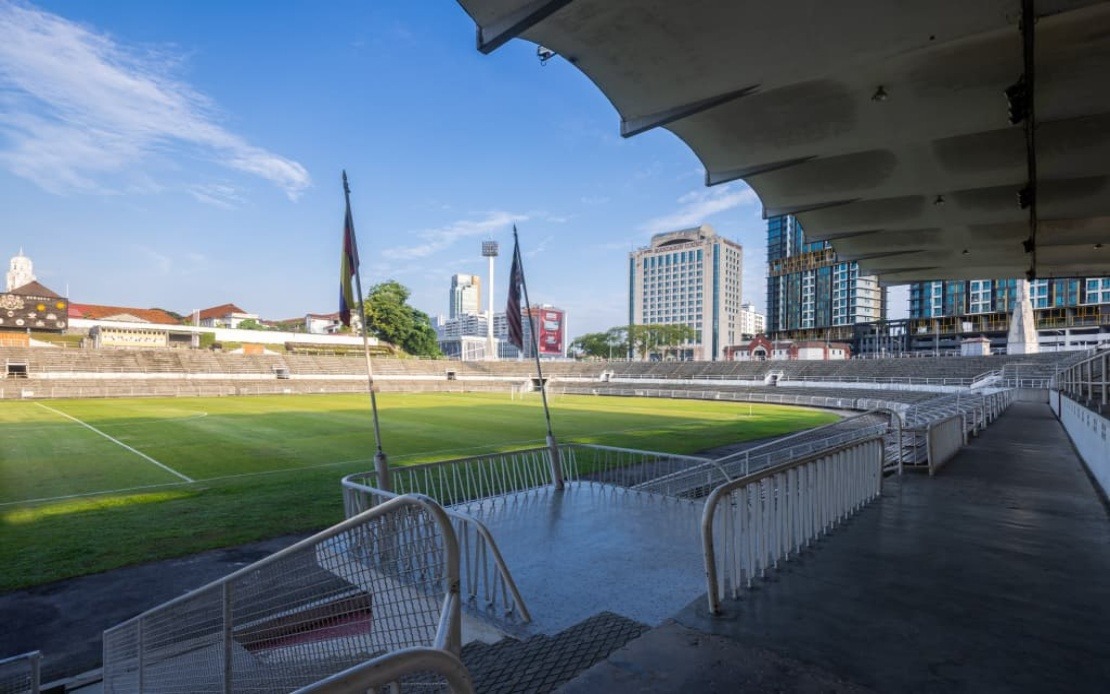
Nearly seven decades after hosting Malaya's independence proclamation on August 31, 1957, Stadium Merdeka endures as Malaysia's most potent symbol of national freedom. Nestled among Kuala Lumpur's modern skyline, including the towering Merdeka 118, the stadium bridges the nation's storied past with its present aspirations, functioning simultaneously as a historical monument and a community gathering space. The venue's very existence represents a conscious national choice to preserve memory in the face of relentless urban development.
Construction of this iconic structure was remarkably swift, completed within a single year at an approximate cost of RM2.3 million. On that fateful August day in 1957, the stadium became the stage for one of Asia's defining moments when Tunku Abdul Rahman Putra Al-Haj, Malaysia's first Prime Minister, proclaimed Malaya's independence. His seven resounding declarations of "Merdeka!" and the subsequent playing of the national anthem transformed Stadium Merdeka from a mere architectural endeavour into the birthplace of a nation. The emotional weight of those moments continues to reverberate through its walls.
Professor Sarjit Singh Gill, a social anthropology expert from Universiti Putra Malaysia and Chairman of the National Council of Professors' National Unity Cluster, articulates the stadium's broader significance beyond its sporting function. He emphasises that the proclamation of independence marked a watershed moment, concluding the British colonial period and inaugurating the Federation of Malaya's journey as a sovereign state. In his assessment, Stadium Merdeka transcends its physical form, embodying the nation's identity, dignity and cultural inheritance. This perspective positions the venue not as a relic confined to history books, but as an active custodian of national consciousness.
The stadium's historical importance deepened in 1963 when it hosted the proclamation establishing the Malaysian Federation, incorporating Sabah, Sarawak and Singapore into the newly formed nation. This ceremony represented another pivotal transition, formally dismantling British colonial governance across the broader peninsular and East Malaysian territories. The two proclamations made Stadium Merdeka the stage for Malaysia's most transformative political moments, cementing its position in the national narrative.
The stadium's survival represents a victory for heritage preservation advocates. During the late 1990s, redevelopment pressures threatened its existence as commercial interests eyed the valuable land for modern development. Public resistance, combined with government determination to safeguard the site, prevented demolition and secured its future. In 2000, Permodalan Nasional Berhad (PNB) assumed stewardship of the venue, undertaking a comprehensive conservation mission. This transfer marked a turning point, ensuring that the stadium would be actively maintained rather than passively allowed to deteriorate.
Under PNB's management, restoration efforts have been scrupulously guided by historical documentation. Datuk Dr Izwan Ibrahim, Chief Executive Officer of PNB Merdeka Ventures Sdn Bhd, articulates a conservation philosophy centred on authenticity. The original Public Works Department construction drawings provided precise specifications for restoration work. Notably, the team removed later architectural additions, including upper seating tiers, to restore the stadium's authentic 20,000-seat capacity. Detailed restoration of original features—scoreboard, sanitation facilities, mosaic tilework and the distinctive cantilevered roof—demonstrates a commitment to preserving the venue's integrity rather than merely creating a contemporary simulacrum.
The stadium's restoration efforts received international validation when UNESCO awarded it the Asia-Pacific Heritage Award in 2008, followed by its gazettal as a National Heritage site in 2009. These recognitions situated Stadium Merdeka within broader conversations about cultural preservation in the region, demonstrating that Malaysia's approach to heritage conservation meets international standards. The awards reinforced the stadium's status as a site worthy of protection and study, elevating it beyond domestic sentiment to global significance.
Contemporary programming demonstrates the stadium's evolution into a multifunctional community space. Once exclusively a National Day venue, it now welcomes public visitors, features a refurbished running track for community athletics, and hosts cultural events. The Bazram Merdeka bazaar, held during Ramadan, attracted over 250,000 visitors earlier this year, transforming the historical site into a vibrant marketplace. This programming strategy ensures the stadium remains socially relevant rather than becoming a museum frozen in time, balancing historical preservation with contemporary utility.
Crucially, stadium management has prioritised engaging younger Malaysians who lack direct family memory of 1957. While school curricula address the independence narrative, Datuk Dr Izwan Ibrahim recognises that abstract historical knowledge differs fundamentally from physical presence. The strategy deliberately encourages school groups and young people to visit, experience the venue firsthand, and forge personal connections with the site. This generational transmission of meaning proves essential for sustained national memory, as emotional engagement typically outlasts didactic instruction. Early indicators suggest neighbouring schools are responding positively to these initiatives.
The human dimension of Stadium Merdeka's preservation emerges through the experiences of long-serving staff. Alias Daud, who dedicated 35 years to PNB before spending his final decade caring for the venue, embodies the deep personal investment many Malaysians hold toward the stadium. His testimony—describing feelings of pride, gratitude and nostalgia—illustrates how heritage preservation extends beyond institutional mandates to touch individual lives. Daud's observation that visitors from diverse backgrounds bring their own stories and memories suggests Stadium Merdeka functions as a democratic meeting ground where different interpretations of Malaysian identity converge.
The stadium's significance intensifies during the August Merdeka season, when government agencies, educational institutions and universities converge on the site for commemorative events. Visitors frequently express surprise upon learning that independence was proclaimed within these walls, transforming abstract historical knowledge into tangible reality. Photography, social media documentation and collective remembrance transform the annual observance into an active recommitment to national values. These rituals, repeated annually, sustain the emotional resonance that keeps Stadium Merdeka alive in contemporary consciousness.
As Kuala Lumpur's skyline continues its vertical expansion, Stadium Merdeka's presence assumes heightened symbolic weight. The venue stands as an anchor to historical authenticity amid urban transformation, reminding Malaysians that national identity rests on foundations laid decades earlier. The juxtaposition of the modest stadium against towering modern structures creates a visual metaphor: progress need not obliterate memory. Stadium Merdeka ultimately represents a collective decision that certain moments warrant perpetual remembrance, and that preserving the spaces where freedom was proclaimed constitutes an investment in national cohesion and historical consciousness. For Malaysian visitors—whether schoolchildren encountering the site for the first time or elder citizens revisiting scenes from their youth—Stadium Merdeka remains the tangible embodiment of the nation's sovereign aspirations.

