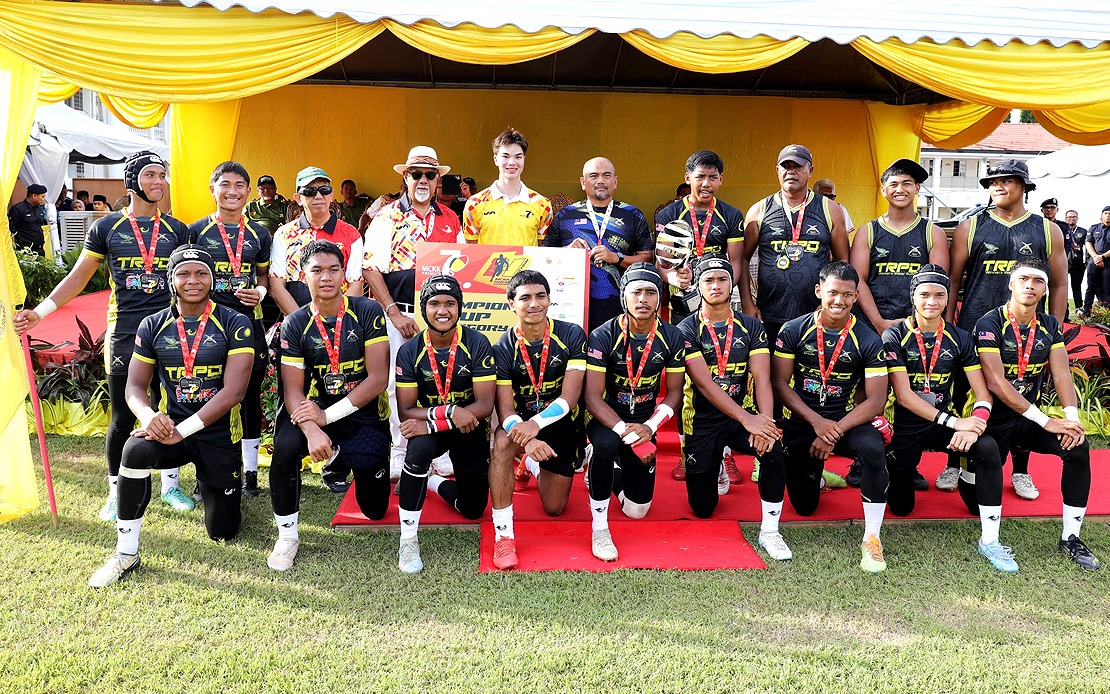
Malaysia's premier secondary school rugby sevens tournament concluded with Sekolah Sukan Malaysia Pahang (SSMP) claiming their second successive crown, defeating rival Sekolah Sukan Tunku Mahkota Ismail (SSTMI) 19-14 in an intense Cup final held at the Malay College Kuala Kangsar field in Perak on July 5. The championship victory enabled SSMP to lift the coveted NJ Ryan Trophy for the second consecutive year, reinforcing their status as one of the nation's dominant school rugby programmes.
The final between the two schools proved a compelling contest that showcased the calibre of youth rugby development in Malaysia. Both SSMP and SSTMI brought considerable experience and tactical sophistication to the match, reflecting years of investment in rugby culture at the secondary school level. The narrow five-point margin of victory underscored how evenly matched the teams were, with SSMP displaying the resilience and composure required to maintain their advantage through to the concluding stages. That SSMP faced SSTMI again in the final—having also overcome them in the previous year's championship decider—suggests a budding rivalry between the institutions that could shape the future trajectory of Malaysian school rugby.
Beyond the Cup competition, the 14th edition of the MCKK Premier 7s tournament featured multiple divisions to accommodate schools of varying competitive levels. The Plate competition saw SMK Tun Hussein Onn (THOR) emerge victorious with a 24-19 triumph over Sekolah Sultan Alam Shah (SAS), demonstrating the breadth of rugby talent distributed across Malaysia's secondary schools. The closely fought scoreline again pointed to the competitive depth within the tournament structure, where even secondary divisions produced engaging rugby of a high standard.
The Bowl division brought SMK Hosba (HOSBA) recognition as champions following their 17-12 victory over SMK Syed Sirajuddin (SEMSIRA). This tier of competition, while positioned below the Plate level, nonetheless demonstrated sustained passion for rugby among schools that might be earlier in their development trajectories. The competitive nature of these matches—with scores typically separated by single digits—suggested that tournament organisers have effectively calibrated the groupings to ensure each division remains appropriately challenging for participating teams.
In the Shield competition, MRSM Balik Pulau (MRSMBP) delivered a dominant performance, overwhelming Royal Military College (RMC) 22-0 in what was a decisive encounter between the two finalists. The comprehensive nature of MRSMBP's victory—a shutout without conceding a single point—indicated the tactical control and physical superiority the Balik Pulau school exerted throughout the match. This tier of the tournament, traditionally featuring schools newer to competitive rugby or with smaller playing populations, nonetheless produced compelling outcomes.
The tournament structure spanning five distinct competitions—Cup, Plate, Bowl, Shield, and supporting divisions—reflects a sophisticated approach to inclusive sports development at the secondary level. Rather than concentrating resources and recognition on a single championship, the MCKK Premier 7s framework ensures that schools of differing competitive maturity can participate meaningfully and have realistic pathways to silverware. This tiered system has become increasingly important in Malaysian school sports, where resource disparities and rugby infrastructure vary considerably across states and regions.
The closing ceremony proceedings added ceremonial weight to the tournament's standing within Malaysian school sports. The presence of Raja Datuk Seri Azlan Muzaffar Shah, son of the Sultan of Perak, as the officiating dignitary and trophy presenter elevated the occasion beyond a purely athletic gathering. Royal patronage of school sports tournaments carries significant symbolic value in Malaysia, signalling the monarchy's investment in youth development and sporting excellence. The formal prize distribution emphasised that achievement in rugby sevens carries recognition and prestige comparable to other celebrated school competitions.
For SSMP, back-to-back championships represent more than accumulated trophies; they underscore the programme's systematic approach to player development and tactical innovation. Schools that sustain competitive excellence across multiple seasons typically benefit from experienced coaching staff, established training philosophies, and institutional commitment to rugby culture. SSMP's retention of the title signals that these elements remain firmly embedded within the school's sporting fabric.
The tournament's significance extends beyond trophy acquisition to the broader ecosystem of Malaysian youth rugby. The MCKK Premier 7s remains one of the calendar's most closely watched school rugby events, attracting strong participation from institutions across the peninsula. Success at this level frequently provides pathways for talented young players into domestic senior rugby structures and potentially national age-group representative opportunities. For SSMP players, particularly those approaching the end of their secondary schooling, championship success can serve as a springboard toward further competitive opportunities.
The competitive dynamics evident throughout the tournament—with multiple divisions producing close contests and multiple schools demonstrating advanced rugby capability—suggest the sport continues to deepen its grassroots foundations in Malaysia. While rugby remains a minority sport compared to football or badminton, the consistent quality and participation visible in tournaments such as the MCKK Premier 7s indicates that specialist rugby schools and committed programmes are successfully cultivating a pipeline of young talent.
Looking forward, SSMP's achievement establishes them as the team to challenge in next year's competition, though SSTMI's consecutive appearance in the Cup final indicates they possess the resources and strategic planning to mount renewed challenges. The presence of strong programmes across multiple divisions suggests that the competitive landscape will continue to evolve, with emerging schools potentially breaking through the established hierarchies. The tournament's 14-year track record demonstrates its resilience as a fixture in the Malaysian school sports calendar.

