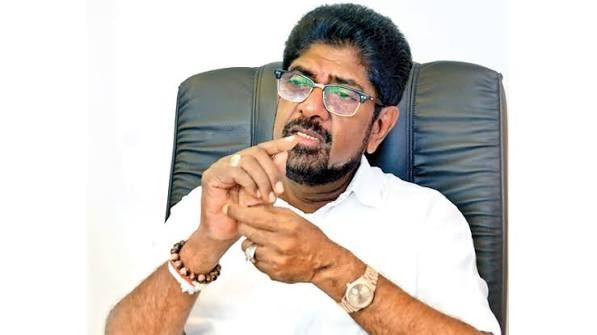
The arrest of Keheliya Rambukwella on Tuesday, August 18, marks another dramatic escalation in Sri Lanka's ongoing accountability drive targeting high-ranking officials implicated in various corruption scandals. The former minister now faces serious allegations concerning his role in the removal of a centuries-old "moonstone" — a heavy, intricately carved circular granite rock that once formed part of the symbolic entrance to the palace complex of Veera Parakrama Narendrasinghe, the final Sinhala monarch who ruled until 1739. The Commission to Investigate Allegations of Bribery or Corruption, known locally as CIABOC, initiated the detention after determining that Rambukwella had conspired in facilitating this theft during December 2022, while simultaneously leveraging his ministerial position to impede police investigations into the matter.
The significance of this particular artefact extends beyond its material value to encompass deep cultural and historical importance within Sri Lankan society. Moonstones occupy a distinctive place in classical Sinhala architecture and symbolism, representing protective spiritual elements at the thresholds of sacred and royal spaces. Their carved designs typically depict cosmic and protective imagery, making such stones not merely decorative features but integral components of the nation's architectural heritage. The theft itself therefore represents not just the removal of an antiquity but a violation of the historical integrity of one of Sri Lanka's most revered royal sites, connecting contemporary corruption to the desecration of national patrimony.
CIABOC's investigation determined that Rambukwella did not act as a lone actor but rather orchestrated collaborative involvement in the theft's execution and subsequent concealment. The authority's statement emphasised that he "conspired, aided and abetted" the removal while occupying a ministerial portfolio, indicating that his official position was instrumentalised to facilitate the criminal enterprise. Beyond the theft itself, investigators found evidence that the former minister actively worked to obstruct police investigations following the initial discovery of the crime, a charge that compounds the seriousness of his culpability by demonstrating deliberate attempts to evade accountability through abuse of his governmental authority.
Yet Rambukwella's legal troubles extend substantially beyond this single incident, illustrating a troubling pattern of misconduct spanning multiple domains of public service. The anti-corruption body simultaneously charged him with misappropriating state funds by employing six individuals for his private commercial operations using government resources. This dual charge reveals not merely opportunistic criminality but a systemic approach to leveraging public office for personal enrichment, raising fundamental questions about governance standards and oversight mechanisms during his period of ministerial responsibility.
The arrested official additionally faces a separate and actively proceeding court case concerning his previous tenure as health minister, where investigations have exposed a staggering pharmaceutical scandal. During his stewardship of the health portfolio, Rambukwella allegedly authorised the procurement of medications for state hospital systems that proved catastrophically deficient. Most egregiously, authorities have determined that a purported life-saving cancer drug purchased under his directives consisted of nothing more than water, representing not merely financial fraud but a direct endangerment to vulnerable patients depending on these institutions for essential treatment. The implications of such deception extend far beyond individual culpability, as patients denied genuine medications faced deteriorating health outcomes and potentially premature mortality.
Multiple senior officials within the health ministry establishment have similarly faced indictment regarding this pharmaceutical procurement debacle, suggesting systematic corruption rather than isolated individual failures. This broader implication indicates that institutional safeguards and quality assurance protocols within Sri Lanka's health administration either failed catastrophically or were deliberately circumvented to facilitate fraudulent acquisitions. The revelation that counterfeit medications entered the state hospital supply chain points to profound vulnerabilities in procurement oversight and regulatory enforcement that continue to threaten public health security.
The timing of these incidents carries particular significance when contextualised within Sri Lanka's broader economic and political crisis. Rambukwella occupied his health ministry position during the acute phase of the nation's severe medicine shortage crisis, which emerged directly from Sri Lanka's declaration of bankruptcy in April 2022. This bankruptcy followed the country's defaulting on its US$46 billion foreign debt burden, creating widespread shortages across essential healthcare commodities and medications. Rather than managing this crisis with urgency and integrity to prioritise citizen welfare, evidence suggests certain officials instead exploited the chaos and desperation to facilitate personal corrupt enrichment through fraudulent medicine procurement schemes.
For Malaysian and Southeast Asian observers, the Rambukwella case exemplifies the interconnected nature of governance failures, public health crises, and corruption in the region. Sri Lanka's experience demonstrates how corruption during moments of national economic vulnerability can amplify humanitarian consequences, as fraudulent procurement directly diminished access to life-saving medicines during a period when resources were already critically scarce. The case also underscores the importance of robust anti-corruption institutions and accountability mechanisms, as demonstrated by CIABOC's investigative capacity and willingness to pursue charges against prominent political figures regardless of their former status.
The prosecution of high-ranking officials like Rambukwella across multiple corruption allegations reflects an emerging regional trend toward increased accountability for political and administrative elites, particularly within South Asia. However, such prosecutions remain inconsistent and often politically complicated across the region, with questions frequently arising regarding selective enforcement and the influence of political rivalries on investigative priorities. Sri Lanka's anti-corruption authority nevertheless demonstrates sufficient independence and investigative capacity to pursue substantive cases grounded in documentary evidence and institutional coordination.
The recovery of the sacred moonstone and its restoration to the royal palace represents symbolic vindication of Sri Lanka's commitment to protecting national heritage and cultural patrimony. However, the broader significance lies in demonstrating that officials cannot exploit national crises, cultural artefacts, or public health systems for personal advantage without facing serious legal consequences. For citizens across Southeast Asia grappling with similar governance challenges, the Rambukwella prosecutions signal that institutional accountability remains possible even when corruption reaches elevated governmental echelons.

