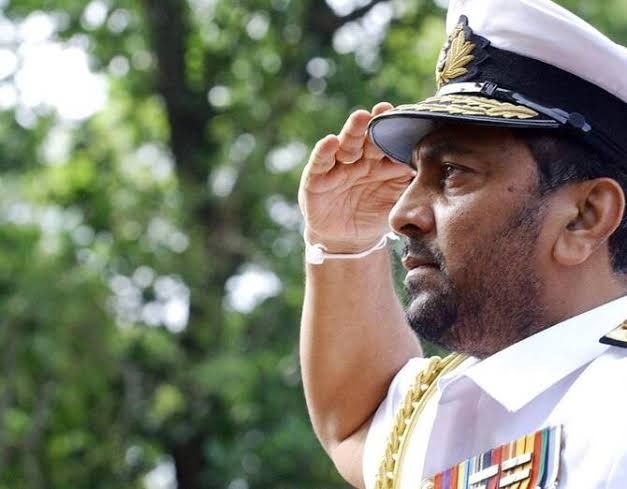
Sri Lanka's Bribery Commission has taken into custody Admiral of the Fleet Wasantha Karannagoda, 73, on allegations of corruption stemming from his role in facilitating the 2006 naval enlistment of Yoshitha Rajapaksa without proper qualifications. The arrest represents a significant moment in the island nation's efforts to investigate longstanding abuses within the defence establishment, coming as part of a broader reassessment of decisions made during and immediately after the country's three-decade conflict with Tamil separatists.
Karannagoda held the position of navy commander during the critical 2009 conclusion of Sri Lanka's civil war and was subsequently promoted to admiral of the fleet in 2019, though he currently maintains no active operational responsibilities. His detention centres on facilitating Yoshitha Rajapaksa's recruitment without meeting standard military entry requirements, an apparent breach that allowed the former president's son to bypass normal vetting procedures. The case represents one strand of a much larger web of allegations of nepotism and misuse of state resources that has entangled multiple members of the Rajapaksa family and their associates.
Yoshitha Rajapaksa, now 38, is already ensnared in parallel legal proceedings following his apprehension last month. Those charges allege he improperly utilised state funds to attend Britain's elite Dartmouth Naval College, suggesting a pattern of preferential treatment and financial impropriety. He currently remains on bail, but faces mounting legal exposure across several fronts including unexplained wealth allegations. Investigators have questioned him regarding the source of funds used to purchase residential property while his father occupied the presidency between 2005 and 2015, prompting explanations invoking the sale of gems allegedly gifted by his grandmother—a narrative that authorities found insufficiently substantiated.
The acceleration of cases against Karannagoda and the wider Rajapaksa circle traces directly to the political transition of September 2024, when President Anura Kumara Dissanayake assumed office on an explicit mandate to pursue accountability for corruption and previously unresolved high-profile crimes. The new administration has systematically revived dormant investigations that had been shelved or deprioritised under previous governments, most notably during the tenure of Gotabaya Rajapaksa, the former president's younger brother, who occupied the presidency until late 2022. This represents a marked departure from the political protectionism that had characterised earlier periods, when cases against the family were conveniently suspended or abandoned.
Karannagoda's vulnerability extends beyond the recruitment matter. International scrutiny intensified markedly in March 2025 when Britain imposed sanctions against him, designating him as responsible for serious human rights breaches and alleged extrajudicial killings during his service. Additionally, he confronts conspiracy-to-murder charges linked to the deaths of eleven individuals during 2008 and 2009, spanning the final stages of the armed conflict. These allegations touch upon the most contentious legacy of Sri Lanka's post-war period—the conduct of security forces during the closing phases of combat operations, when significant civilian casualties occurred and questions about proportionality and restraint remained largely unexamined for years.
The trajectory of the conspiracy charges against Karannagoda exemplifies the political nature of post-conflict accountability in Sri Lanka. Authorities initially abandoned these prosecutions in October 2021, when Gotabaya Rajapaksa held the presidency and wielded influence over the investigative apparatus. Under the new administration, however, judicial momentum has resumed, signalling a willingness to revisit controversial episodes that implicated military leadership aligned with the previous regime. This reversal underscores how political transitions can fundamentally alter the calculus around which cases proceed and which perpetrators face consequences.
The Rajapaksa family's legal predicament extends well beyond Yoshitha and Admiral Karannagoda. Multiple family members and their inner circle face a sprawl of outstanding criminal charges covering corruption, unexplained wealth, and serious crimes. Gotabaya Rajapaksa himself has recently been subjected to restrictions on foreign travel owing to suspected connections with the 2019 Easter Sunday bombings, a terrorist attack that claimed 279 lives and exposed catastrophic intelligence failures. These mounting restrictions and revived charges suggest that the new government intends to pursue a systematic dismantling of the protective shield that had previously insulated the family from accountability.
For regional observers, particularly in Malaysia and elsewhere in Southeast Asia, the unfolding prosecutions illuminate the challenges of transitional justice in post-conflict societies. Sri Lanka's experience demonstrates how democratic change can unlock previously frozen accountability mechanisms, yet also reveals the vulnerability of such processes to political winds and the difficulty of maintaining impartial investigation and prosecution when powerful families retain substantial influence and resources. The involvement of international actors—whether through sanctions regimes or through scrutiny by prestigious institutions like Dartmouth—adds another dimension, highlighting the interconnectedness of global accountability frameworks with domestic judicial processes.
The broader context underscores deeper questions about Sri Lanka's attempt to address historical grievances while moving forward. The Rajapaksa family oversaw military operations that fundamentally shaped the island's post-war trajectory, yet those same operations remain contested in terms of their legality and proportionality under international humanitarian law. The current government's willingness to prosecute figures like Karannagoda and members of the Rajapaksa circle may signal a pivot toward greater openness on these fraught matters, though entrenched interests and residual military influence continue to constrain the scope and pace of accountability efforts. For Sri Lanka's constitutional and political system, these cases will test whether institutions can operate with genuine independence or whether they remain subject to factional pressures and political calculation.

