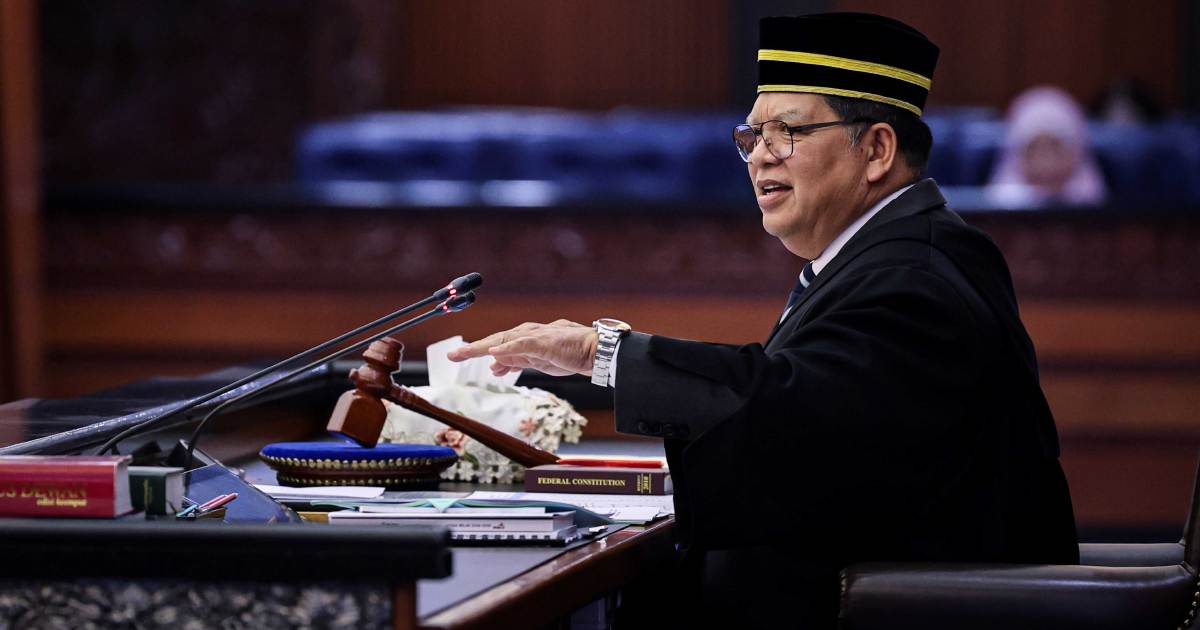
Dewan Rakyat Speaker Tan Sri Johari Abdul has issued a direct reminder to members of parliament concerning their obligation to participate in legislative proceedings, cautioning against unexcused absences from parliamentary sittings. The warning underscores the speaker's commitment to maintaining standards of attendance and accountability within the lower house, signalling that casual disregard for parliamentary schedules will not be tolerated.
As the presiding officer of Malaysia's primary legislative chamber, the speaker holds significant authority over parliamentary conduct and discipline. The reminder reflects broader concerns about legislative productivity and the importance of ensuring that elected representatives fulfil their constitutional duty to participate in the nation's law-making processes. In a country where parliamentary stability has occasionally been tested by shifting political alignments and competing priorities, maintaining regular attendance becomes both a procedural and symbolic matter of governance.
Parliamentary attendance carries implications beyond mere administrative compliance. When elected representatives absent themselves without justification, constituents lose their voice in legislative deliberations, budget discussions, and committee hearings that directly affect policy outcomes. The absence of MPs can also complicate the government's ability to pass legislation and maintain quorum for critical votes, potentially delaying important national initiatives or undermining the legislative agenda.
The speaker's intervention suggests that problematic absenteeism may have been observed among certain members, prompting the need for this formal reminder. In Malaysia's context, where coalition dynamics often create competing pressures on MPs' time and loyalties, distinguishing between legitimate absences and unjustified ones becomes important. Valid reasons typically include approved medical leave, official parliamentary business conducted elsewhere, or other circumstances approved by the speaker's office.
For Malaysian MPs, attendance carries both personal and political consequences. Voters expect their elected representatives to be present during parliamentary debates, particularly on matters affecting their constituencies. High absenteeism rates can damage an MP's credibility and public standing, especially if constituents perceive their representative as disengaged from legislative responsibilities. Opposition parties and media watchdogs frequently monitor attendance records as a gauge of parliamentary commitment.
The enforcement of attendance standards also relates to Malaysia's broader efforts to strengthen democratic institutions and parliamentary quality. As regional democracies face evolving challenges to institutional legitimacy, maintaining robust parliamentary procedures and member engagement becomes essential. The speaker's reminder contributes to these institutional safeguards by asserting that parliament is not merely a ceremonial gathering but a working legislative body requiring consistent participation from all elected members.
Parliamentary sittings in Malaysia typically occur in scheduled sessions, with advance notice provided to all members. The chamber operates during designated periods, allowing MPs to plan their schedules accordingly. When members fail to attend without approval, it reflects either deliberate neglect or poor time management, neither of which enhances legislative effectiveness or parliamentary reputation. The speaker's message aims to reset expectations and reinforce that attendance is non-negotiable absent legitimate reasons.
Beyond individual accountability, widespread absenteeism can diminish parliamentary visibility and public engagement with the legislative process. Citizens following parliamentary debates through media coverage may form negative impressions when they observe numerous empty seats during important discussions. This perception can undermine public confidence in democratic institutions and the seriousness with which representatives approach their work. The speaker's reminder therefore serves educational and institution-strengthening purposes alongside its disciplinary function.
The timing and tone of the speaker's statement reflect an institutional commitment to orderly parliamentary governance. By making this reminder public, Tan Sri Johari Abdul signals to all MPs, regardless of party affiliation, that standards will be maintained consistently. This demonstrates the speaker's role as custodian of parliamentary norms and procedures, operating independently of partisan political considerations to ensure the chamber functions effectively.
For Malaysian politics moving forward, the speaker's reminder establishes a clear benchmark: attendance at parliament is expected and mandatory unless members have submitted appropriate justification. This reinforcement of basic parliamentary discipline may seem elementary, but in contemporary Malaysian politics, where competing agendas sometimes pull MPs in different directions, explicit statements of institutional expectations serve important regulatory functions. The warning suggests that the speaker intends to monitor compliance more rigorously and potentially apply consequences for continued violations.
Constituents and civil society observers will likely view the speaker's intervention positively, as it emphasizes that elected representatives must prioritize their parliamentary duties. In a regional context where some democracies struggle with legislative engagement, Malaysia's speaker taking decisive action to maintain attendance standards reinforces the institutional foundations that sustain functional parliamentary democracy. The message extends beyond parliament itself, touching on broader questions of governmental accountability and the public's right to have its elected representatives present and engaged.