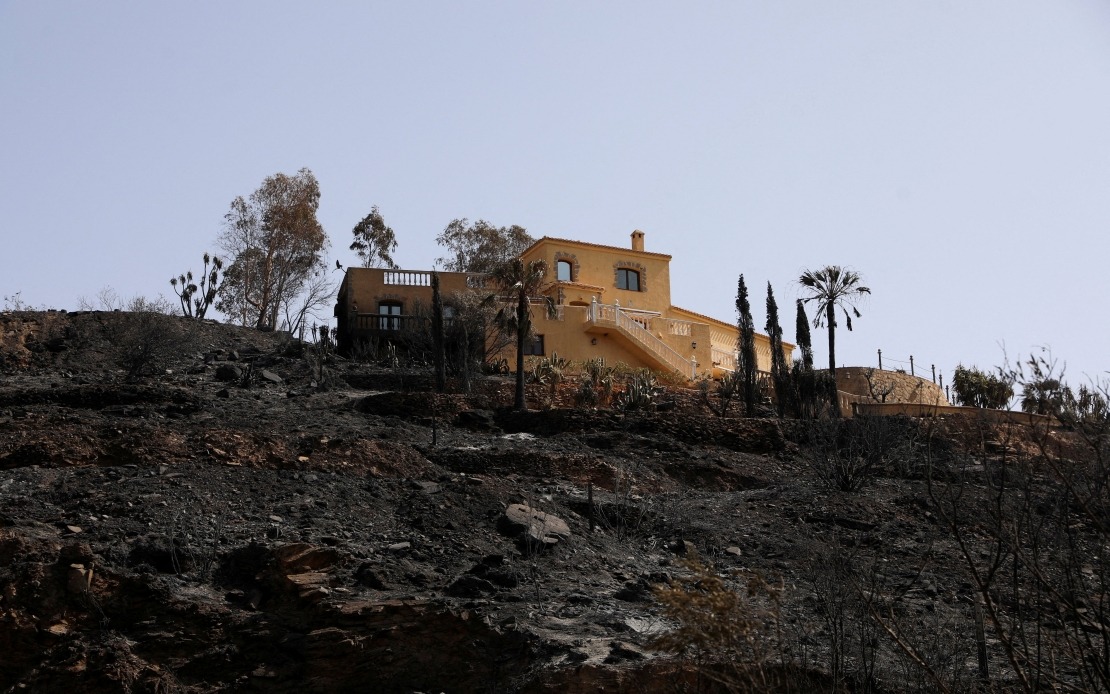
A catastrophic wildfire sweeping through Spain's southeastern province of Almeria has claimed 13 lives, with regional authorities announcing on Sunday that the massive blaze has been stabilised after destroying vast swathes of landscape since erupting on Thursday. The disaster underscores the growing intensity of wildfire incidents across Europe, a phenomenon experts increasingly attribute to shifting climate patterns affecting Mediterranean regions.
The fire initially ignited near the Los Gallardos municipality within Andalusia, rapidly consuming approximately 7,000 hectares of terrain. Seven individuals remain hospitalised in the aftermath, including three in serious condition requiring intensive care. The incident has also left ten people officially listed as missing, adding to the humanitarian toll beyond the confirmed fatalities. According to Spain's state broadcaster RTVE, a significant proportion of those impacted are foreign nationals, suggesting the affected areas may include tourist destinations or communities with substantial international populations.
The stabilisation of the wildfire has enabled regional authorities to downgrade their emergency response protocols and gradually permit residents to return to their homes. After approximately 600 residents were authorised to re-enter their properties on Saturday, officials granted the remaining roughly 1,000 evacuees permission to leave temporary shelters and return home on Sunday. This staged approach reflects standard emergency management procedures designed to ensure public safety while restoring normalcy to affected communities. The ability to safely manage evacuation and re-entry demonstrates the importance of coordinated disaster response frameworks, lessons increasingly relevant for Southeast Asian nations facing intensified seasonal fire risks.
While investigators continue examining the precise origins of the conflagration, preliminary findings suggest the fire may have been triggered by the collapse of an electricity pole or associated electrical cable. This hypothesis, if confirmed, would highlight infrastructure vulnerabilities during extreme weather conditions—a concern shared across developed nations with aging utility networks. The investigation remains ongoing, though officials have narrowed their focus to this leading theory. Such findings often prompt governments to review maintenance schedules and upgrade standards for critical infrastructure in fire-prone regions.
Juanma Moreno, the chief executive of Andalusia's regional government, emphasised Sunday that the wildfire had ceased advancing and remained contained within its established perimeter, though he cautioned that considerable effort remained before the blaze could be formally declared fully controlled and extinguished. His measured assessment reflected the precarious nature of large-scale wildfire management, where stabilisation represents a critical milestone but not final victory. Moreno also used the occasion to advocate for heightened public awareness and governmental action regarding climate change, describing the disaster as the gravest wildfire Andalusia has experienced in recent memory.
Moreno's statements connecting the disaster to climate change aligned with growing scientific consensus on wildfire patterns. He characterised climate change as creating increasingly difficult operating conditions for emergency responders, generating wildfires of unprecedented magnitude that stretch existing suppression capabilities. This framing resonates particularly with Southeast Asian policymakers, given the region's vulnerability to transboundary haze and intensified dry seasons that fuel annual fire crises in countries like Indonesia and Malaysia. The Spanish experience offers cautionary evidence of how climatic shifts can overwhelm even well-resourced European nations' disaster management systems.
The geographical and demographic context of the Almeria fire carries additional significance. The province, located in Spain's arid southeast, experiences Mediterranean-climate conditions characterised by hot, dry summers—conditions that have become progressively more severe over recent decades. The presence of foreign nationals among the victims suggests the affected areas may encompass agricultural regions, seasonal employment zones, or recreational areas that attract international visitors. This international dimension complicates response operations, requiring coordination across multiple language groups and administrative jurisdictions.
The incident arrives amid a broader pattern of intensifying wildfires across southern Europe. Spain, Greece, and Italy have all experienced record-breaking fire seasons in recent years, with authorities consistently pointing to climate change as the primary driver. These repeated crises have prompted European governments to invest substantially in firefighting capacity, early warning systems, and cross-border coordination mechanisms. For Malaysia and other Southeast Asian nations, the European experience provides instructive precedent regarding the necessity of climate adaptation strategies and enhanced regional cooperation on wildfire management.
The humanitarian aftermath will likely extend well beyond the immediate casualty figures. Displaced residents face reconstruction challenges, farmers must assess damage to agricultural lands, and local economies dependent on tourism or seasonal labour face disruption. The psychological trauma affecting survivors and emergency responders represents another often-overlooked dimension of such disasters. These cascading impacts underscore why climate change discussions increasingly intersect with economic policy, social welfare, and disaster risk reduction frameworks across both developed and developing nations.

