Spain's Prime Minister Pedro Sanchez has accused Russia and Israel of orchestrating a disinformation campaign regarding the country's migration policies, alleging this foreign interference directly precipitated the sudden influx of migrants into the Ceuta enclave last month. Speaking to media outlets in Madrid, Sanchez indicated his government had identified telltale indicators of involvement from both nations in disseminating misleading information about Spanish immigration practices, though he clarified that Morocco, Spain's immediate neighbour across the Strait of Gibraltar, bore no responsibility for spreading such false narratives.
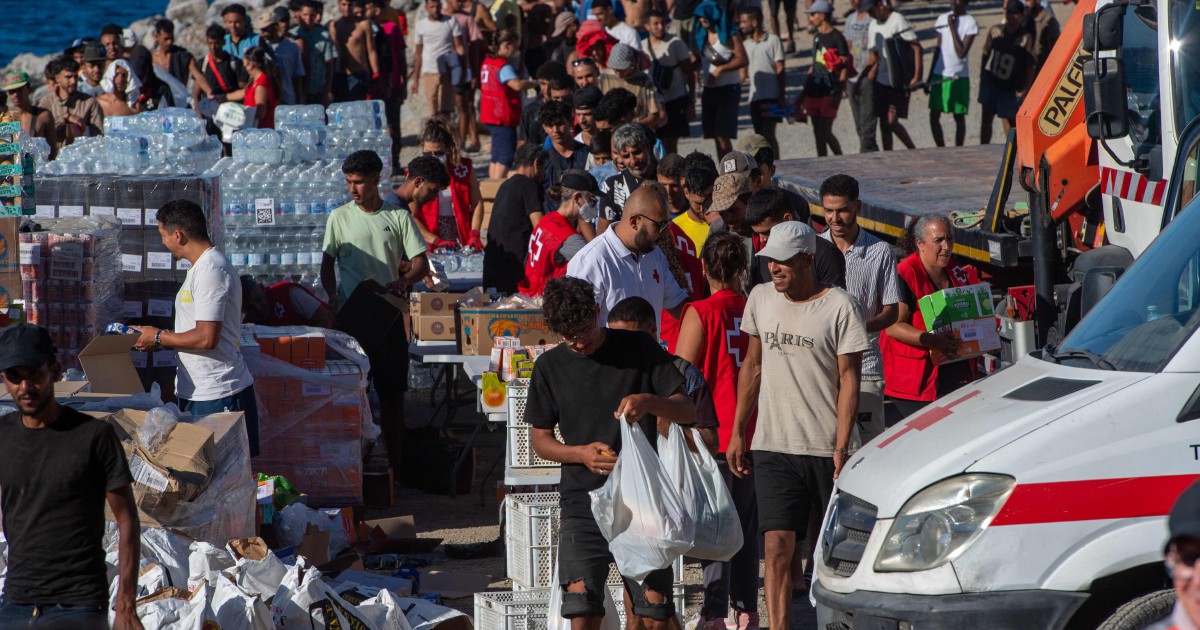
The Ceuta crisis emerged when thousands of migrants, predominantly from Sub-Saharan Africa and the Middle East, surged across the border into the Spanish autonomous city in a dramatic event that overwhelmed local authorities and sparked considerable debate across Europe about migration management and border security. The unprecedented movement occurred over several days and created immediate challenges for Spanish officials attempting to process and accommodate the sudden arrivals. Sanchez's remarks represent an important geopolitical assessment of how external actors may have weaponised information about Spain's immigration stance to exploit existing vulnerabilities at one of Europe's most sensitive maritime crossings.
The characterisation of Russian involvement aligns with broader patterns observers have documented across multiple continents, where Moscow has repeatedly leveraged social media platforms, state media outlets, and other information channels to amplify divisive narratives regarding European migration and integration policies. Russia's documented interest in exacerbating internal European tensions through targeted disinformation campaigns has become increasingly sophisticated, with analysts noting how false claims about migration can inflame public sentiment and undermine governmental credibility. By introducing inflammatory content into Spanish discourse, external actors could capitalise on pre-existing concerns about border management and create conditions favourable for mass movement.
Israel's alleged participation in spreading such disinformation represents a more complex dimension of the situation, as the accusation diverges from typical geopolitical narratives focused on Moscow's influence operations in European affairs. The inclusion of Israel in Sanchez's assessment suggests that disinformation regarding Spain's migration policies may have originated from multiple international sources with differing motivations and operational capabilities. Understanding why Israeli actors would engage in spreading false information about Spanish immigration systems requires consideration of broader Middle Eastern dynamics and potential strategic interests in destabilising European border regions.
The prime minister's explicit exclusion of Morocco from responsibility carries particular significance given the country's geographic proximity to Ceuta and Spain's historical tensions with Moroccan authorities over migration control and border management. Morocco maintains substantial influence over migrant flows from sub-Saharan Africa through its territory, and Rabat has previously weaponised migration as a bargaining tool in diplomatic disputes with Spain. By publicly clearing Morocco of involvement in the disinformation campaign, Sanchez appears to be preserving bilateral relations while simultaneously establishing a distinction between Morocco's actual migration management practices and foreign state interference in Spanish domestic discourse.
For Malaysian and Southeast Asian observers, this European episode offers instructive lessons about how disinformation campaigns can exploit legitimate policy disagreements and social sensitivities to trigger large-scale human movement and border crises. The region faces comparable vulnerabilities, with migration pressures originating from conflict zones, economic disparities, and environmental challenges across Southeast Asia. If external powers can successfully manipulate information about immigration policies in Spain, similar tactics could potentially be deployed to destabilise migration management systems throughout Southeast Asia, where multiple nations host significant displaced populations and irregular migrant communities.
The identification of state-level involvement in spreading migration-related disinformation also underscores how traditional security challenges now intersect with information warfare. Spain's experience demonstrates that border security cannot be addressed purely through physical infrastructure and personnel deployment; governments must simultaneously contend with sophisticated foreign interference in the information environment. This reality has profound implications for Southeast Asian nations managing their own borders and migration systems, many of which lack the institutional resources Spain possesses for detecting and countering disinformation at scale.
Spanish authorities have reportedly initiated investigations into the specific mechanisms through which disinformation was disseminated, examining social media platforms, messaging applications, and traditional broadcast channels for evidence of coordinated influence operations. The technological sophistication required to simultaneously spread conflicting narratives across multiple languages and cultural contexts suggests organisational capacity extending beyond individual actors or loosely affiliated groups. Understanding how disinformation travels through different communities and which messages prove most effective at mobilising migrant populations remains an active area of research for Spanish security services.
The broader implications extend to European Union migration policy coordination, as member states increasingly recognise that external interference in migration-related discourse undermines collective border management efforts. Spain's allegations will likely feature in ongoing discussions within EU security and intelligence forums regarding foreign influence operations targeting European territory. Southeast Asian nations observing these developments may similarly need to strengthen regional coordination mechanisms addressing disinformation and state-level interference in matters affecting human mobility across international boundaries.
Sanchez's public attribution of responsibility to Russia and Israel represents a deliberate political choice to frame the Ceuta crisis within a strategic narrative of external interference rather than portraying it as a failure of Spanish migration management. This framing carries important implications for how the incident influences domestic political debates about immigration policy and border security. By emphasising foreign manipulation, Spanish political leaders can redirect public anger toward external adversaries rather than accepting full responsibility for policy outcomes, a dynamic that observers across the region would do well to monitor carefully.

